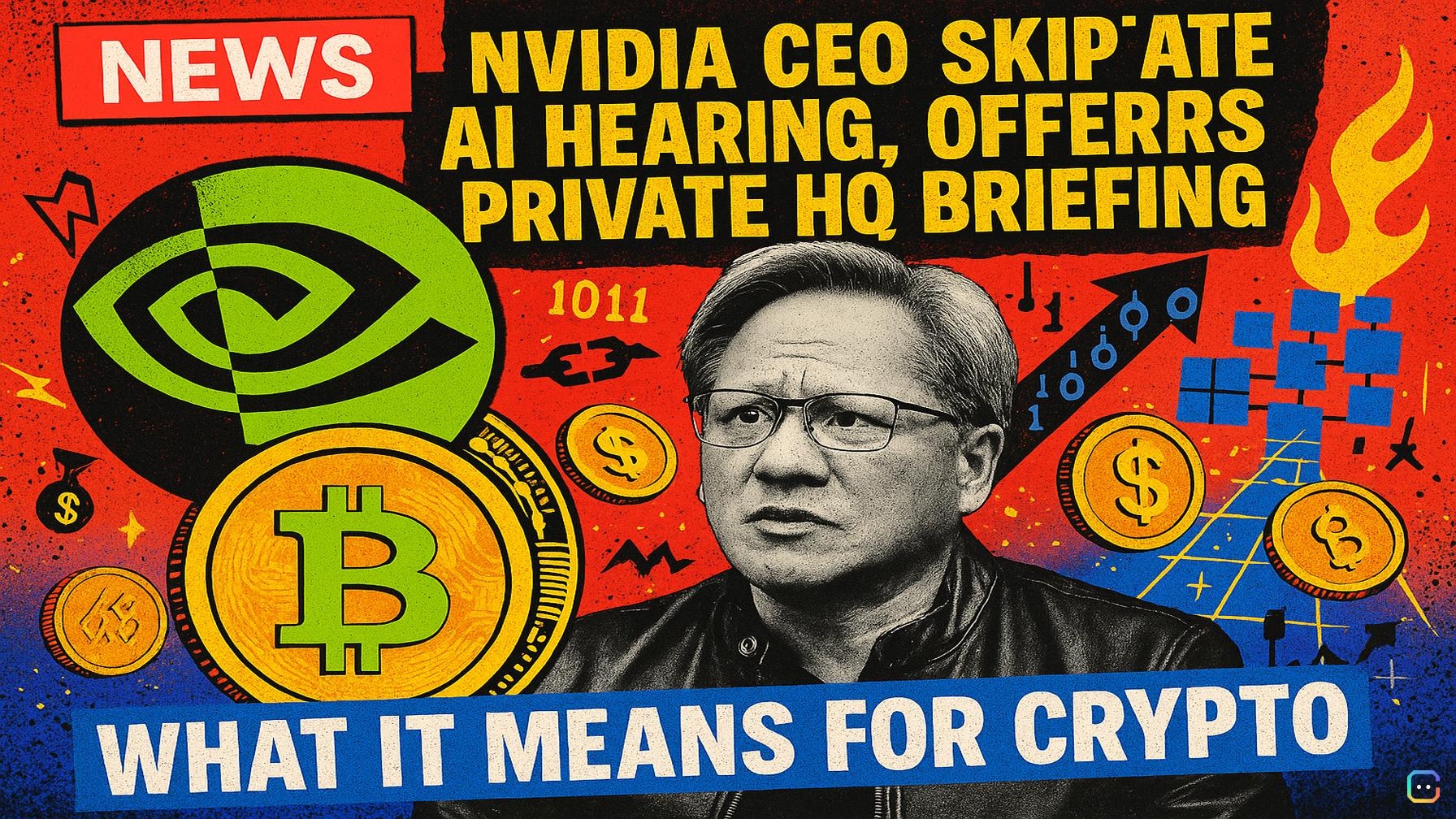
Nvidia CEO Jensen Huang has declined an invitation from the Senate Banking Committee to testify publicly about the company’s China business, offering instead to host committee members at Nvidia’s Santa Clara headquarters.
Sen. Elizabeth Warren had asked Huang to appear at a Thursday hearing on American AI development and technology leadership — a session that will press companies on innovation, affordability and U.S. competitive standing as lawmakers review export controls on advanced AI chips. Those controls limit sales of high-end American semiconductors to foreign markets, and Nvidia sits at the center of the debate: its GPUs and accelerators power many of today’s most advanced AI systems.
Huang replied that he appreciated the committee’s focus on U.S. AI leadership and stressed Nvidia’s long record of supporting researchers, universities, startups and businesses — noting the company delivered what it calls the first AI supercomputer to American researchers more than a decade ago. But he told Warren he would be “unable to attend” the hearing and instead invited the committee to meet at Nvidia’s headquarters for a briefing on the company’s technology and the broader American AI ecosystem. Huang added that “American leadership in AI technologies cannot be taken for granted” and reaffirmed Nvidia’s commitment to U.S. leadership in the field.
Warren pushed back, saying the public — not private briefings — deserves answers. “I appreciate Mr. Huang’s response, but the American people deserve answers in a public forum,” she said, arguing that Nvidia’s global footprint raises questions about AI, economic competition and national security. Warren also criticized Huang’s recent foreign and political engagements, citing his attendance at a Mar-a-Lago dinner and meetings in China.
The disagreement comes amid ongoing policy debate over how tightly the U.S. should restrict exports of advanced AI chips. Lawmakers are weighing how export rules should balance national-security concerns against the economic interests of U.S. tech firms that want to compete in China and other large markets. Huang has repeatedly urged officials to allow American companies to compete overseas; he sits on President Donald Trump’s Council of Advisors on Science and Technology and joined a delegation of CEOs on Trump’s May trip to China, which included a meeting with President Xi Jinping and discussions where AI chip policy was reportedly one topic.
Huang’s past comments — including remarks in December urging that U.S. firms “have the best and the most and first” chips for China — prompted criticism from some lawmakers, including Warren, who warned that such lobbying could aid China’s military and erode U.S. tech leadership.
Nvidia did not schedule another public appearance before the Senate Banking Committee; the Thursday hearing will go forward without Huang’s testimony. Lawmakers are expected to continue reviewing AI export rules and Nvidia’s overseas business, and the committee has not yet said whether it will issue another invitation. Huang’s letter left open the possibility of private discussions at Nvidia’s Santa Clara campus.
Why crypto readers should care: Nvidia’s chips are central not only to AI but also to GPU-based workloads familiar to the crypto community — from mining (historically) to AI-driven trading, analytics, and blockchain research. Any change in export policy that reshapes who can access high-performance GPUs could ripple through AI development and related crypto infrastructure and services that lean on advanced compute.
Read more AI-generated news on: undefined/news