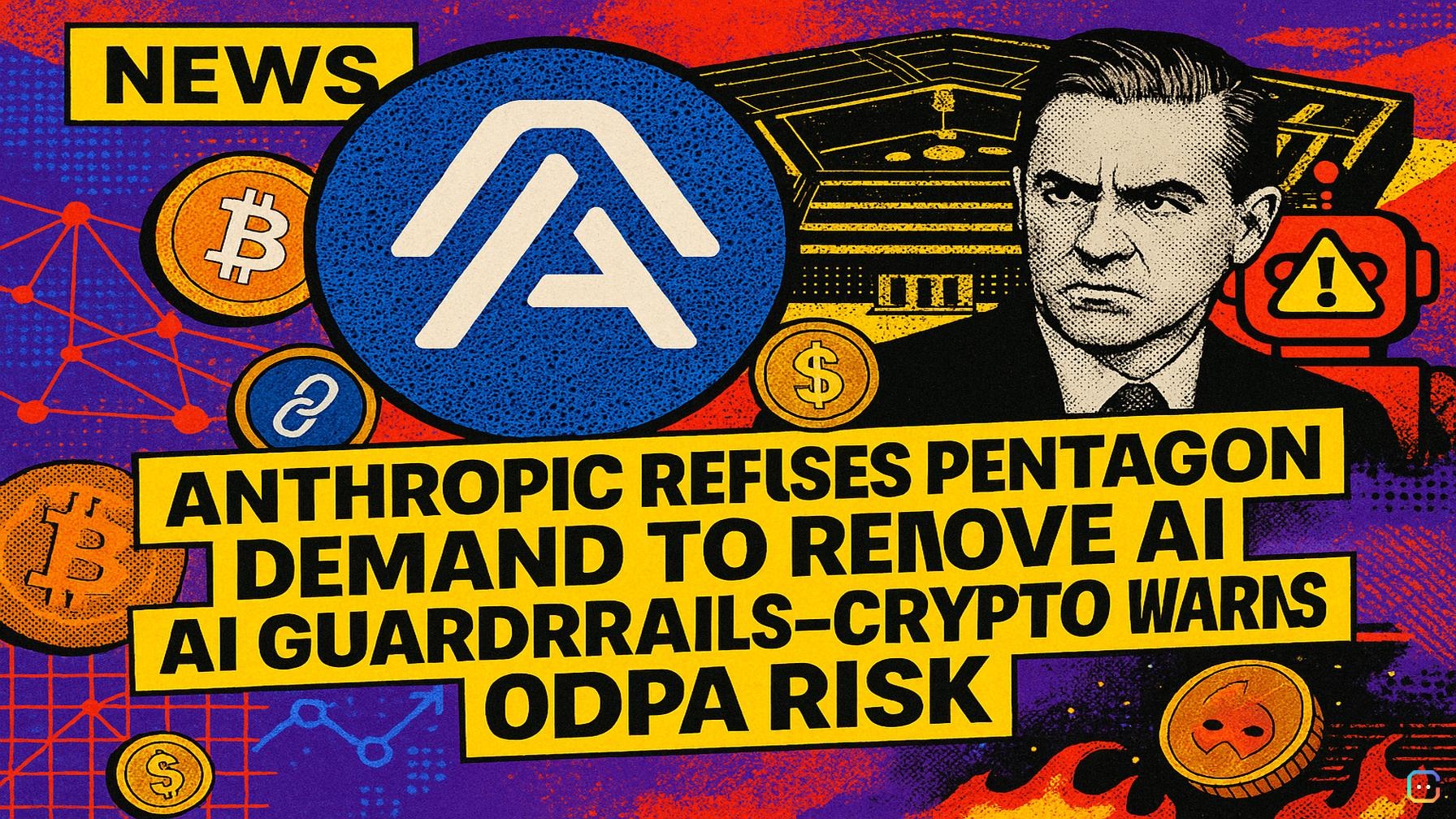
Anthropic’s CEO Dario Amodei has publicly refused a Pentagon demand to give the U.S. military unfettered access to the company’s Claude AI, setting up a potentially precedent-setting clash over how far the government can compel private tech to bend to national security needs.
What happened
- The Defense Department gave Anthropic a hard deadline — Friday at 5:01 p.m. ET — to remove two guardrails the company placed on Claude: a ban on autonomous targeting of enemy combatants and a prohibition on mass surveillance of U.S. citizens.
- Pentagon officials warned that refusal could lead to removal from military systems, a “supply chain risk” designation preventing defense contractors from using Anthropic products, and even use of the Defence Production Act (DPA) to compel the company to comply. The DPA, a Cold War–era law from 1950, lets the government require companies to prioritize national defense needs.
- Amodei called the Pentagon’s approach “inherently contradictory,” saying officials described Anthropic both as a security risk and as essential to national defense. He wrote: “Regardless, these threats do not change our position: we cannot in good conscience accede to their request.”
- A Pentagon spokesperson replied bluntly on X: “We will not let ANY company dictate the terms regarding how we make operational decisions.”
Why this matters
- Technically and ethically, Anthropic says frontier AI isn’t reliable enough to operate without human oversight — especially for autonomous weapons — and its guardrails reflect that assessment. The Pentagon argues those limits are incompatible with lawful military operations.
- The stakes for Anthropic are tangible: the company reportedly stands to lose a roughly $200 million military contract, and a supply-chain risk label could shut it out of defense integrations more broadly.
- The dispute also plays out against a backdrop of intense competition: xAI has reportedly struck deals allowing its Grok model in classified systems, while OpenAI and Google are pushing to expand government partnerships. Anthropic — once uniquely cleared to handle classified material — risks losing that edge.
Why crypto and decentralised projects should pay attention
- This conflict highlights a broader legal and strategic threat to private digital infrastructure: if the government can use the DPA or similar authorities to force an AI firm to remove safety controls, the same rationale could be applied to compel actions from crypto firms — for example, to limit privacy features, alter encryption, or expose transactional protections.
- The episode reinforces a core argument for decentralisation: centralised platforms and vendors can be pressured, regulated, or compelled by state actors; distributed and censorship-resistant systems are structurally harder to seize, coerce, or mandate changes to.
- There are also market links: Anthropic’s rapid valuation growth (reported in media coverage) underscores capital concentration around AI, which some analysts note is reshaping private credit and liquidity patterns relevant to crypto markets. Historic ties matter too — Anthropic was once partially owned by the FTX bankruptcy estate, which later sold its stake to repay creditors.
The bigger picture
- If the Pentagon follows through with DPA invocation or supply-chain sanctions, it would be among the most aggressive uses of federal power to directly control cutting-edge tech. That would set a powerful precedent for how the U.S. government can override corporate policies in the name of national security.
- For founders and developers in crypto, decentralised AI, and privacy-first projects, this is more than an AI vendor dispute: it’s a case study in how governments might seek to regulate, compel, or extract control from private infrastructure — and why designing systems that resist central chokepoints matters.
Bottom line: Anthropic’s refusal is a high-stakes stand that could redefine the boundaries between national security prerogatives and corporate safety choices. The outcome will be closely watched by builders and investors across AI and crypto, who see in it a blueprint for how state power might be applied to digital infrastructure.
Read more AI-generated news on: undefined/news