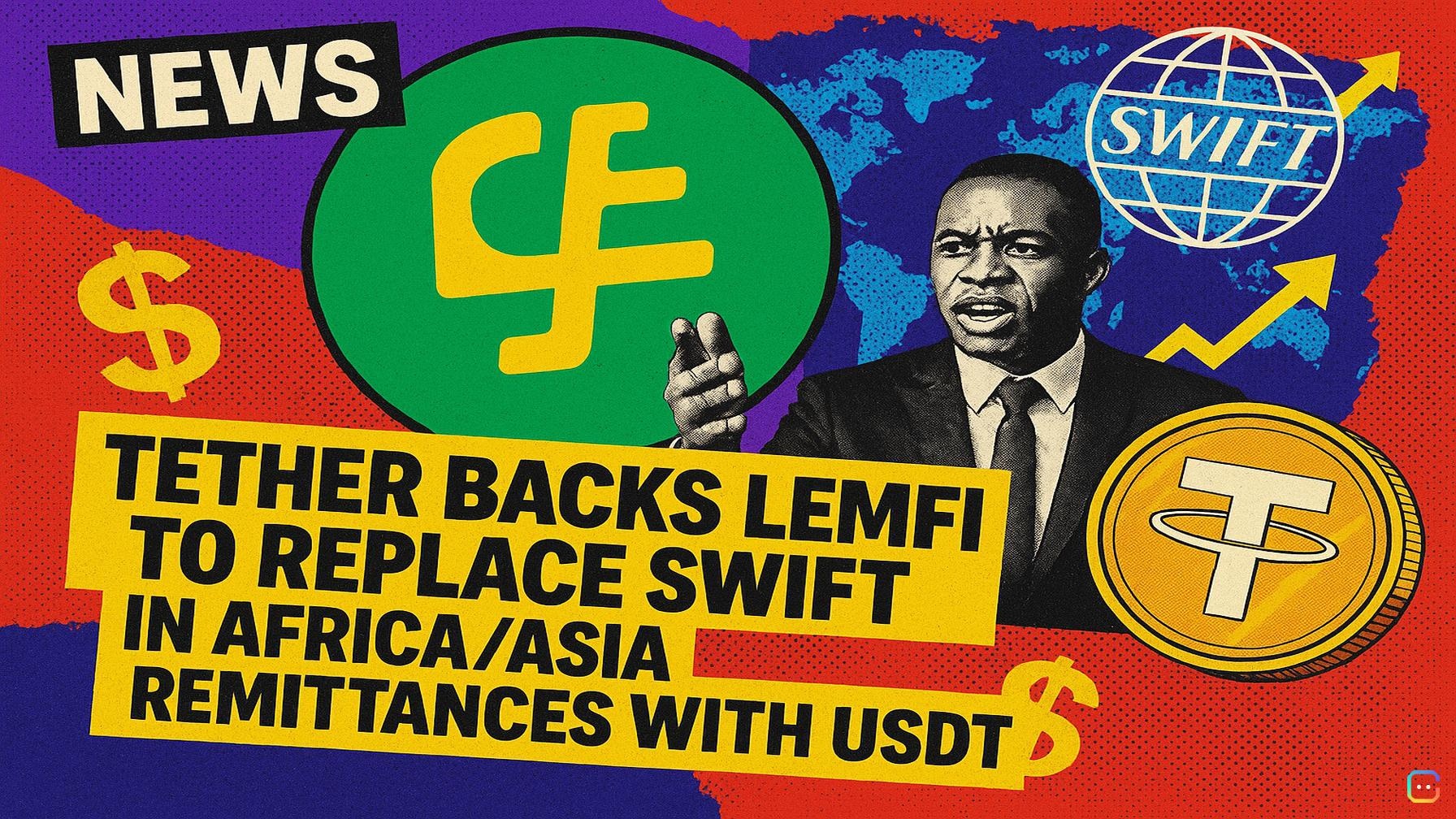
Tether has quietly doubled down on cross‑border payments, announcing a strategic investment in LemFi, a UK‑based remittance platform serving African and Asian diaspora communities. Reported by Foresight News and picked up by ChainCatcher, the deal embeds USDT as a core settlement asset in LemFi’s remittance corridors into Africa and Asia. Financial terms were not disclosed.
LemFi already enables multi‑currency wallets and instant transfers to more than 30 countries, managing KYC, real‑time FX and disbursement via its own infrastructure and partners. With USDT wired into those existing rails, LemFi can route settlements over stablecoin rails behind the scenes while customers continue to send and receive in familiar local currencies such as naira or shilling.
For Tether, the investment advances a clear playbook: push USDT into high‑friction payments use cases and replace slow, costly SWIFT chains with near‑instant stablecoin settlement. It follows earlier bets in settlement tech, including t‑0 Network, and echoes CEO Paolo Ardoino’s stated goal of promoting “financial inclusion and economic empowerment in underserved regions.” Ardoino has framed these moves as part of a broader effort to build infrastructure that can withstand a potential breakdown in legacy financial rails.
The pitch is straightforward: swap multi‑day settlement windows for near‑instant finality and lower fees. In prior USDT‑powered deployments that supplanted SWIFT wires, businesses reported settlement times dropping to under a minute and payment costs falling by roughly 45% — advantages that matter most to low‑income migrants sending frequent, small transfers. Crucially, many end users may never touch a stablecoin wallet themselves; USDT operates in the background to speed and secure the flow of funds.
The LemFi tie‑up also fits into Tether’s wider strategy of using its sizable USDT float (reported at more than $185 billion) and roughly $15 billion in annual profit to forge an ecosystem of real‑world infrastructure, from payments networks to telecoms and commodity exposure. As Tether bets on stablecoins becoming the default settlement layer for both retail remittances and institutional flows, the LemFi integration could add another live corridor where USDT functions not just as an exchange instrument but as a working replacement for SWIFT‑era cross‑border banking.
If the integration scales, diaspora communities served by LemFi could see fewer failed transfers, more transparent FX pricing and much faster access to funds back home — even if most users never directly interact with a stablecoin wallet.
Read more AI-generated news on: undefined/news