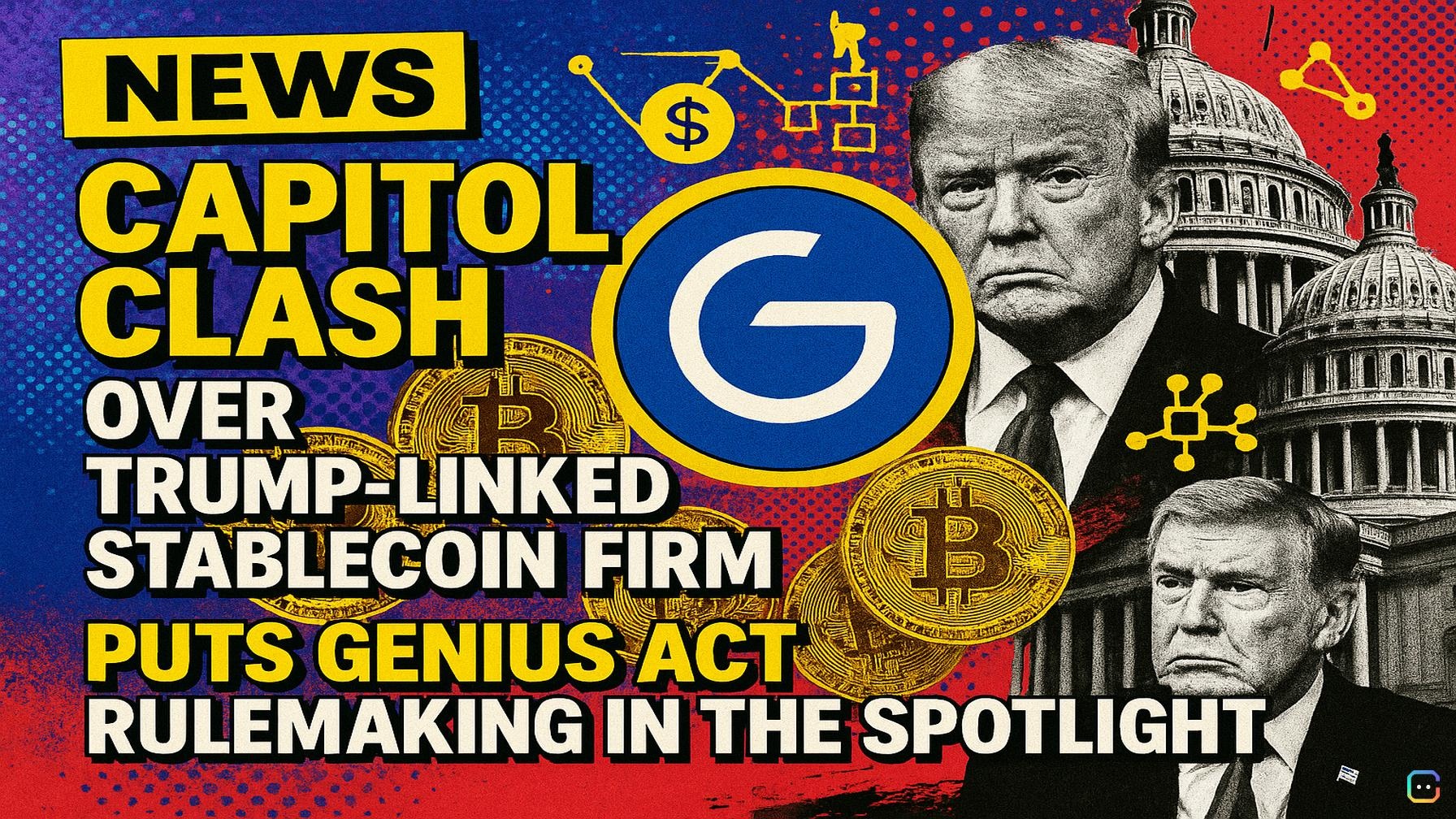
A heated hearing on Capitol Hill Thursday put a Trump-linked crypto firm and the future of U.S. stablecoin regulation squarely in the spotlight.
The House Financial Services Committee grilled Office of the Comptroller of the Currency (OCC) Comptroller Jonathan Gould over World Liberty Trust Company’s application for a national trust-bank charter. World Liberty Financial Inc., which has ties to former President Donald Trump and his family and counts foreign investors and crypto partners — including Binance — among its backers, is also a stablecoin issuer. That combination has intensified scrutiny from Democratic lawmakers.
Representative Gregory Meeks (D-N.Y.) asked Gould bluntly whether he was “working for the American people” or acting as a “Trump fixer.” Gould rejected the charge, saying the only political pressure he had felt came from Democratic members of Congress. He told the committee the OCC is reviewing World Liberty’s charter request under existing banking law and is following ethics rules, calling the campaign of pressure “unfortunate and unprecedented.”
The hearing also unfolded as regulators defend their approach to implementing the new GENIUS Act, a law that governs stablecoins and related chartering. FDIC Chairman Travis Hill told lawmakers regulators have already proposed several rules tied to the statute and that the FDIC and other agencies will soon propose a rule requiring customer identification programs for stablecoin issuers. Agency officials said rulemaking is still underway and several requirements remain in draft form.
Regulatory officials gave differing takes on stablecoins’ role in the U.S. payments system. Kyle Hauptman, chairman of the National Credit Union Administration, argued stablecoins could speed payments dramatically — potentially enabling things like weekend or holiday tax refunds and rapid emergency disbursements. Representative Brad Sherman (D-Calif.), a long-time crypto critic, pushed back, calling the idea of using stablecoins for government payments “a terrible idea” that would risk legitimizing an alternative to the U.S. dollar. Sherman also warned that, although the GENIUS Act bars stablecoin issuers from paying interest, lawyers may seek ways around that rule and urged regulators to write robust anti-evasion standards.
Federal Reserve Vice Chair for Supervision Michelle Bowman faced questions about the Fed’s decision to grant crypto exchange Kraken a form of access to the payments system. Bowman said Kraken was given limited access for an initial 12-month period and that the Fed will closely monitor the arrangement while it drafts formal rules for similar access requests. Industry observers have been watching so-called “skinny” master accounts closely — these limited Fed accounts could give approved crypto firms constrained entry to central bank payment rails.
What to watch next
- World Liberty’s charter decision and any follow-up ethics or conflict-of-interest probes.
- Timing and substance of GENIUS Act rulemaking, including customer ID requirements and anti-evasion provisions on interest payments.
- Whether regulators finalize standards for limited Fed master accounts and how broadly those will be made available to crypto firms.
- How lawmakers’ political pressure shapes the pace and tone of regulatory reviews.
The hearing underscored both the political sensitivity around high-profile crypto applicants and the significant rulemaking still to come as U.S. agencies implement a new regulatory framework for stablecoins.
Read more AI-generated news on: undefined/news