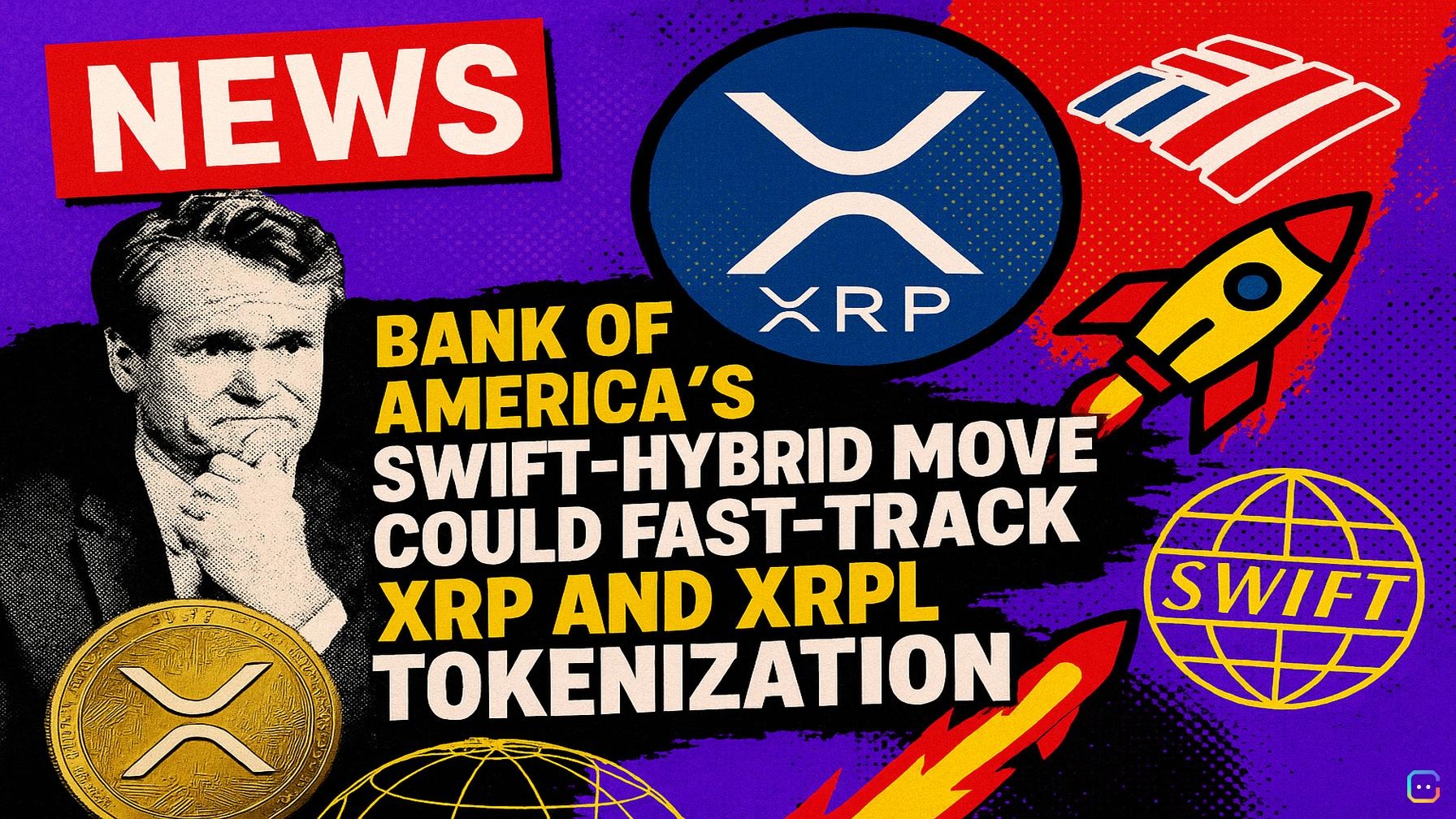
Bank of America is doubling down on cross-border payments — and the move could accelerate the crypto industry's push into mainstream banking rails.
What’s happening
- The banking giant is rolling out a new real-time cross-border payments service that will work with SWIFT, signaling a renewed focus on faster, more efficient international money movement.
- Observers note the rollout fits broader industry trends in which legacy systems are being augmented rather than replaced. On X, analyst SMQKE highlighted that banks are increasingly favoring hybrid models that combine established networks like SWIFT with newer payment rails such as RippleNet.
Why the hybrid approach matters
- Hybrid models let banks retain the global reach and interoperability of SWIFT while allowing them to tap alternative liquidity mechanisms when needed. RippleNet, for example, can plug into existing banking infrastructure in much the same way as traditional payment systems, making integration smoother for institutions.
- SMQKE argues this design could create a practical pathway for XRP — Ripple’s native token — to be used as on-demand liquidity inside a bank’s broader payment network, without forcing banks to abandon SWIFT connectivity.
Implications for XRP and tokenization
- Supporters say Bank of America’s hybrid real-time service could strengthen the case for integrating XRP into core payment flows, though that outcome remains speculative and dependent on commercial and regulatory decisions.
- Crypto analyst CharuSan has taken this discussion further, arguing that the XRP Ledger (XRPL) is particularly well-suited for institutional tokenization. The key points they make:
- XRPL includes token issuance as a native protocol feature (Native Issued Assets), unlike Ethereum where tokenization typically requires custom smart contracts (e.g., ERC-20) that can introduce vulnerabilities.
- Because tokenization is embedded at the protocol level, XRPL proponents say issuers can create and transfer tokenized real-world assets — from real estate to equities and bonds — quickly and with fewer smart-contract attack vectors.
- XRPL also includes built-in compliance controls that matter to banks and institutional investors: issuer-level restrictions, account freezes, and other mechanisms that help enforce KYC/AML requirements at the protocol level.
What this could mean for institutions
- If major banks continue to adopt hybrid payment frameworks that preserve legacy connectivity while layering in crypto-enabled liquidity options, it could lower technical and operational barriers for tokenized assets and crypto liquidity solutions to gain institutional traction.
- That said, concrete outcomes will hinge on bank-level decisions, legal/regulatory clarity, and commercial integrations. Analysts’ views about XRPL’s advantages reflect an active debate in payments and tokenization circles rather than settled industry fact.
Bottom line
Bank of America’s new cross-border effort underscores a pragmatic trend: banks are experimenting with blended payment architectures that keep SWIFT’s global reach while opening the door to crypto-enabled rails. For proponents of XRP and the XRPL, that hybrid strategy could offer an on-ramp to large-scale institutional use — provided regulatory and business conditions align.
Read more AI-generated news on: undefined/news