Headline: Jamie Dimon: “AI Will Affect Virtually Every Function” at JPMorgan — What That Means for Banks and Crypto
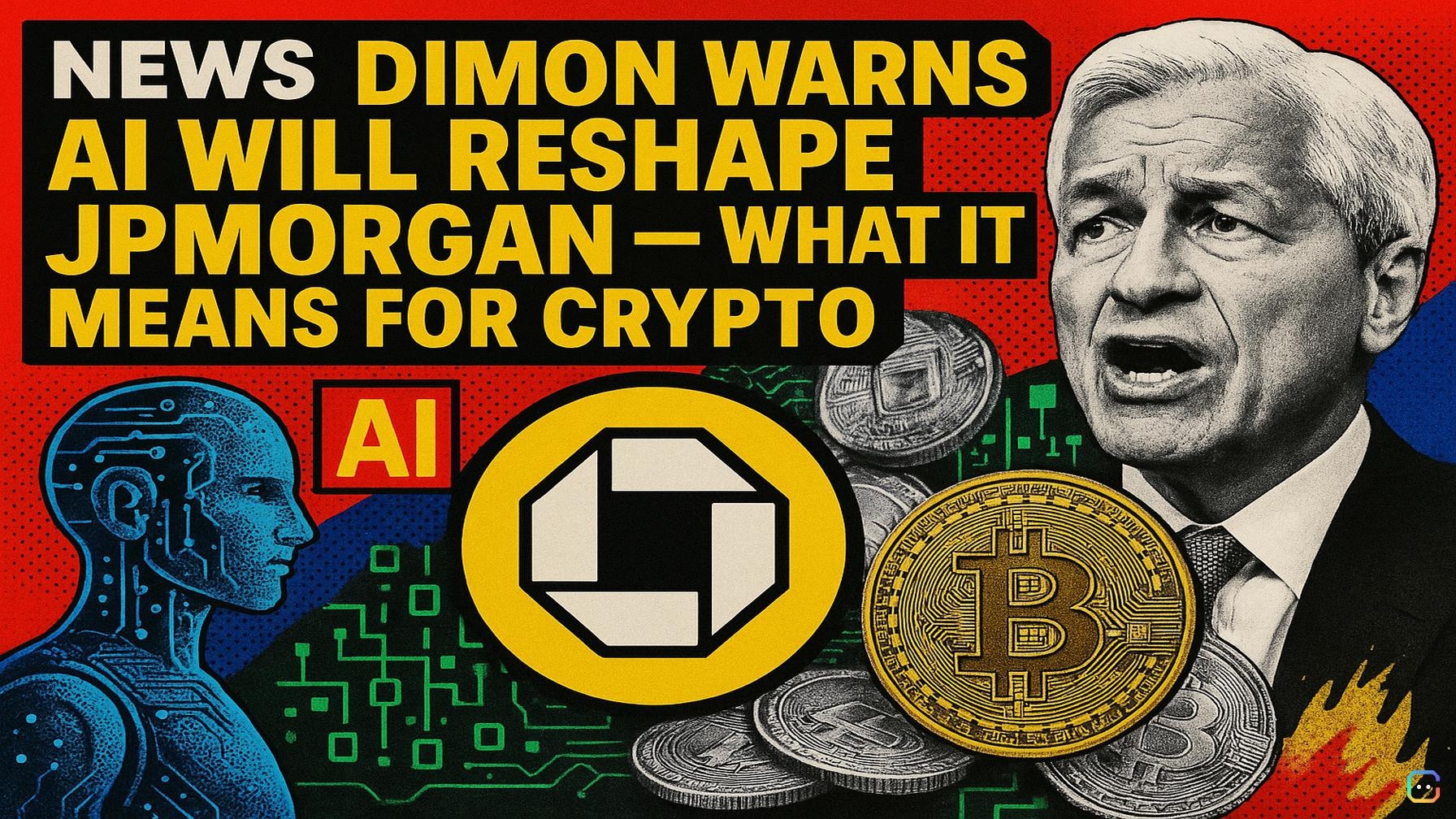
JPMorgan Chase CEO Jamie Dimon told shareholders that artificial intelligence isn’t just another tech trend — it’s a rapid, broad-based shift that will touch nearly every part of the bank’s business. In his annual letter, Dimon described AI as “real” and “transformational,” warning that its pace of adoption will likely far outstrip earlier revolutions like electricity or the internet and accelerate over the next few years.
How AI will reshape JPMorgan
- “AI will affect virtually every function, application, and process in the company,” Dimon wrote, saying the technology will transform customer-facing services, internal systems, productivity and more. Over the long run he expects “a huge positive impact on productivity.”
- He also touted AI’s broader societal upside: “I do not think it is an exaggeration to say that AI will cure some cancers, create new composites, and reduce accidental deaths, among other positive outcomes.”
- At the same time, Dimon flagged real risks — deepfakes, misinformation, and cybersecurity threats — and urged a balanced response: prepare rigorously, assess honestly when things go wrong, and fix problems without stifling innovation. “The worst mistakes we can make are predictable: overreact at the first serious incident and regulate out important innovation, or underreact and fail to learn from what went wrong,” he wrote.
Bigger AI budgets and strategic commitment
- JPMorgan has been ramping technology investment as part of this push. The bank expects to spend roughly $19.8 billion on technology in 2026 — a figure Business Insider reported includes AI, data infrastructure, and cloud computing and represents a sharp increase from 2025 levels.
- Dimon has also previously said the firm spends about $2 billion annually on AI initiatives.
- He emphasized the bank will continue deploying AI to stay competitive against fintechs and other tech-driven financial firms: “We will not put our heads in the sand. We will deploy AI, as we deploy all technology, to do a better job for our customers (and employees).”
Labor impact and wider industry debate
- Dimon acknowledged the labor disruption AI may cause: “AI will definitely eliminate some jobs, while it enhances others. Our firm will have definitive plans on how we can support and redeploy our affected workforce.”
- He added that AI will create roles — in cybersecurity, AI engineering and other areas — even as some jobs disappear, and noted there is a “huge workforce shortage for many well‑paying white‑ and blue‑collar jobs.”
- The concern about job losses has been echoed across the AI sector. Anthropic CEO Dario Amodei warned that advances could eliminate large swaths of entry‑level professional work, and OpenAI recently urged governments to plan for potential economic disruption from advanced AI, including new approaches to taxation, worker protections and social support.
Why crypto readers should care
- Faster, large‑scale AI adoption at major banks matters for crypto markets and infrastructure:
- Trading and market-making: AI-driven analytics and execution could increase efficiency and liquidity in crypto trading but also raise competitive pressure on algorithmic trading desks and crypto-native market makers.
- Compliance and AML/KYC: Banks using advanced AI for fraud detection, transaction monitoring and sanctions screening could tighten on‑ramps and compliance expectations for crypto firms.
- Custody and risk modeling: Improved risk models and automated custody controls may push institutional adoption — but also raise the bar for crypto custodians and DeFi protocols to prove resilience.
- Fraud and security: AI creates new tools for defense (smarter anomaly detection, automated auditing of smart contracts) and new threats (deepfake social engineering, AI‑assisted exploits) that the crypto ecosystem must address.
- Competition with fintechs and DeFi: Big banks’ AI investments signal incumbents will aggressively adopt automation and data-driven products — a reminder that crypto projects must demonstrate unique value (decentralization, composability) to compete.
- The interplay between AI and decentralized finance could also produce new hybrid services (AI-enabled portfolio management, on‑chain oracle intelligence, automated smart contract audits), but it will require careful regulation and security design.
Bottom line
Dimon’s message is straightforward: JPMorgan sees AI as a sweeping, fast-moving force and is committing capital and strategy to deploy it across the firm — while warning that firms, regulators and governments must prepare for associated risks and workforce shifts. For the crypto sector, the bank’s pivot underscores both opportunities for collaboration and competition, and a need to adapt as legacy financial institutions bring powerful AI to bear on trading, compliance and product innovation.
Read more AI-generated news on: undefined/news