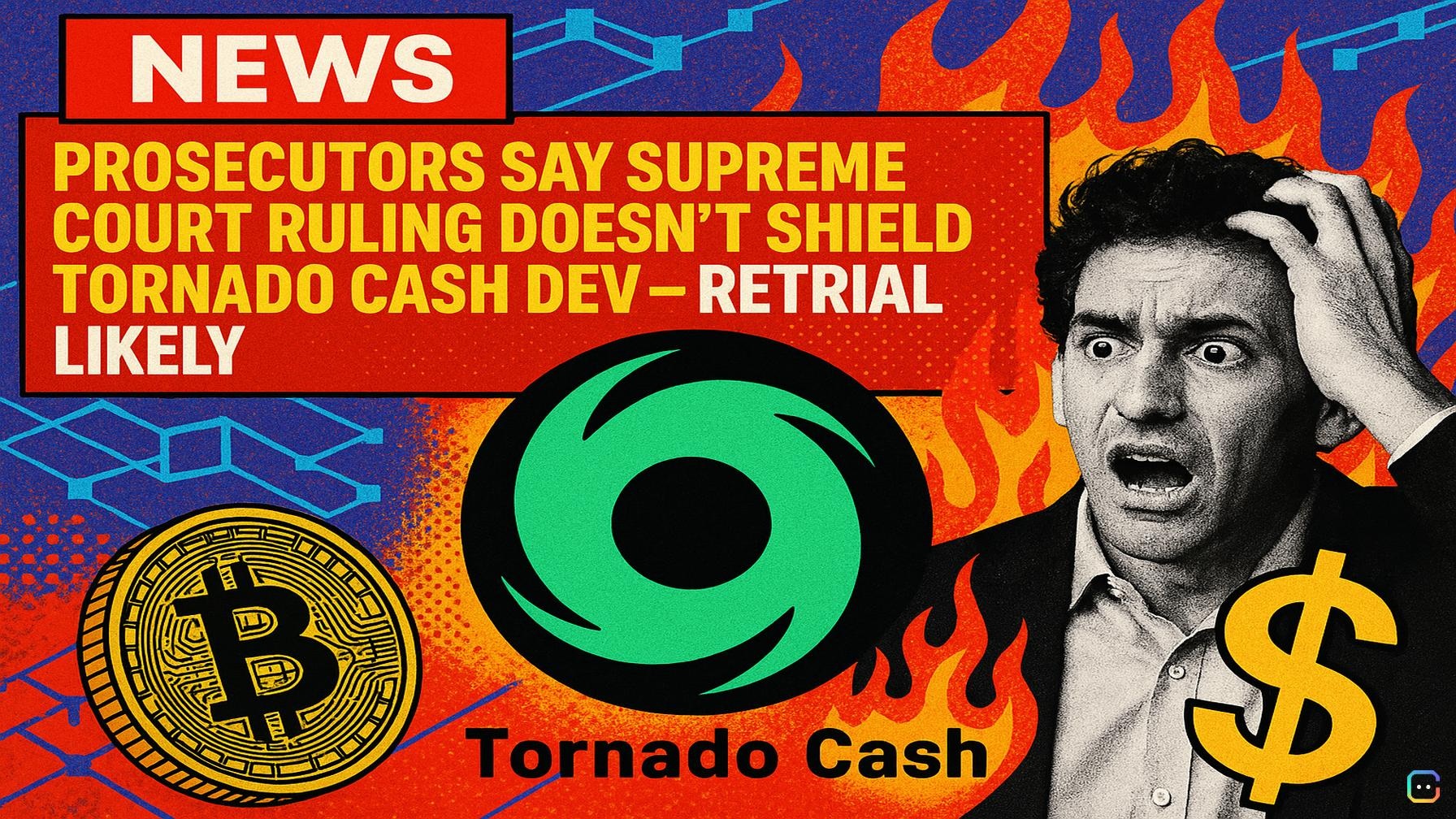
Federal prosecutors told a judge on Tuesday to reject a novel defense tactic from Roman Storm, the Ethereum developer behind Tornado Cash, signaling the criminal case could be headed back to trial.
What happened
- In a three-page letter to U.S. District Judge Katherine Polk Failla, prosecutors for the Southern District of New York argued that a recent U.S. Supreme Court decision in a music‑copyright case (involving ISP Cox) has no bearing on Storm’s prosecution. Storm’s lawyers had urged the judge to apply the high‑court ruling to their client’s case as a basis for dismissal.
- The Cox decision, issued March 25, held that an internet service provider could not be held liable simply because it was aware some customers used its platform to infringe copyrights. Storm’s team argued the logic should shield a software developer from criminal liability for users’ misconduct, and pointed out the federal government had backed Cox’s position in that civil case.
Case background
- Storm was arrested in 2023 over his role in Tornado Cash, a coin‑mixing tool that obfuscates on‑chain transaction links to provide privacy for Ethereum users. Prosecutors say he knew bad actors used the tool to launder funds.
- Last summer, a Manhattan jury convicted Storm of operating an illegal money transmitter but deadlocked on two other counts—money laundering and sanctions evasion. Storm appealed, and the DOJ recently moved to retry him on conspiracy to commit money laundering and conspiracy to commit sanctions evasion.
Why prosecutors say Cox doesn’t help Storm
- The DOJ argued Cox is not comparable: the ISP actively discouraged infringement, enforced policies that stopped most identified misconduct, and the service had many lawful uses—factors central to the Supreme Court’s analysis.
- By contrast, prosecutors said, Storm was allegedly aware of specific illicit uses of Tornado Cash and failed to stop them, and there is no evidence the privacy service had “substantial or commercially significant” lawful uses. The letter also emphasized that a civil copyright ruling is not controlling in a criminal prosecution.
Wider implications
- The clash highlights tensions in U.S. policy toward crypto privacy tools. The Trump administration has publicly promoted a pro‑crypto agenda and at times suggested it would refrain from prosecuting developers of privacy software—yet federal prosecutors have pursued several developers, drawing alarm from privacy advocates.
- If the judge rejects Storm’s Cox‑based argument, the case will likely proceed toward a second trial; if she finds the precedent persuasive, it could undercut the government’s theory of developer liability for user conduct.
Next step
- Judge Failla will decide whether to credit Storm’s argument or allow the DOJ to move ahead with retrial efforts. The outcome could shape how courts treat developer responsibility for decentralized or automated crypto tools.
Read more AI-generated news on: undefined/news