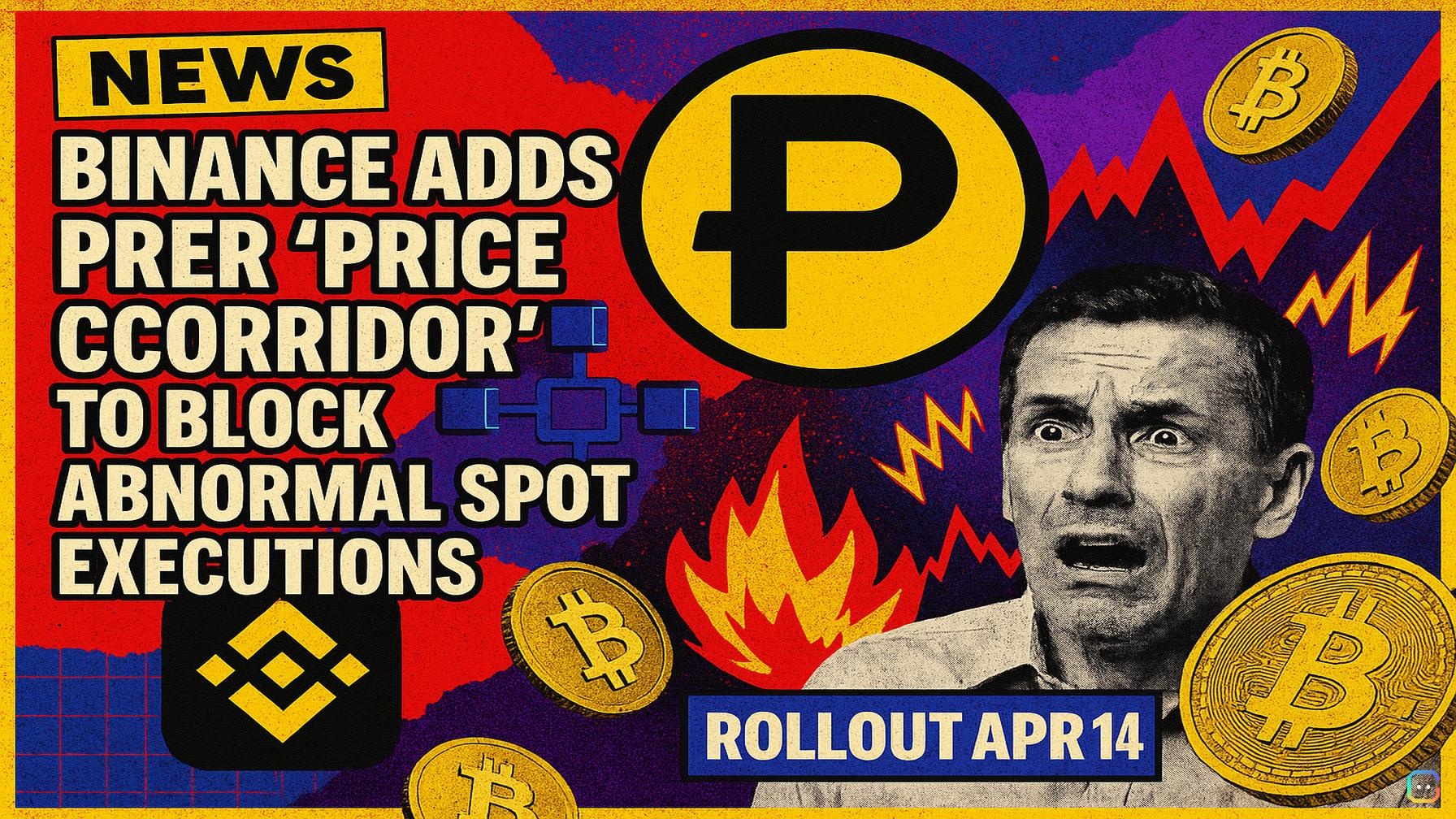
Binance is rolling out a new safety feature designed to prevent trades from executing at “abnormal prices” during episodes of extreme volatility.
What’s changing
- Starting April 14, 2026, Binance will implement the Spot Price Range Execution Rule (PRER) across its spot markets, with a phased rollout across trading pairs.
- PRER enforces a dynamic “fair‑value corridor” around a reference price calculated from recent trades. As the reference price moves, the corridor moves with it, creating a live band that defines where Binance considers trading to be normal.
How it works
- Taker orders that would sweep past the corridor are stopped at the band’s edge: the portion of the order inside the range fills, and any out‑of‑range remainder simply expires.
- In calm markets, most liquidity sits inside the corridor, so PRER should be effectively invisible to routine trading. It only acts as an execution filter when the market becomes dislocated.
- Binance says PRER does not change order types or fee tiers—only execution behavior in stressed conditions.
Why Binance is doing this
- The exchange frames PRER as a circuit breaker to reduce the risk of orders executing at prices detached from fair value during flash crashes and other extreme events.
- That comes after the October 10, 2025 flash crash and liquidation cascade that erased tens of billions from leveraged positions. The shock—widely linked to a surprise macro announcement—saw more than $19 billion of leverage liquidated in hours; Bitcoin fell from roughly $122,000 to near $105,000 and many altcoins plunged far harder. Binance pointed to the broader macro shock at the time, later issuing roughly $283 million in compensation.
Market impact and trade-offs
- Aggressive taker strategies and execution algorithms may see more partially filled or expired orders during fast moves and will need to adapt execution logic.
- Liquidity providers may change quoting behavior: extremes are less likely to print, which could tighten spreads on some pairs but reduce tail‑risk trading opportunities on others.
- In a crash, “last‑resort” liquidity that once cleared the book may vanish faster if out‑of‑range orders simply expire—yet retail stop orders should be less likely to trigger at absurd wick prices, potentially reducing slippage in extreme events.
What it means for users
- For most day‑to‑day trading, PRER should be unobtrusive. During market stress, it acts as an additional safeguard against executions that deviate sharply from recent trade activity.
- The rule is another step toward institutional‑style market plumbing on Binance, which could make spot order books more attractive to risk‑averse capital while forcing high‑frequency and execution strategies to adapt.
Rollout begins April 14, 2026, with pairs added gradually as the system comes online.
Read more AI-generated news on: undefined/news