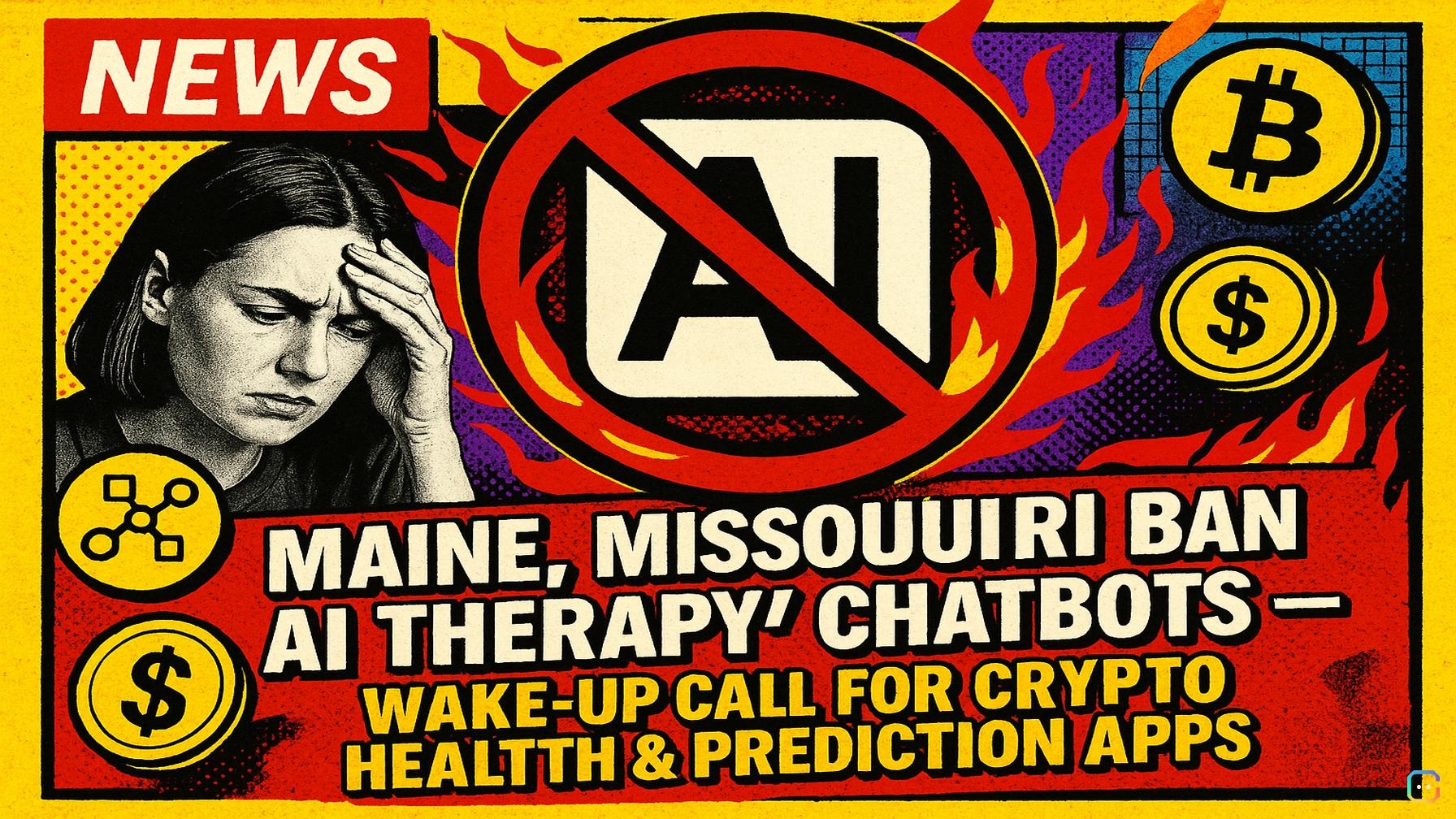
State lawmakers are racing ahead of Washington to curb AI-driven therapy tools, with Maine and Missouri this week taking concrete steps to restrict clinical uses of chatbots in mental health care.
What happened
- Maine’s LD 2082 was sent to the governor on April 10. The bill would ban the clinical use of AI in mental-health therapy while still permitting AI for administrative tasks.
- Missouri advanced HB 2372 as part of an omnibus health-care package. Its language is broader—covering therapy services, psychotherapy, and mental-health diagnoses—and it imposes a $10,000 penalty for first violations, enforceable by the state attorney general, according to the Transparency Coalition.
Why it matters
Lawmakers are drawing a firm line between administrative applications of AI (scheduling, recordkeeping, triage support) and clinical judgment that should remain with licensed providers. The moves respond to a fast-growing market of commercial therapy chatbots—some sold directly to consumers and even used in clinical or near-clinical settings—raising alarms about unregulated systems reaching vulnerable patients.
A wider regulatory wave
The therapy-chatbot bans are part of broader state and federal activity on AI. Since January 2026 more than 10 anti-prediction-market bills have been introduced in Congress, and dozens of AI-focused measures have appeared in state legislatures aimed at different high-risk applications. At the same time, federal agencies are rapidly adopting AI internally and litigating where AI authority begins and ends—leaving states to pass targeted restrictions in areas they see as urgent.
Why crypto readers should watch
This patchwork of state rules matters for crypto projects that intersect with AI—particularly decentralized mental-health apps, blockchain-based health-data platforms, or prediction markets that incorporate AI-driven signals. As states carve out prohibitions for specific AI uses, developers and investors will need to navigate a shifting compliance landscape that could affect product design, deployment, and cross-state operability.
Bottom line
Maine and Missouri’s actions illustrate a broader trend: states are already moving faster than federal regulators to limit certain AI applications in sensitive domains. That momentum is likely to ripple across healthcare and adjacent tech sectors—including parts of the crypto ecosystem that combine AI and human services.
Read more AI-generated news on: undefined/news