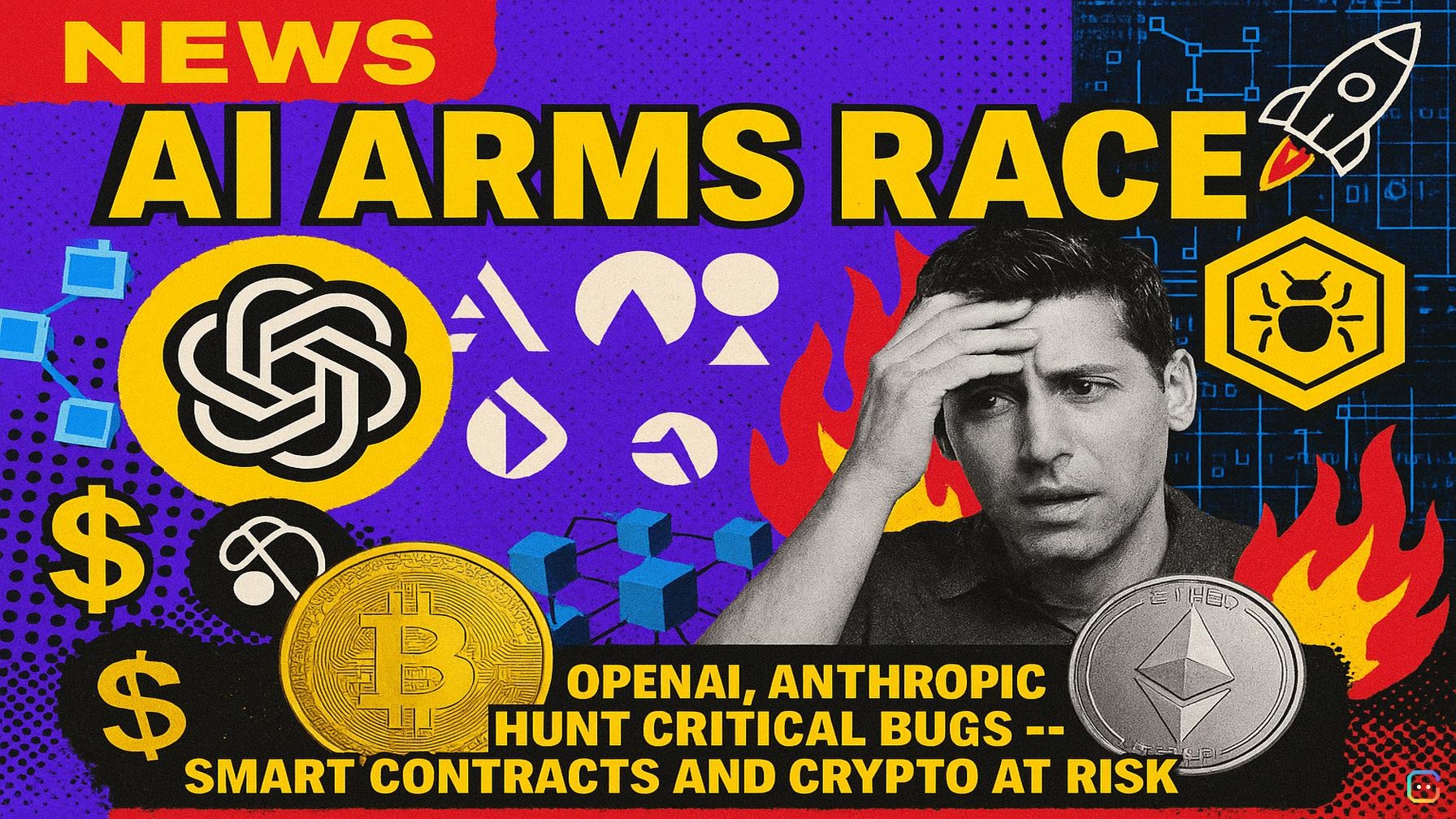
Headline: AI Arms Race in Cybersecurity — OpenAI Readies Limited Release as Anthropic Runs “Project Glasswing” to Hunt Critical Bugs
OpenAI and Anthropic have turned cybersecurity into a formal battleground. OpenAI is finalizing an advanced AI security product targeted for an initial limited-partner release, while Anthropic is operating a tightly controlled internal initiative — Project Glasswing — to find and neutralize critical software vulnerabilities before malicious actors do.
Why this matters for crypto and finance
AI has evolved from a defensive analytic tool into a system that can autonomously discover—and potentially exploit—vulnerabilities. That capability directly affects governments, enterprises, and the millions of software systems that underpin global financial and crypto infrastructure. For blockchain projects and smart-contract developers, the risk is especially acute: automated tools can both harden contracts and, if misused, scale up attacks rapidly.
What each lab is doing
- OpenAI: According to Tech Startups, OpenAI is close to shipping an advanced cybersecurity product and plans a limited partner release to start. Details remain limited, but the move signals a push into security-specific tooling with potentially offensive and defensive use cases.
- Anthropic: Internally, Anthropic’s Project Glasswing is focused on proactively hunting severe vulnerabilities. The company previously restricted access to its Claude Mythos Preview after early tests reportedly uncovered thousands of critical issues across widely used systems — including a 27-year-old OpenBSD bug and a 16-year-old remote-execution flaw in FreeBSD.
Scope and scale of the threat
Anthropic warns that progress in AI makes such capabilities likely to spread beyond responsibly governed actors. Industry figures cited by Anthropic point to a 72% year-over-year rise in AI-powered cyberattacks, with 87% of global organizations reporting exposure to AI-enabled incidents in 2025. Project Glasswing is pitched as a way to stay ahead of that accelerating curve.
Crypto-specific findings
A joint study by Anthropic and MATS Fellows highlighted the dual-use danger for blockchain ecosystems: models including Claude Sonnet and GPT-5 were able to generate simulated exploits against Ethereum smart contracts totalling $4.6 million in test scenarios and uncovered two novel zero-day vulnerabilities across nearly 3,000 recently deployed contracts. That demonstrates both the power of AI-driven auditing and the speed at which attackers could weaponize the same tools.
The regulatory and policy dilemma
The core problem is dual use: the same AI that helps defenders locate and patch bugs can show attackers how to exploit them. Both OpenAI and Anthropic are restricting initial access, but whether such “limited rollouts” are sufficient to prevent proliferation remains an open question for regulators, security teams, and the crypto community.
What to watch
- How quickly OpenAI’s product becomes available and under what access controls.
- Any public disclosures or findings from Project Glasswing that affect widely used crypto libraries and smart contracts.
- Regulatory responses around dual-use AI security tools and whether stricter guardrails will be imposed for tools that can autonomously generate exploits.
As AI tooling increasingly intersects with cybersecurity and decentralized finance, projects and custodians should prioritize continuous audits, robust bug-bounty programs, and rapid patching workflows—because the same advances that can protect your infrastructure can also, in the wrong hands, break it.
Read more AI-generated news on: undefined/news