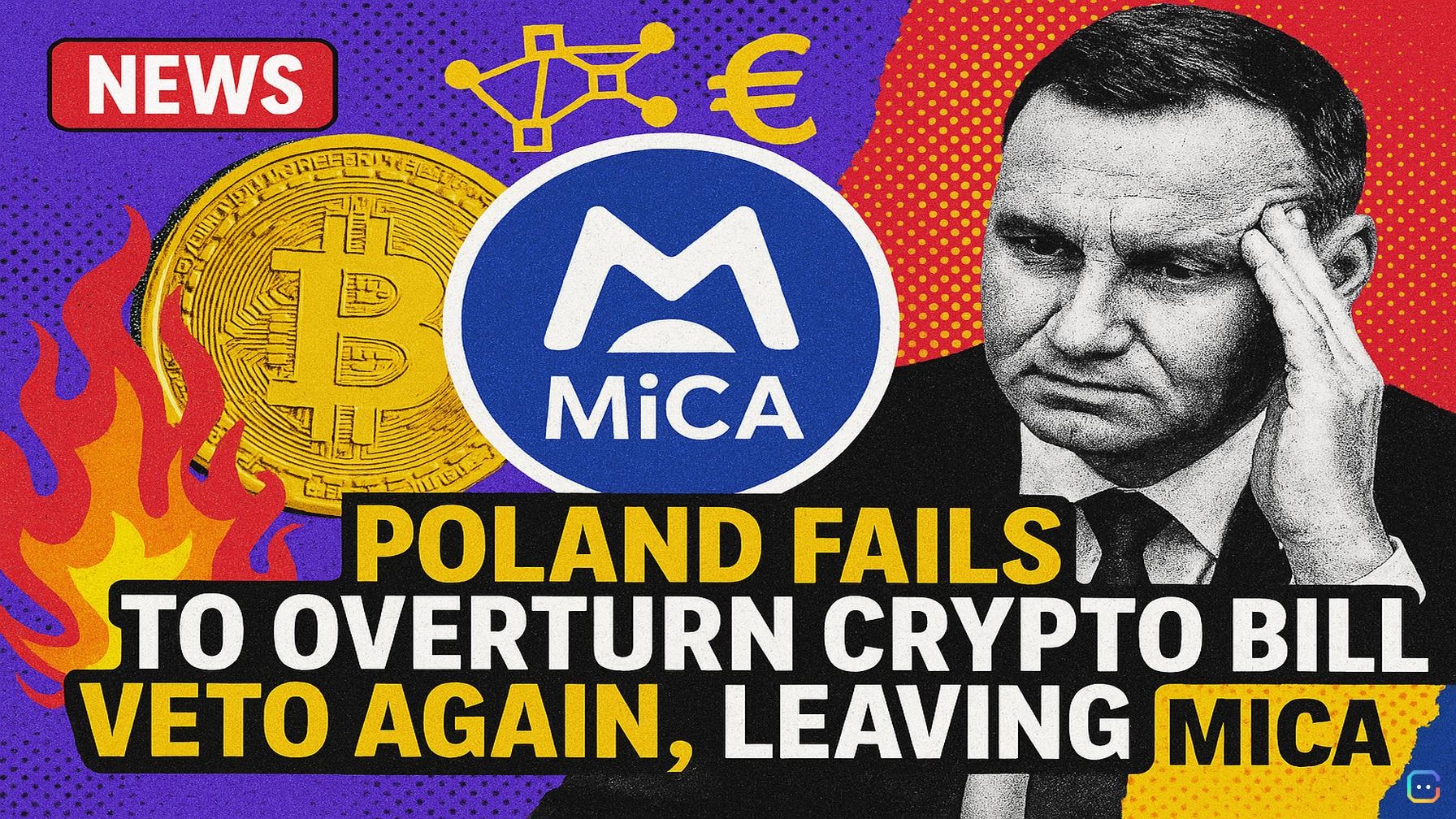
Headline: Poland’s bid to override crypto bill veto fails again, deepening political standoff
Poland’s Sejm once again failed to overturn the president’s veto of the Crypto Asset Market Act, leaving the country’s crypto rulebook in limbo and intensifying a political clash between lawmakers and the head of state.
What happened
- Lawmakers tried on Friday to override President Karol Narcowski’s second veto of the Crypto Asset Market Act but fell short of the constitutionally required three-fifths majority. The vote did not reach the 263 votes needed to overturn the veto.
- This was the second time Narcowski rejected the bill. He initially vetoed the measure in December 2025 and blocked it again after the Sejm passed it in February. Narcowski has said the proposed law would “threaten the freedom of Poles, their property, and the stability of the state,” arguing it was overly broad and burdensome—particularly for small businesses.
Background
- The bill was intended to align Poland’s crypto regime with the EU’s Markets in Crypto‑Assets (MiCA) framework, updating local rules for exchanges, issuers and service providers. Supporters in Prime Minister Donald Tusk’s government argued new legislation was needed to protect investors and bring regulatory clarity; opponents — including the president — warned it risked overregulation and legal uncertainty.
Political fallout and accusations
- Finance Minister Andrzej Domański sharply criticized the president’s veto, saying the absence of updated regulation has created an “environment of fraudsters” that undermines investor and entrepreneur protection and harms the integrity of Poland’s digital asset market.
- The debate has also taken on broader political and security dimensions. Prime Minister Tusk accused Poland’s largest exchange, Zondacrypto, of having ties to organized crime and Russian intelligence-linked resources, and noted the company lobbied against the bill. Tusk cited security reports alleging the exchange’s CEO, Przemysław Kral, donated to opposition candidates.
- Interior Minister Marcin Kierwiński tied the legislative push to concerns about these alleged links, saying the government would “keep addressing this until…awareness of the threats and these strange interests connecting certain right‑wing politicians with this [cryptocurrency] exchange finally reaches the president.”
What this means for crypto in Poland
- With the override attempt failing, Poland remains without an updated national framework aligned with MiCA, creating continued uncertainty for exchanges, issuers and investors operating in the market.
- The political confrontation suggests future attempts to pass the bill could continue, but timing and outcome are unclear. Meanwhile, accusations against a major exchange add a security and reputational layer to the debate, with potential implications for market participants and policymakers alike.
Next steps
- The Tusk-led government has signaled it will press on. Whether it can build the broader parliamentary majority required—or resolve the president’s objections—remains to be seen. The standoff will be a key development to watch for exchanges, investors and regulators monitoring Europe’s evolving crypto landscape.
Read more AI-generated news on: undefined/news