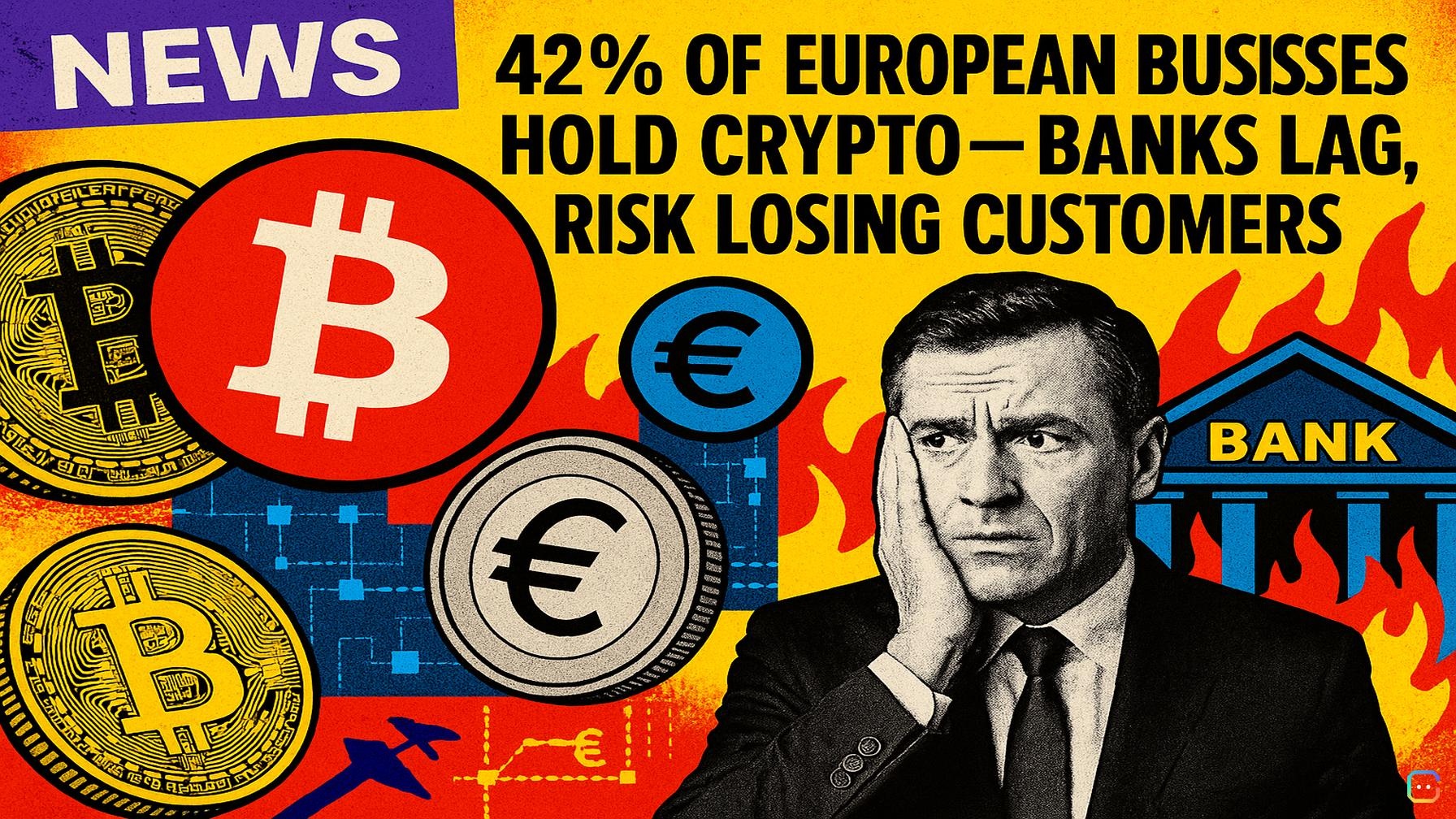
European businesses are moving into crypto faster than their banks can follow.
New data from Boerse Stuttgart Digital shows 42% of business investors already hold digital currency, and another 18% of institutional players plan to buy soon. Yet legacy banks — aware of the shift but slow to act — are largely absent from the market: only about 19% of financial institutions currently offer customers a way to buy or custody crypto.
What the numbers reveal
- 42% of business investors already hold crypto; +18% plan to enter the market soon.
- Just 19% of banks provide client-facing crypto services.
- 80% of financial institutions acknowledge the growing importance of digital assets — but most lack the staff and budget to act.
- 27% of investors want to manage crypto through their existing bank; only 14% prefer a dedicated crypto exchange.
- 35% of European investors would consider switching banks if another offered better crypto investment options.
Why banks are falling behind
Banks aren’t ignoring crypto — they’re constrained. Many institutions haven’t allocated the funds needed to hire specialists or upgrade systems. Operational hurdles dominate: training staff, building secure custody solutions (including safe management of private keys), and integrating new products into legacy infrastructure all take time and money. Even the arrival of legal clarity from the Markets in Crypto-Assets (MiCA) regulation hasn’t sped adoption much; banks are stuck in planning and execution rather than regulatory fear.
Customer costs of inaction
The result is growing friction and eroding loyalty. Customers increasingly prefer a one-stop relationship with their bank; 27% want crypto services from their current provider instead of switching apps. When banks don’t deliver, those customers — from retail traders to high-net-worth individuals and corporates — migrate to crypto-native platforms. That means fee revenue that could belong to banks is going to exchanges, and once customers form habits on external platforms, winning them back is costly and difficult.
Where things stand
Some banks are beginning to experiment, recognizing the revenue potential. But for most, the window to capture mainstream demand is closing: investors are already active on external exchanges and aren’t waiting. Unless legacy banks accelerate hiring, tech upgrades, and operational readiness, they risk ceding a permanent slice of the market to crypto-native competitors.
Source: Boerse Stuttgart Digital
Featured image: Pexels. Chart: TradingView.
Read more AI-generated news on: undefined/news