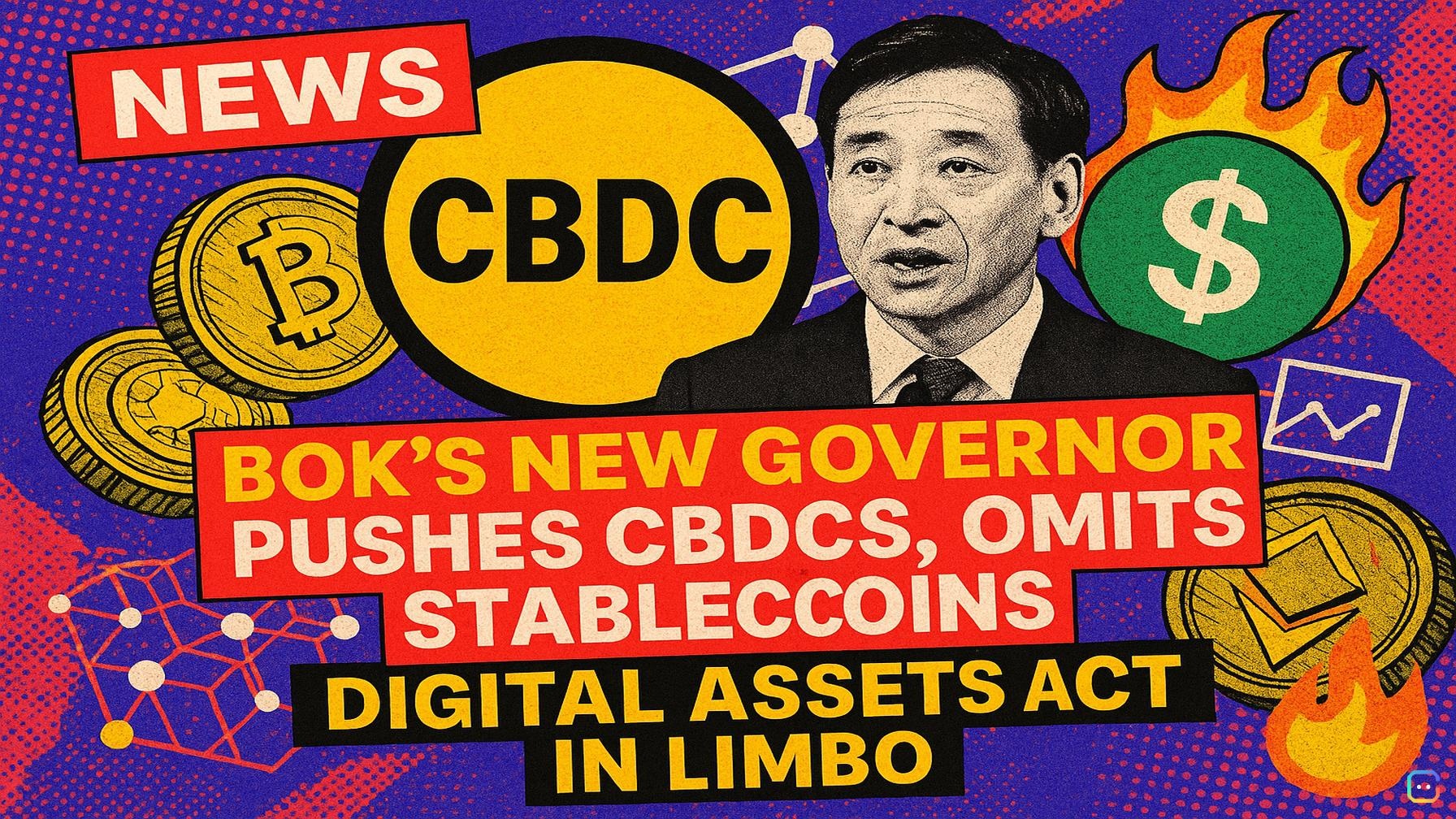
The Bank of Korea’s new governor set a pro-digital tone in his first policy address — but notably left stablecoins off the agenda.
In an inauguration speech on Tuesday, Shin Hyun-song, a former head of the Monetary and Economic Department at the Bank for International Settlements (BIS), mapped out the central bank’s priorities for the next four years. Shin framed the BOK’s mission as protecting trust in money and the stability of payments and settlements while preparing the monetary system for rapid digital innovation.
Key policy highlights
- CBDCs and bank-issued deposit tokens front and center: Shin singled out central bank digital currencies and deposit tokens as tools to help internationalize the won and strengthen Korea’s currency infrastructure. He said Phase 2 of Project Han River will focus on increasing the usability of the BOK’s CBDC and deposit tokens, and that international cooperation — including projects like Agora — will support the won’s standing in digital payments.
- Financial stability guardrails: Shin emphasized that efforts to modernize the currency regime must not undermine financial stability. The BOK will design safeguards and a “macroprudential framework suited to the changed environment,” he said.
What he didn’t say — and why it matters
Despite calling for digital innovation, Shin did not mention stablecoins in his inaugural remarks. That silence is notable given South Korea’s ongoing debate over won-pegged tokens and last year’s delay of the Digital Assets Act (the Second Phase of the Virtual Asset User Protection Act). Shin has previously suggested stablecoins could coexist with CBDCs and deposit tokens; on April 14 he said he expected them to be “supplementary and competitive” to one another.
The stalled Digital Assets Act and the tug-of-war over stablecoins
Stablecoins have become a flashpoint in Korea’s policy process. Lawmakers delayed the Digital Assets Act after regulators — namely the BOK and the Financial Services Commission (FSC) — failed to agree on how banks should participate in stablecoin issuance. The central bank pushed for a model in which a consortium of banks would own at least 51% of any approved stablecoin issuer. The FSC countered that such a majority bank stake could discourage tech firms from participating and curb market innovation, even as both sides agree that financial institutions must be involved.
Pressure on lawmakers
Last week, lawmakers renewed calls to fast-track stablecoin legislation. Representative Kim Sang-hoon urged the National Assembly to pass the Digital Asset Act, while the chairman of the Special Committee on Digital Assets — a key ruling party lawmaker from the People Power Party — warned that debates over governance structures are overshadowing urgent issues of market stability and innovation. “At a time when institutionalization is urgently needed, governance issues such as restrictions on major shareholders’ stakes have suddenly taken center stage…while the essential discussions on market stability and support for innovation…are being pushed to the sidelines,” he said.
Bottom line
Shin’s inaugural address signals the BOK will aggressively pursue CBDCs, deposit tokens and international partnerships to raise the won’s profile — but his omission of stablecoins from the speech leaves open questions about their regulatory priority under his tenure. With the Digital Assets Act still pending and lawmakers pressing for clarity, the future role of won-pegged stablecoins in Korea’s digital-economy architecture remains unresolved.
Read more AI-generated news on: undefined/news