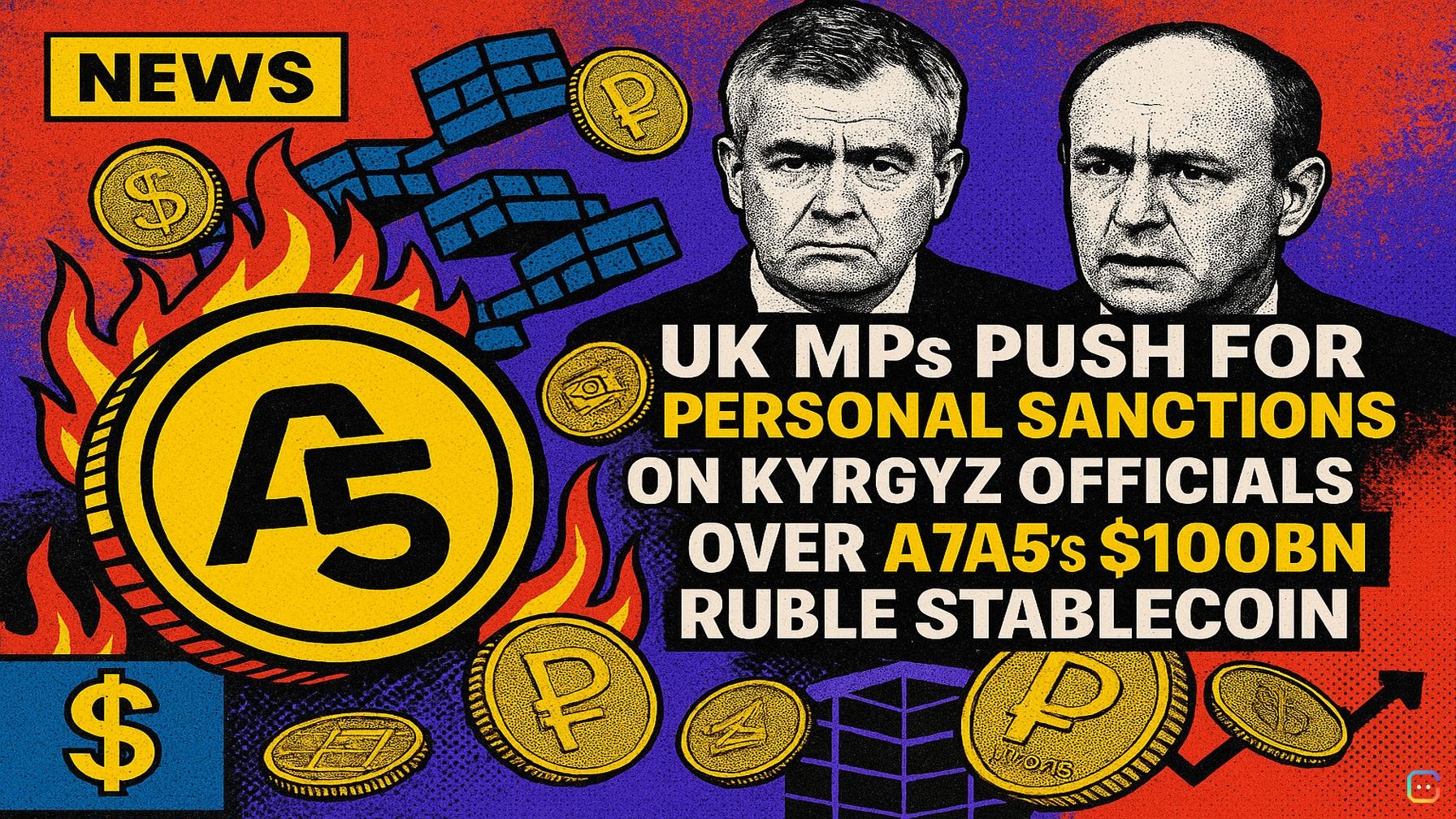
More than 20 UK MPs and peers have urged the foreign secretary to impose personal sanctions on senior Kyrgyz officials they say are enabling large-scale Russian sanctions evasion via a ruble‑pegged stablecoin known as A7A5.
In a letter to ministers, the group singled out three officials for targeted measures: Melis Turgunbaev, head of Kyrgyzstan’s central bank; Maksat Asanaliev, the country’s general prosecutor; and Marat Pirnazarov, who runs the financial regulator. The lawmakers argue that these officials and Kyrgyz institutions have helped create the on‑ramps and legal cover that allow A7A5 to keep operating despite Western sanctions.
What is A7A5 and why does it matter?
A7A5 is a stablecoin pegged to the Russian ruble. Researchers say it has processed more than $100 billion in transactions and can be traded into other cryptocurrencies — a route that ultimately gives holders access to dollars and the wider global financial system. That ability to move value across crypto rails is what critics say makes A7A5 a powerful channel for sanctions evasion.
The stablecoin is linked to Promsvyazbank, a Russian bank already sanctioned by the UK, and A7A5 itself has been designated by the UK, EU and US. That has effectively blocked legal access to the token in those jurisdictions. Yet exchanges operating in Kyrgyzstan — including Grinex and Meer, which were sanctioned by the UK last year — have reportedly enabled cash purchases of A7A5, creating a persistent loophole.
Scale and tactics
According to the MPs’ letter, A7A5 moves more than $1 billion a day and has become “the main platform for sanctioned Russian individuals and entities to evade sanctions.” The company behind A7A5 has also been reported to be recruiting in Africa as it seeks to expand its network and user base outside Western jurisdictions.
Alexander Browder, the author of a recent report on stablecoins and sanctions evasion, described A7A5 as “specifically designed for aiding sanctions evasion technology,” arguing it’s controlled by Russian‑backed entities that shield users from prosecution or asset seizure. “It’s time to tighten the noose on Russia’s sanctions evasion,” he said. “Kyrgyzstan shouldn’t be allowed to enable Russia to evade the UK sanctions by harbouring Russian stablecoin operations, which ultimately lead to thousands of Ukrainian deaths,” Browder added.
Calls for action
Signatories to the letter include Liberal Democrat MP Chris Coghlan, who said the UK government must “shut down these loopholes now” and use all tools to cut funding streams to Russia’s war effort. Former Conservative leader Iain Duncan Smith also backed targeted sanctions to hold enablers of the Kremlin’s operations to account.
The MPs argue that last year’s sanctions on Kyrgyz entities such as Grinex and Meer were a start but insufficient, because A7A5 continues to function thanks to cooperation from Kyrgyz financial institutions and regulators that initially registered the stablecoin.
Responses sought
The letter asks the foreign secretary to consider personal measures against Turgunbaev, Asanaliev and Pirnazarov to disrupt the network enabling A7A5. The article’s sources say the three officials, the A7A5 operators and the Foreign, Commonwealth & Development Office were approached for comment.
Read more AI-generated news on: undefined/news