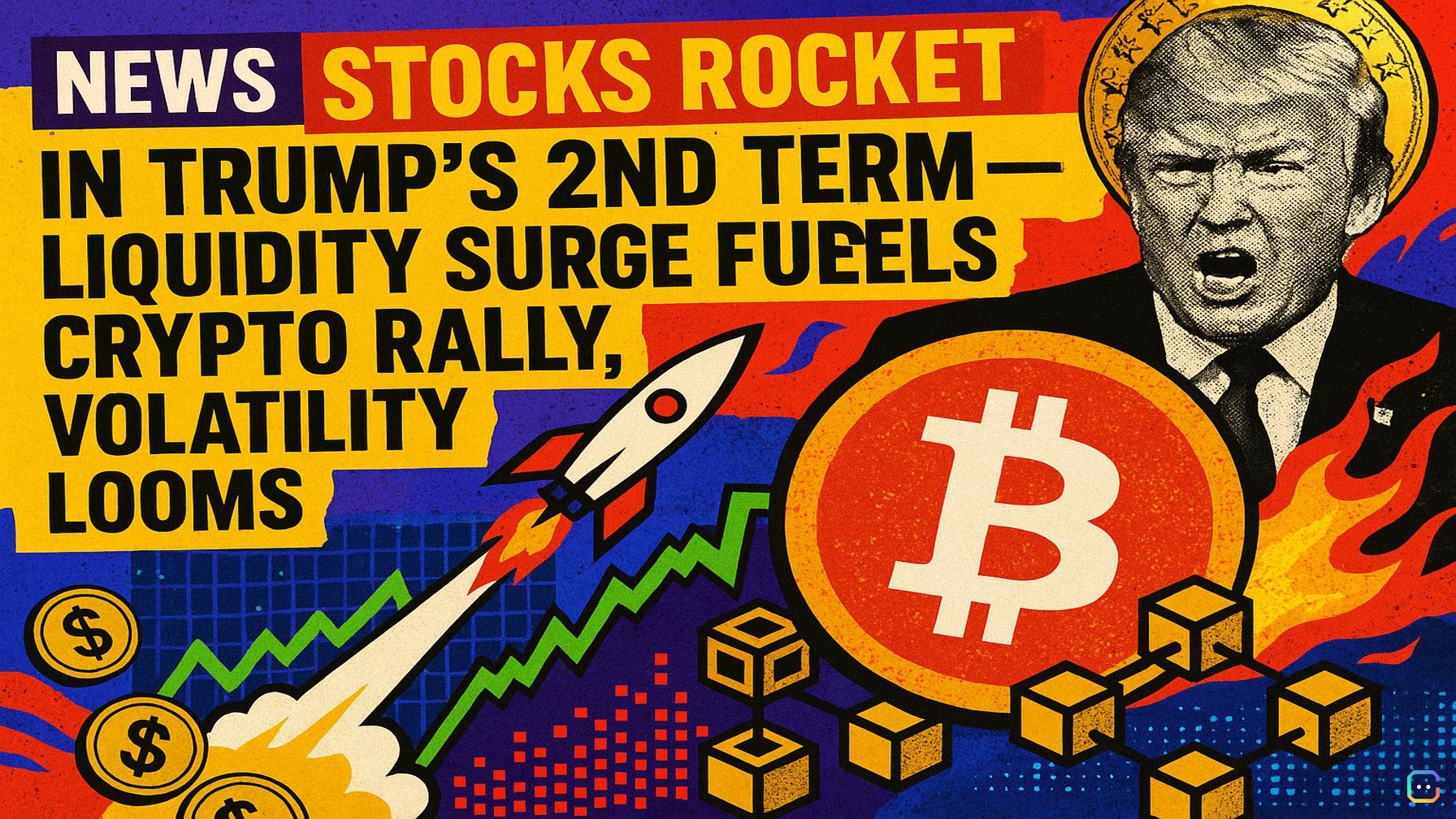
CNN recently summed up the mood on Wall Street under President Trump’s second term: “up like a rocket.” The broadcaster’s analysis highlights a market that—despite bouts of volatility—has trended sharply higher in the early months of his second presidency.
Quick market snapshot
- Through his first 317 trading days in office (April 2026), the S&P 500 has advanced about 17.8%, roughly matching the gains seen during Trump’s first term over the same span.
- As of April 23, the index at one point had climbed as much as 19% since inauguration—outpacing the post-inauguration average gain of 15% recorded since 2001.
- Major benchmarks have repeatedly hit record highs in early 2026: the Nasdaq and S&P both made fresh peaks. Since their March 30 lows, the S&P has rallied more than 12% and the Nasdaq more than 18%. Since the U.S.-Iran conflict intensified, the S&P is up nearly 4% and the Nasdaq nearly 9%.
What’s been driving the move
- Geopolitics: Markets rallied in part on signs the U.S.-Iran war may be winding down. Paradoxically, that same conflict pushed Brent crude back above $100 per barrel and kept the Strait of Hormuz effectively closed—factors that added both inflationary pressure and volatility.
- Consumer resilience: U.S. consumer spending remains a key pillar. Spending rose 5.3% year-over-year through February while incomes climbed 3.7%. High-frequency indicators—Johnson Redbook weekly retail sales and Fiserv point-of-sale data—show strong spending growth (~6.9% YoY in recent reads). Economists still peg 2026 real GDP growth at about 2.2%, comparable to 2025.
- Policy tailwinds: The One Big Beautiful Bill Act’s tax cuts for corporations and individuals, higher federal tax refunds (about $40 billion more through April 17 vs. 2025), and earlier Federal Reserve rate cuts helped support borrowing, spending and investor risk appetite.
Headwinds and broader impact
- Rising oil has translated into higher gas prices and added inflationary pressure for consumers. Last year’s tariff rhetoric also contributed to cost pressures on goods.
- Despite a market rally, President Trump’s approval ratings remain low—an indication that a buoyant equity market hasn’t translated into broader political popularity.
Why crypto traders should care
- The same forces that drive equities—liquidity from rate cuts, consumer spending, and risk-on sentiment—can spill over into crypto markets, lifting prices and volumes. Conversely, elevated geopolitical risk and surging energy costs increase the potential for sharp volatility across all risk assets. Crypto market participants should watch macro flows, Fed policy signals and geopolitical developments closely.
Bottom line: markets are climbing, supported by consumer demand, tax relief and looser policy, but higher energy costs, trade frictions and geopolitical shocks keep the outlook choppy—creating both opportunities and risks for investors across equities and crypto.
Read more AI-generated news on: undefined/news