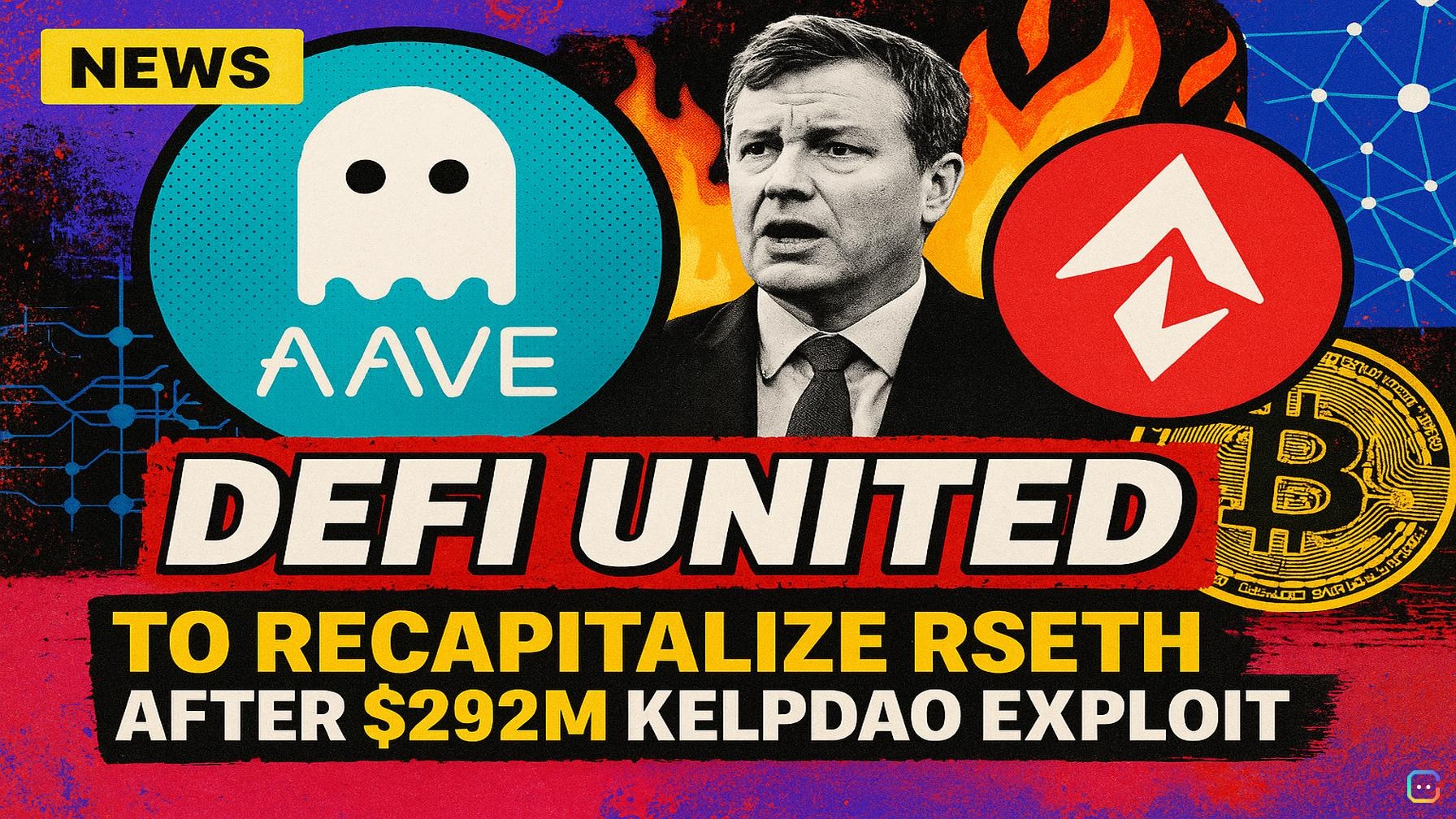
Aave leads “DeFi United” rescue as sector reels from $292M KelpDAO exploit
Aave and a coalition of major DeFi players have launched a coordinated recovery effort to stabilize lending markets after a $292 million exploit exposed a massive shortfall in collateral backing. The initiative—dubbed “DeFi United” and organized by Aave service providers—targets rsETH, the yield-bearing ether derivative at the center of the attack.
What’s happening
- Multiple ecosystem participants have already pledged support. Lido Labs Foundation (an ecosystem contributor to Lido Finance) proposed committing up to 2,500 stETH—roughly $5.7 million at current prices—into a relief vehicle to shore up rsETH backing and reduce liquidation pressure.
- EtherFi has proposed contributing 5,000 ETH to “protect users and prevent bad debt.”
- Aave founder Stani Kulechov personally offered 5,000 ETH, saying on X that “Aave is my life’s work and we’re working nonstop to find the best possible outcome for users.”
Aave said it will announce additional formalized commitments as they are finalized.
Why this matters
The coordinated effort is designed to recapitalize rsETH and head off forced liquidations that could cascade through DeFi lending markets. After the exploit, Aave experienced a run on deposits and saw total assets on the platform plunge by about $10 billion.
How the exploit unfolded
According to Aave’s incident report, the attacker exploited a vulnerability in KelpDAO’s integration with cross-chain messaging protocol LayerZero to mint 116,500 unbacked rsETH. Rather than sell immediately, the attacker deposited nearly 90,000 rsETH into Aave as collateral and borrowed about $190 million in ETH and other assets across Ethereum and Arbitrum—leaving Aave with severely impaired collateral and an estimated shortfall of more than 112,000 rsETH.
Early containment and complications
Prior to DeFi United, Arbitrum’s security council froze 30,766 ETH linked to the exploit (about $71 million at the time). But much of the stolen funds were subsequently bridged and swapped into bitcoin via Thorchain, complicating recovery and making on-chain clawbacks difficult.
Focus shifts from clawback to stabilization
Rather than relying primarily on asset recovery, the current push centers on a coordinated recapitalization of rsETH to normalize market conditions and limit losses across lending markets. DeFi United aims to restore confidence and prevent the exploit from triggering broader contagion across the space.
Aave and participating teams say additional support commitments will be revealed as they are finalized, as the community races to plug the hole and stabilize DeFi markets.
Read more AI-generated news on: undefined/news