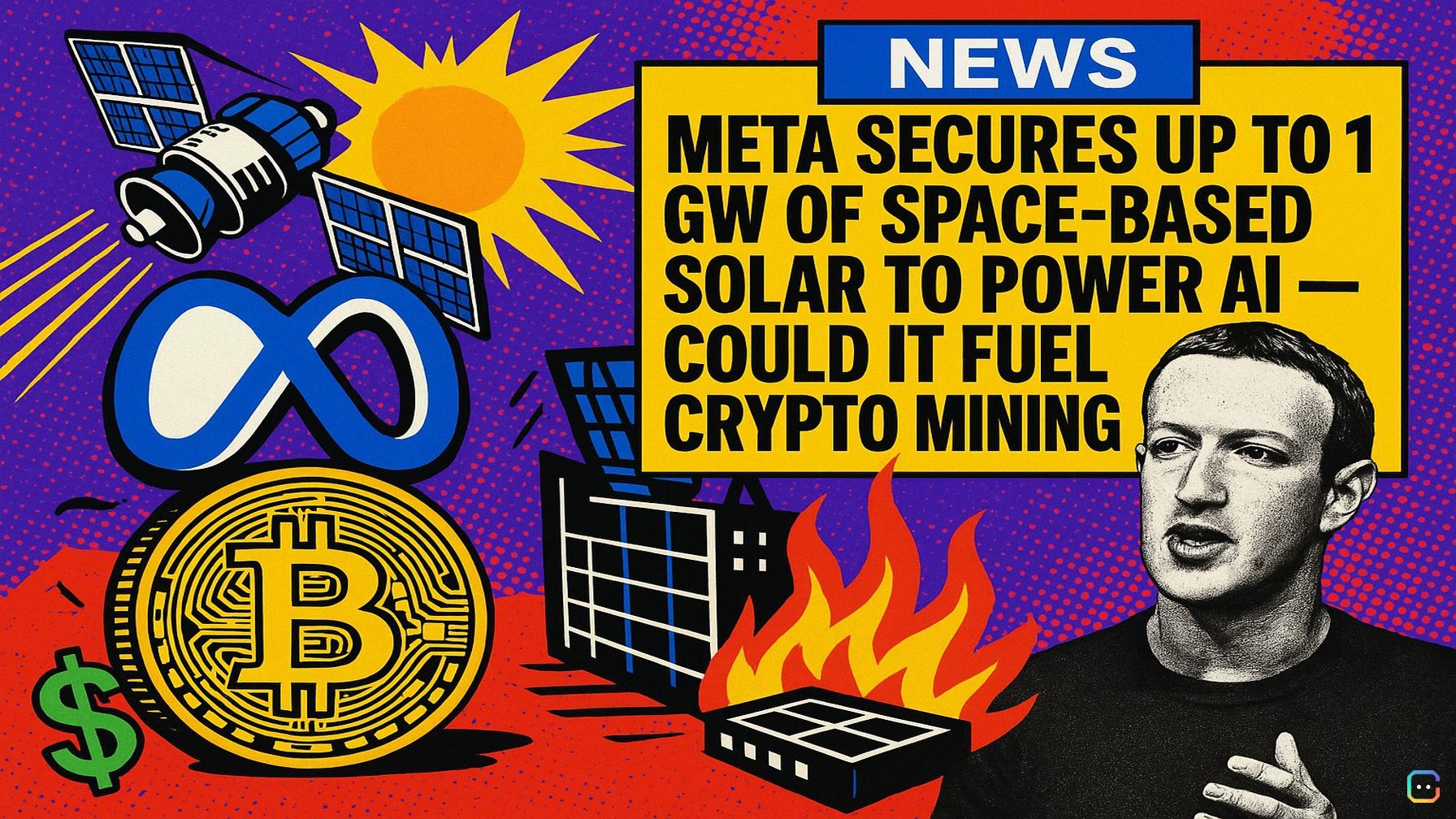
Meta is betting on sunlight from space to help power the AI boom on Earth.
The Facebook and Instagram parent announced it has signed an agreement with Virginia startup Overview Energy to secure up to 1 gigawatt of electricity from a planned space-based solar power system by the end of the decade. Rather than putting data centers in orbit, Meta’s move aims to generate power in geosynchronous orbit—where sunlight is essentially constant—and beam that energy down to ground facilities to feed data centers and the wider grid.
Why this matters: artificial intelligence workloads are driving a huge rise in electricity demand from hyperscale data centers, putting new stress on the U.S. grid. Space-based solar promises continuous, carbon-free power that can be directed where it’s needed in real time—a tantalizing option for companies chasing reliable, large-scale clean energy.
How the technology would work: Overview plans to collect uninterrupted sunlight in geosynchronous orbit and transmit it to Earth-based solar receiver sites. The startup demonstrated a core capability last year by beaming power from a moving airplane to a ground receiver. Meta’s deal gives it preferential access to up to 1 GW of future capacity once Overview hits agreed technology milestones.
Complementary storage play: Meta also announced a separate agreement with Noon Energy targeting more than 100 hours of energy storage. The companies will test an initial 25-megawatt, 2.5-gigawatt-hour pilot in 2028 and aim to scale toward a combined target of 1 GW generation and 100 GWh of storage.
Meta’s broader energy footprint: The company says it has backed more than 30 GW of new energy capacity across 28 states—across wind, solar, nuclear, and geothermal projects—positioning the space-based solar deal as an experimental but strategic addition to a diversified energy strategy.
Big caveats remain: space-based solar remains early-stage and unproven at commercial scale. Key questions include launch costs, long-term maintenance, and overall economics compared with terrestrial generation and storage. SpaceX’s recent pre-IPO filing cautioned that “orbital AI computing may not achieve commercial viability,” even as CEO Elon Musk has described space-based AI as a “no-brainer.”
Meta frames the partnership as a way to give Overview the project certainty it needs to develop this potentially game-changing technology. If the milestones are met, space-sourced solar could become another tool for meeting the surging, around-the-clock power demands of AI—and a development worth watching across tech and energy markets.
Read more AI-generated news on: undefined/news