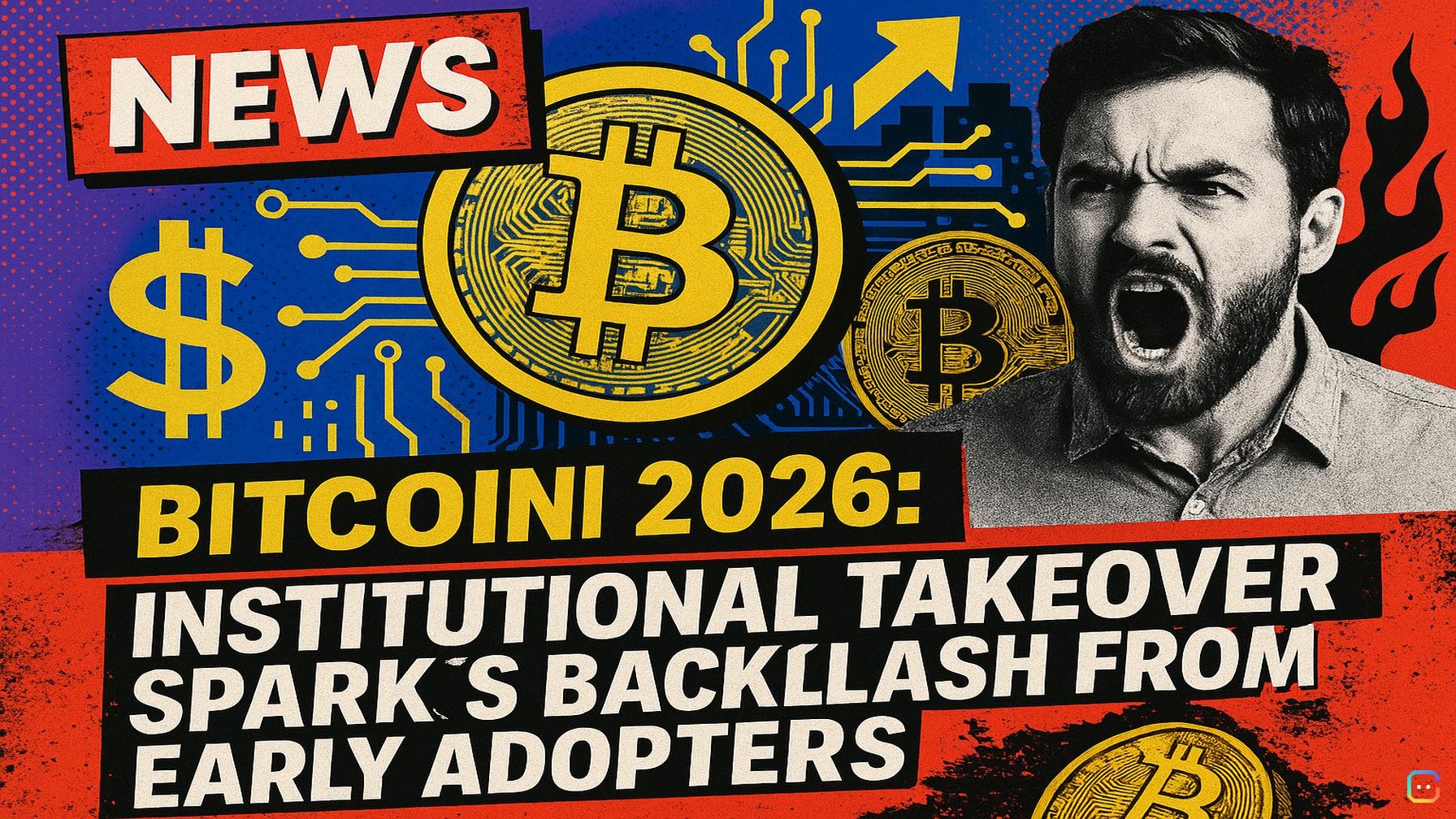
Bitcoin 2026 Conference Spotlights Deepening Rift Between Wall Street and Early Adopters
The Bitcoin 2026 Conference packed The Venetian Resort in Las Vegas from April 27–29, drawing more than 40,000 attendees and over 500 speakers across multiple stages. What should have been a celebration of Bitcoin’s growth instead highlighted a growing schism: a conference heavy on institutional presence and regulator engagement met vocal pushback from early adopters who say the event has drifted away from the cypherpunk roots that birthed Bitcoin.
Scale and institutional tilt
Organizers reported the event surpassed 30,000 registered attendees before doors opened and ultimately hosted 40,000 people over three days. The speaker roster read like a who’s who of institutions and regulators — a shift that many long-time Bitcoiners found jarring.
Major policy and regulatory announcements dominated the program:
- SEC Chair Paul Atkins used the stage to unveil “Project Crypto,” a Commission-wide initiative to update securities rules for digital assets and introduce a new token taxonomy that would classify most digital assets as non-securities.
- Acting Attorney General Todd Blanche and FBI Director Kash Patel appeared in a widely reported fireside chat, “Code is Free Speech: Ending the War on Bitcoin,” framing Bitcoin development as protected speech and suggesting a softer enforcement posture.
- The “Code and Country” policy forum explicitly engineered direct conversations between Bitcoin builders and U.S. policymakers — a framing some attendees read as Bitcoin asking for permission from the institutions it was designed to route around.
Pushback from the community
Some early adopters were blunt in their criticism. Simon Dixon, an early Bitcoin investor and inaugural speaker, warned on the eve of the conference: “Let’s face it, this Bitcoin conference is compromised. Bitcoin is open source code. It’s a big mistake not to understand the difference.” His critique — echoed by others on the floor — centered on the prominence of panels marketing custody products, ETFs, and corporate treasury strategies that, in their view, undermine individual sovereignty and the self-custody ethos central to the protocol.
Ownership shift underlies the debate
The dispute isn’t just cultural. Institutional products now hold a material share of the supply: Bitcoin ETFs collectively control more than one million coins, and more Bitcoin is held via ETFs, corporate treasuries, and custodial platforms than in self-custody wallets. That shift in custody models changes how power and control play out in practice, even if the protocol’s code remains unchanged.
Market flows underscored the institutional momentum. Crypto ETFs recorded $1.2 billion of inflows in the conference week, their fourth consecutive positive week. Bitcoin led the inflows with $933 million, and BlackRock’s IBIT accounted for $732.6 million of that.
Policy, tech and security headlines
Beyond rhetoric, the conference produced several substantive developments:
- Senator Cynthia Lummis said the CLARITY Act markup is scheduled for May.
- MARA Holdings announced the MARA Foundation, aimed at quantum resistance and network stewardship.
- Paul Atkins outlined a regulatory framework to separate digital securities from digital commodities.
- The event included a dedicated panel on quantum threats to Bitcoin, following the April 2026 release of BIP 361 — a three-phase proposal to migrate Bitcoin toward quantum-resistant outputs that could ultimately freeze coins that don’t migrate.
Price reaction and macro risk
Bitcoin briefly hit $79,000 on the conference’s opening day, a sign of the institutional demand narrative the event celebrated. But the rally proved fragile: news of uncertainty around an Iran ceasefire sent oil above $104 and reversed gains within hours, underscoring how macro events can quickly undo momentum.
Who’s steering the ship?
BTC Inc., the conference organizer, has not publicly answered critiques from Dixon and other early adopters. The program’s emphasis on regulators, custody solutions, and institutional products suggests the organizers see institutional legitimacy as the growth path forward — even as a vocal subset of the community fears the movement’s original principles are being sidelined.
Takeaway
Bitcoin’s ecosystem is at an inflection point: mainstream adoption and regulatory engagement are unlocking massive capital, products, and political access — but they are also intensifying a debate about custody, sovereignty, and the cultural roots of the project. The Bitcoin 2026 Conference made that tension impossible to ignore.
Read more AI-generated news on: undefined/news