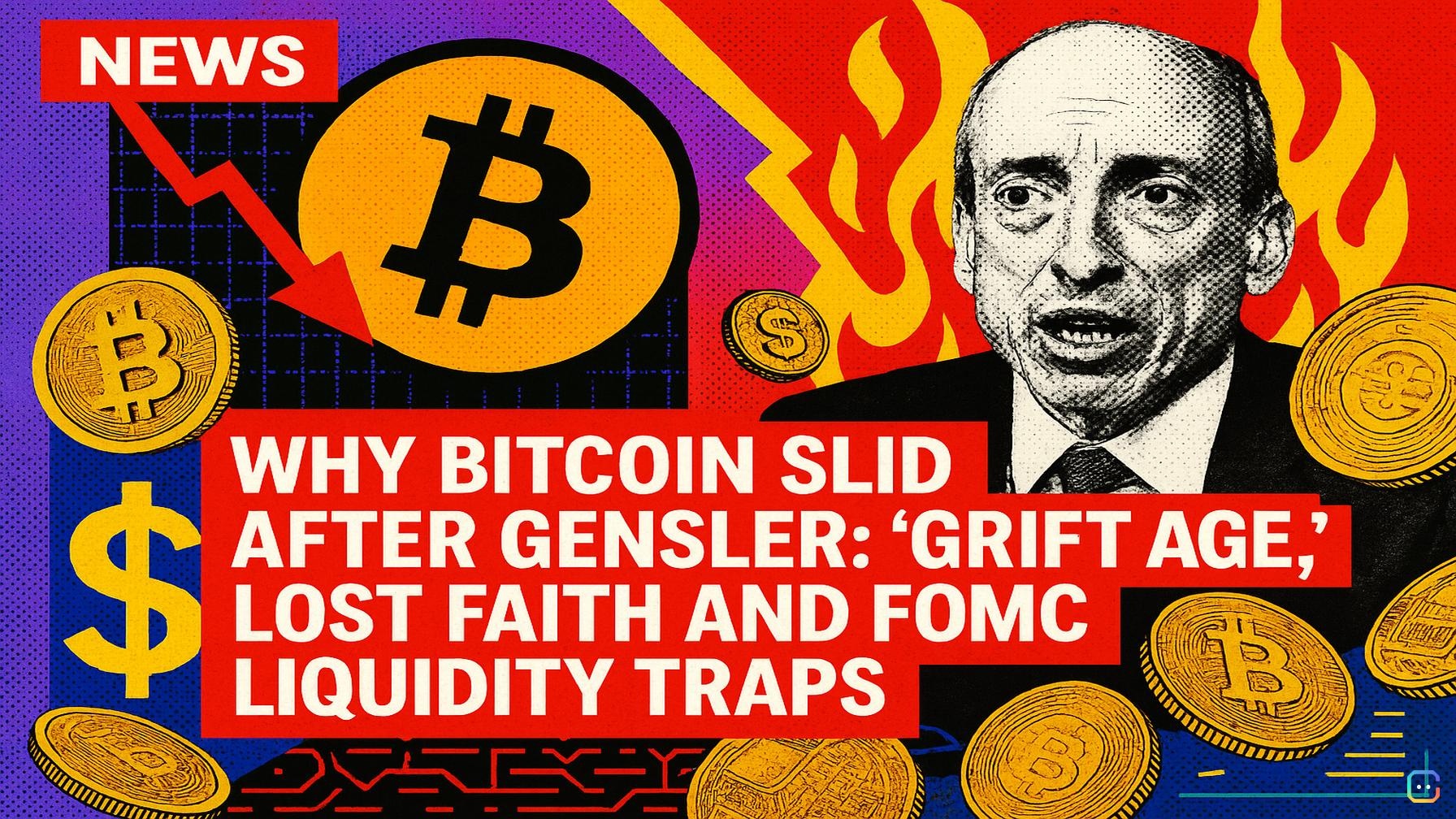
When Gary Gensler left the U.S. Securities and Exchange Commission in January 2025, many in crypto expected his departure to clear a path for higher prices. Bitcoin was trading near $109,000 at the time. Instead, BTC has slid to roughly $75,000, a move that undercuts the simple narrative that regulation — or Gensler alone — was the primary brake on the market.
Analysts point to deeper problems than any single regulator
Crypto analyst Benjamin Cowen has argued that the post-Gensler decline reflects a broader loss of faith in the industry rather than regulatory relief alone. In his view, Gensler’s exit coincided with a “grift age” in which influencers and some politicians aggressively launched memecoins and pulled liquidity with little apparent consequence. That dynamic, Cowen says, misallocated capital into speculative projects instead of strengthening core infrastructure, eroding trust among investors.
What looked like a celebration of regulatory change, then, turned into a turning point: BTC climbed only marginally after Gensler left before slipping into a bear phase. Cowen warns of a similar cycle with central banking: jubilant reaction to the removal of Jerome Powell as Fed chair could eventually be reinterpreted as a loss of institutional credibility, with market participants later concluding they were better off under the outgoing leadership.
Liquidity and Fed meetings: a recurring technical pattern
On the technical front, traders are flagging a recurring setup around Federal Open Market Committee (FOMC) decisions that has tended to be bearish for Bitcoin. Trader Max Trades noted that after each of the last seven FOMC meetings, BTC dropped sharply following the Fed’s decision.
The pattern is familiar: price rallies into the meeting, sweeps local highs while creating a pool of stop-loss liquidity below, and then reverses—marking a local top and triggering a sizable correction. That was the structure ahead of March’s meeting, which preceded a roughly 13% pullback that wiped out most of the preceding gains.
The current landscape looks similar. BTC is trading just beneath a major higher-timeframe resistance level, and the liquidity structure that favored downside last time appears to be in place again. If those technical dynamics repeat, traders say the next FOMC decision could again mark a local peak rather than a breakout.
What this means for markets
Taken together, the narrative is that Bitcoin’s price is being driven as much by sentiment, liquidity dynamics and market structure as by headline regulatory events or individual departures. Analysts and traders suggest watching investor confidence and how liquidity behaves around key macro events — especially FOMC meetings — for cues on where BTC might be headed next.
Read more AI-generated news on: undefined/news