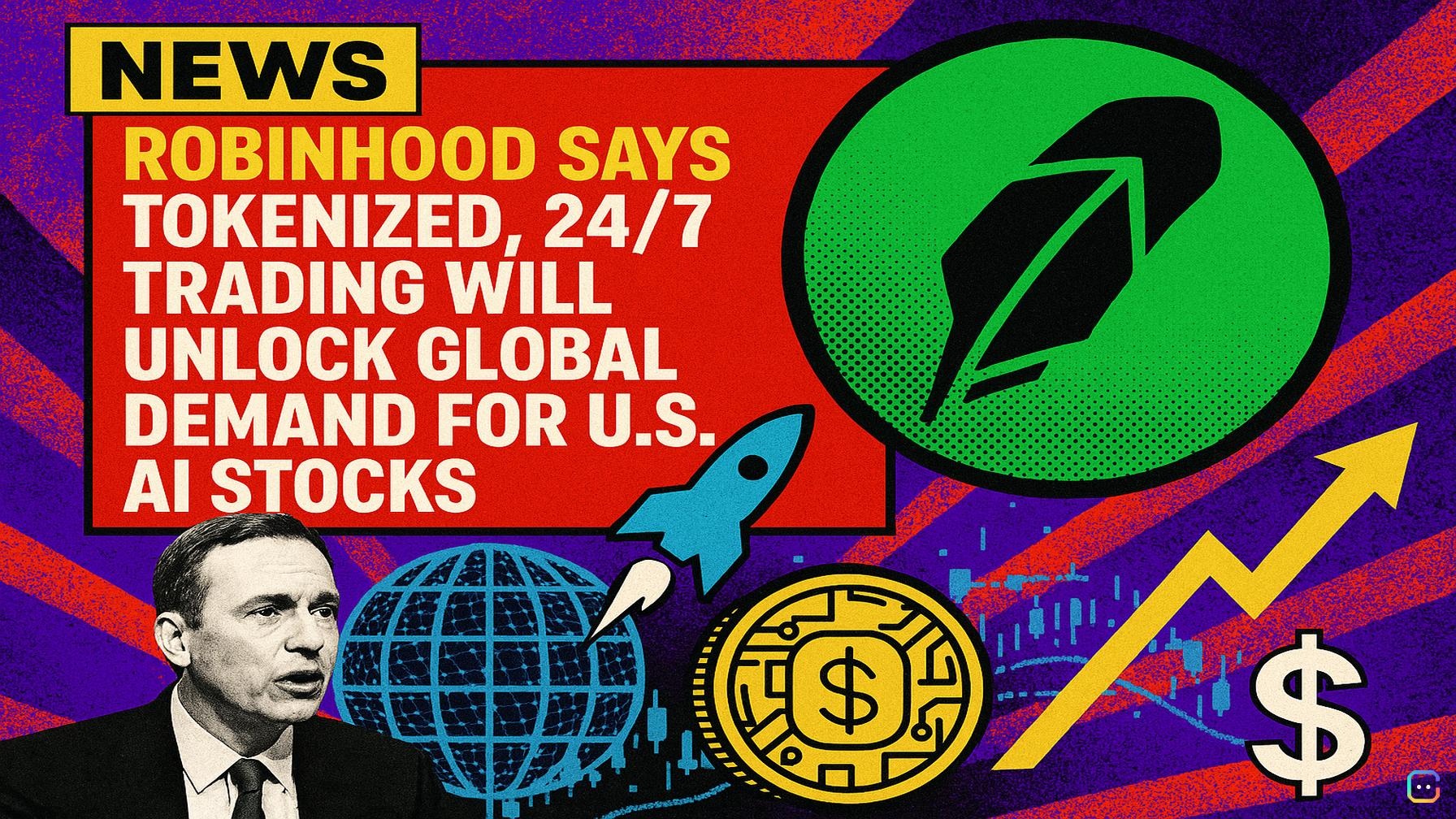
Demand for U.S. equities is heating up abroad, driven in large part by investor appetite for AI-related names — and crypto-native tools could make global access easier, Robinhood’s Johan Kerbrat told Consensus 2026 attendees.
Speaking in a Fireside chat in Miami moderated by Crypto in America host Eleanor Terrett, Kerbrat, Robinhood’s senior vice president and general manager for crypto, said interest from overseas buyers is pushing investors to look beyond home markets. “We are seeing a lot of demand for U.S. stocks from overseas investors, particularly tied to AI-related companies,” he said, noting that many regions still face limited access compared with the U.S.
That gap, Kerbrat argued, is opening up thanks to tokenization and 24/7 trading platforms. Tokenized assets, he suggested, could offer features that set them apart from traditional brokerage products — continuous trading, instant settlement, and new forms of collateralization and lending. “We think it is going to be 24/7. We think it is going to be instant settlement,” Kerbrat said.
He urged investors to transition from country-specific strategies to global allocation now that around-the-clock trading infrastructure is becoming available. “It is time for a lot of investors to really think about not just how to invest in one specific country, but also how to have a global portfolio,” he said.
Regulatory headwinds in the U.S. also came up. Kerbrat acknowledged that “regulation in the U.S. has been less than friendly in the past,” but added that Robinhood’s recent engagement with policymakers has improved, signaling a possible easing of frictions for crypto-linked products.
Robinhood has already moved into tokenized securities in Europe, offering tokenized stocks through a derivative model that tracks the underlying assets. Kerbrat said the company plans to extend tokenized offerings to additional classes, including private equity, with the goal of widening market access previously reserved for accredited investors. “I think it is really important to give them the choice to be able to invest in it before it goes public,” he noted.
But Kerbrat emphasized that adoption won’t come from simply copying existing brokerage features. He expects tokenized products to distinguish themselves by adding new functionality — continuous trading, lending and collateralization among them — rather than merely mirroring traditional services.
A wider crypto-market snapshot: Kraken, a U.S.-based exchange where users trade bitcoin, ether and other digital assets, trails heavyweight platforms like OKX, Bybit and Coinbase in spot trading volumes but remains a significant player in the derivatives market. Kraken has also expanded into services such as derivatives, staking and custody as it seeks to position itself beyond a basic retail app.
Bottom line: cross-border demand for U.S. equities — especially AI names — plus the rise of tokenized, always-on trading could reshape how global investors build portfolios, but broader adoption will hinge on product innovation and clearer regulatory frameworks.
Read more AI-generated news on: undefined/news