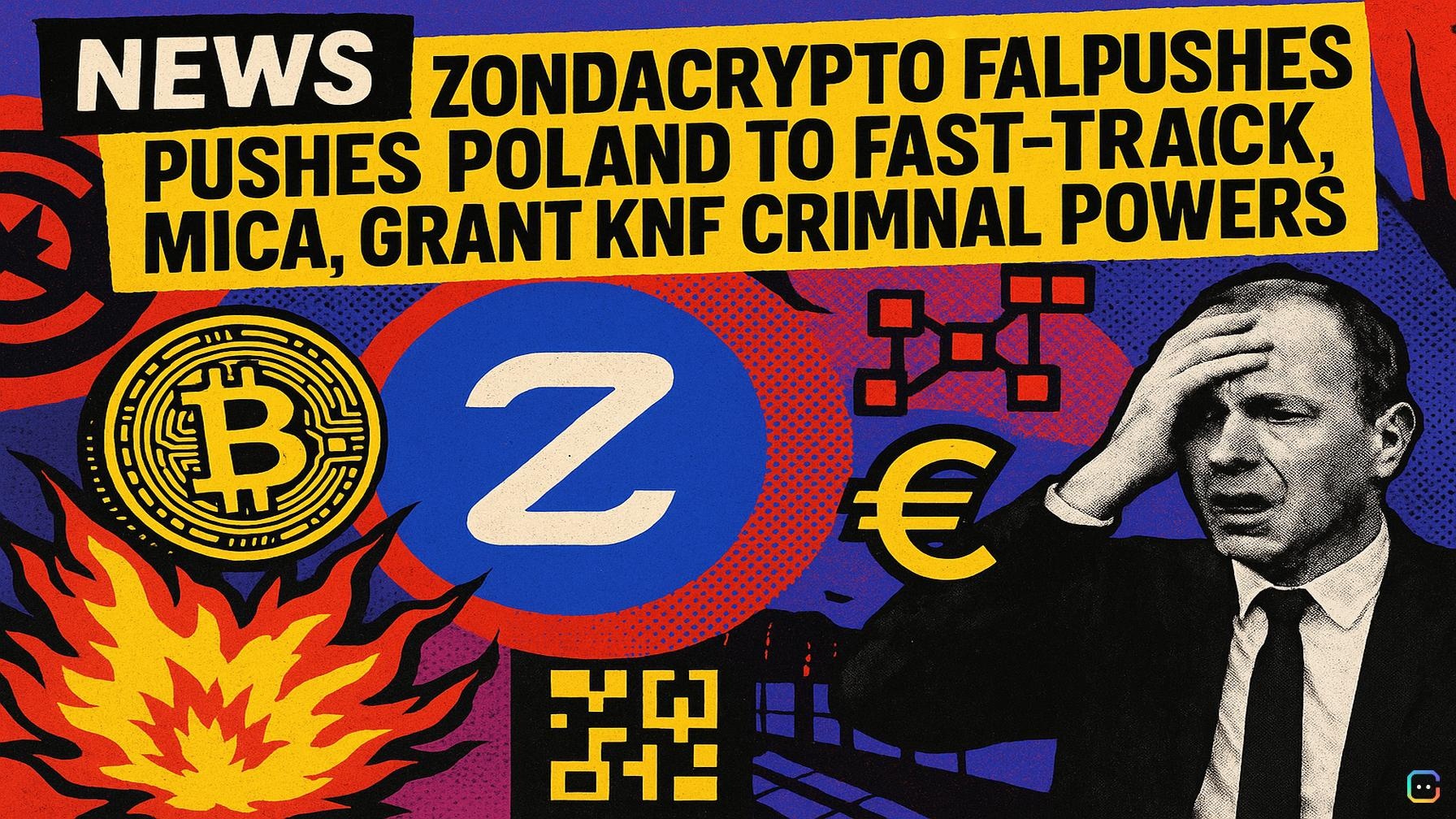
Poland’s lower house has pushed through a long‑delayed bill to transpose the EU’s Markets in Crypto‑Assets (MiCA) rules into national law — a move driven in large part by public outrage after the collapse of exchange Zondacrypto.
What changed
- The legislation hands Poland’s Financial Supervision Authority (KNF) explicit powers over crypto‑asset service providers, creates licensing and reporting duties, and establishes criminal liability for serious breaches related to token issuance and exchange operations.
- Lawmakers fast‑tracked the measure to meet an EU MiCA implementation deadline in July and in response to the Zondacrypto scandal, which has focused political attention on gaps in domestic crypto oversight.
The Zondacrypto fallout
- Prosecutors in Katowice opened a large fraud and money‑laundering probe into Zondacrypto after authorities and media reported losses exceeding 350 million zlotys (roughly $95–97 million) and thousands of users locked out as the platform halted withdrawals.
- The case has been assigned to the Central Cybercrime Bureau. Investigators are reviewing more than 1,500 complaints and probing whether funds of potentially illicit origin passed through the exchange.
- Political leaders have made stark allegations: Prime Minister Donald Tusk suggested “Russian funds” and foreign political influence “may be involved,” framing the affair as more than routine financial crime and edging it into national‑security territory.
Key people and outstanding questions
- Zondacrypto’s founder, Sylwester Suszek, has been missing since March 2022. Current CEO Przemysław Kral reportedly left Poland for Israel, fuelling public suspicion.
- Kral has said Suszek never handed over the keys to a wallet holding 4,500 BTC — then valued at about $336 million — and that the wallet address was last active in November 2025, a hole that helps explain the exchange’s missing funds.
Political tug‑of‑war
- President Karol Nawrocki had twice vetoed earlier MiCA‑transposition bills, warning that handing sweeping powers to the KNF and imposing high supervisory fees risked over‑regulation and could push innovation and exchanges offshore.
- Those vetoes left Polish platforms in limbo while other EU states moved ahead with MiCA licensing. The Zondacrypto scandal changed the political calculus: parliament opted for a tougher regulatory approach rather than another delay.
What’s next
- The bill returns to President Nawrocki’s desk. If he signs, Poland will establish a formal MiCA‑aligned licensing regime and enforcement toolkit for crypto firms — just as Zondacrypto becomes a live test of how those powers are used in practice.
- For users and local exchanges, the new rules promise clearer oversight and legal remedies but may also bring higher costs and stricter compliance requirements.
Why it matters
Poland’s vote is a reminder that high‑profile crypto collapses accelerate regulatory action. As EU member states implement MiCA, this case will be watched closely: it could set precedents for criminal enforcement, cross‑border investigations and how regulators respond to alleged fraud and suspected illicit finance in the crypto sector.
Read more AI-generated news on: undefined/news