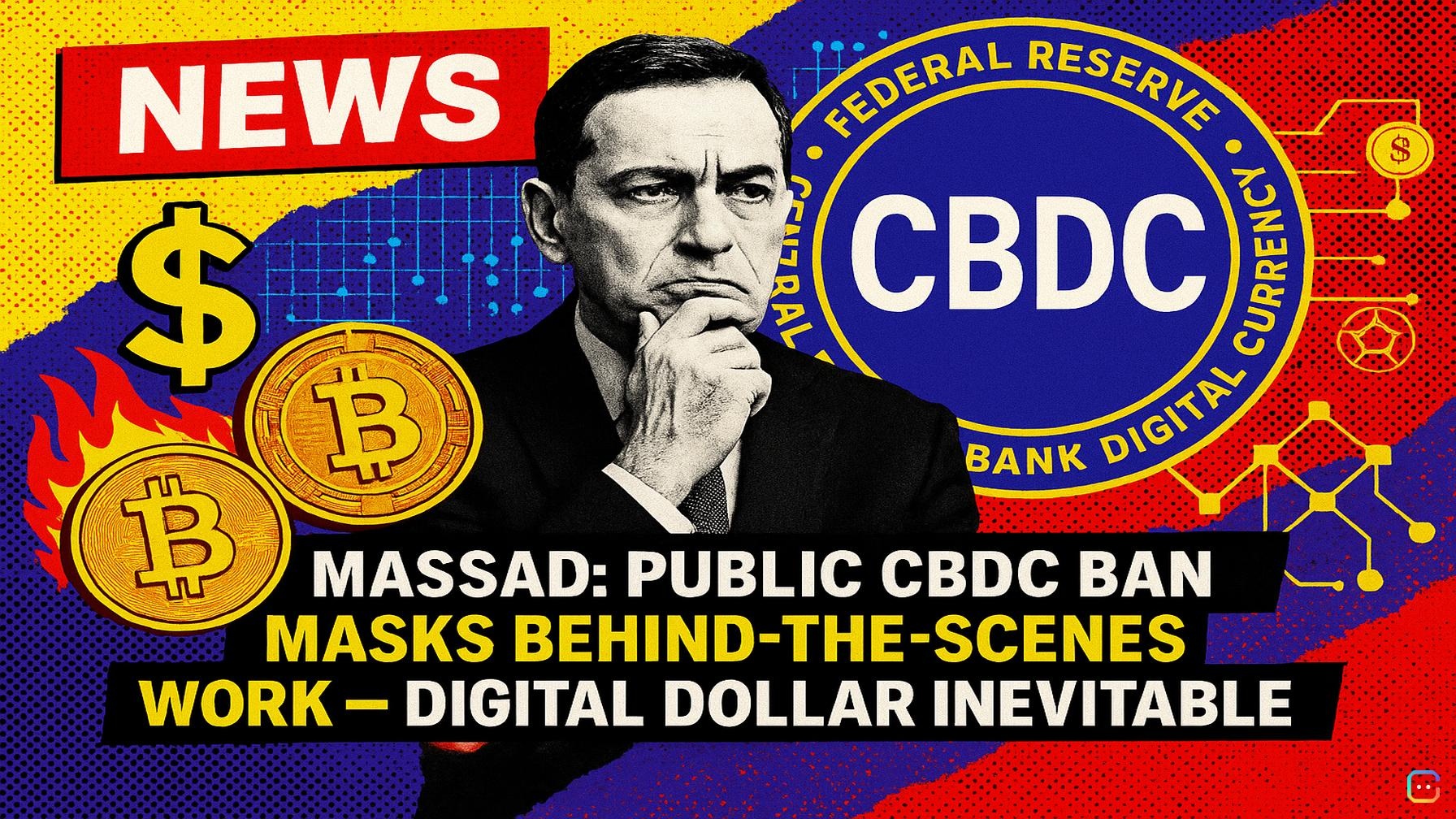
Former CFTC chair Timothy Massad warned at London’s Digital Money Summit on May 19 that a public-facing ban on a US central bank digital currency (CBDC) masks ongoing behind-the-scenes work — and that a digital dollar is ultimately inevitable.
“It’s politically sensitive to talk about a wholesale or retail CBDC, but that does not mean we are not looking at how to create one,” Massad said, arguing that public pronouncements don’t reflect confidential infrastructure planning. Massad, who led the Commodity Futures Trading Commission from 2014 to 2017, has repeatedly urged faster US action on digital currency infrastructure.
Federal Reserve payments chief Mark Gould pushed back on the idea that a digital dollar is imminent, saying the Fed is not currently charged with creating one — though he acknowledged that if a CBDC were introduced it would fall to the central bank to operate. Still, Massad pointed to active projects that show the US remains engaged on the technical side.
He highlighted Project Agora, a BIS-led experiment that includes the Federal Reserve Bank of New York and six other central banks. The initiative tests tokenized deposits and wholesale central bank money on a programmable platform — signaling the kinds of settlement rails that could underpin a future digital dollar.
Political maneuvers meanwhile complicate the picture. On May 19 House Republicans sought to make a CBDC ban permanent via language in a major housing bill; President Trump previously signed an executive order in early 2025 directing federal agencies not to develop a CBDC. Massad warned that retreating from international experiments risks ceding influence over emerging global standards for digital payments.
That concern echoes recent reporting and analysis tracked by crypto.news questioning whether private stablecoins alone can preserve the dollar’s dominance in a tokenized, programmable financial ecosystem. For Massad, the choice isn’t simply political rhetoric: it’s about ensuring the US helps shape the infrastructure and rules that will govern global digital payments.
Read more AI-generated news on: undefined/news