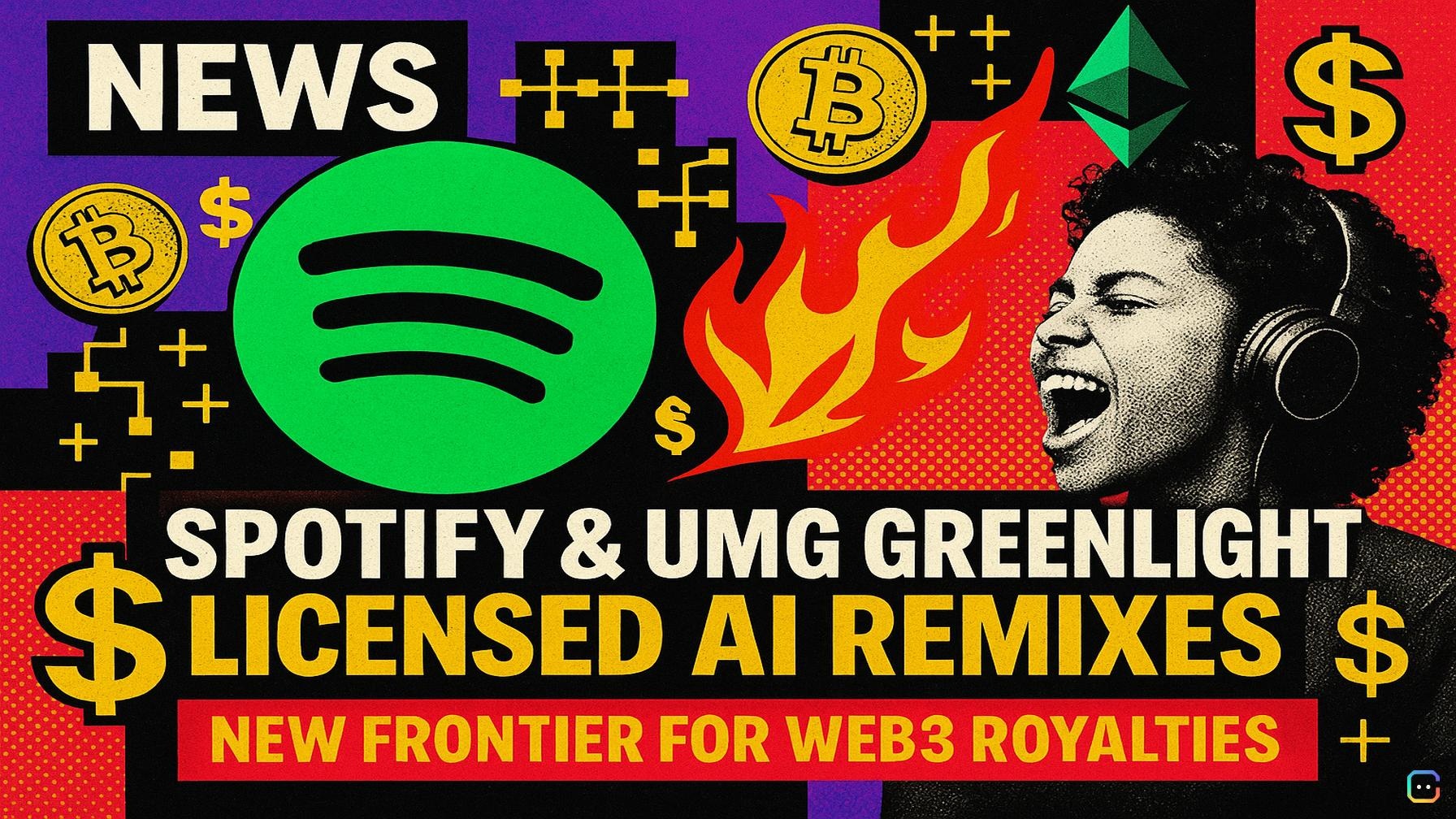
Spotify and Universal Music Group are rolling out a legal pathway for fan-made AI remixes — and it could change how fans interact with music and how artists get paid.
What’s happening
Spotify and Universal announced a licensing deal that lets Spotify Premium users generate AI-created covers and remixes using tracks from participating UMG artists and songwriters. The feature will arrive as a paid add-on for Premium subscribers; the platform says participating creators will receive compensation tied to any AI-generated works made on Spotify.
Why it matters
This is one of the first major, licensed consumer-facing AI remix efforts from a leading streaming service and a major label. It aims to move remixing and cover creation from a legal gray area into an authorized, monetized workflow — potentially opening a new revenue stream for artists and giving superfans a sanctioned way to personalize music.
Who’s involved
Universal Music Group represents a roster that includes Taylor Swift, The Weeknd, Billie Eilish, Olivia Rodrigo, Post Malone, Lana Del Rey, Sabrina Carpenter and Chappell Roan. UMG chairman and CEO Lucian Grainge framed the initiative as a way to “support human artistry, deepen fan relationships, and create additional revenue opportunities for artists and songwriters.”
Context and precedent
The announcement follows high-profile disputes over AI-generated music. In 2023, an AI-created track mimicking Drake and The Weeknd circulated on Spotify and YouTube until UMG had it removed. More recently, Taylor Swift has sought trademark protections over elements of her voice and image after AI deepfakes and fake endorsements proliferated online. Those incidents underscored the legal and ethical stakes of synthetic audio — and helped push the industry to build licensed alternatives.
Industry landscape
Tech platforms are rapidly experimenting with creative AI tools. At Google I/O, YouTube debuted a Shorts Remix powered by Gemini Omni that lets users stylize and rework other people’s videos. Spotify’s approach stakes a claim for controlled, consent-driven AI remixing with explicit credit and compensation mechanisms. “Solving hard problems for music is what Spotify does, and fan-made covers and remixes are next,” Spotify Co-CEO Alex Norström said, emphasizing consent, credit, and payment for participating creators.
What crypto and Web3 observers should watch
While Spotify’s announcement doesn’t involve blockchain or tokenization, it raises issues that intersect with crypto/Web3 debates: provenance of derivative works, verifiable attribution, automated royalty distribution, and how smart contracts might someday encode licenses for AI-generated content. For builders and investors tracking music-tech, the deal signals a mainstream push toward regulated, monetized creator tools — a space where decentralized ownership models and programmable payments could eventually play a role.
Bottom line
Spotify and UMG have created a commercially backed, licensed route for AI remixes that acknowledges artist control and compensation. For fans it promises new creative freedom; for artists and rights-holders it offers a monetized alternative to unlicensed AI deepfakes. For the broader creative-tech ecosystem — including crypto and Web3 players — it’s a development worth monitoring as platforms and rights owners define how AI-generated content is governed and paid for.
Read more AI-generated news on: undefined/news