Headline: Zcash pulls off emergency upgrade after critical Orchard bug — ZEC price keeps climbing
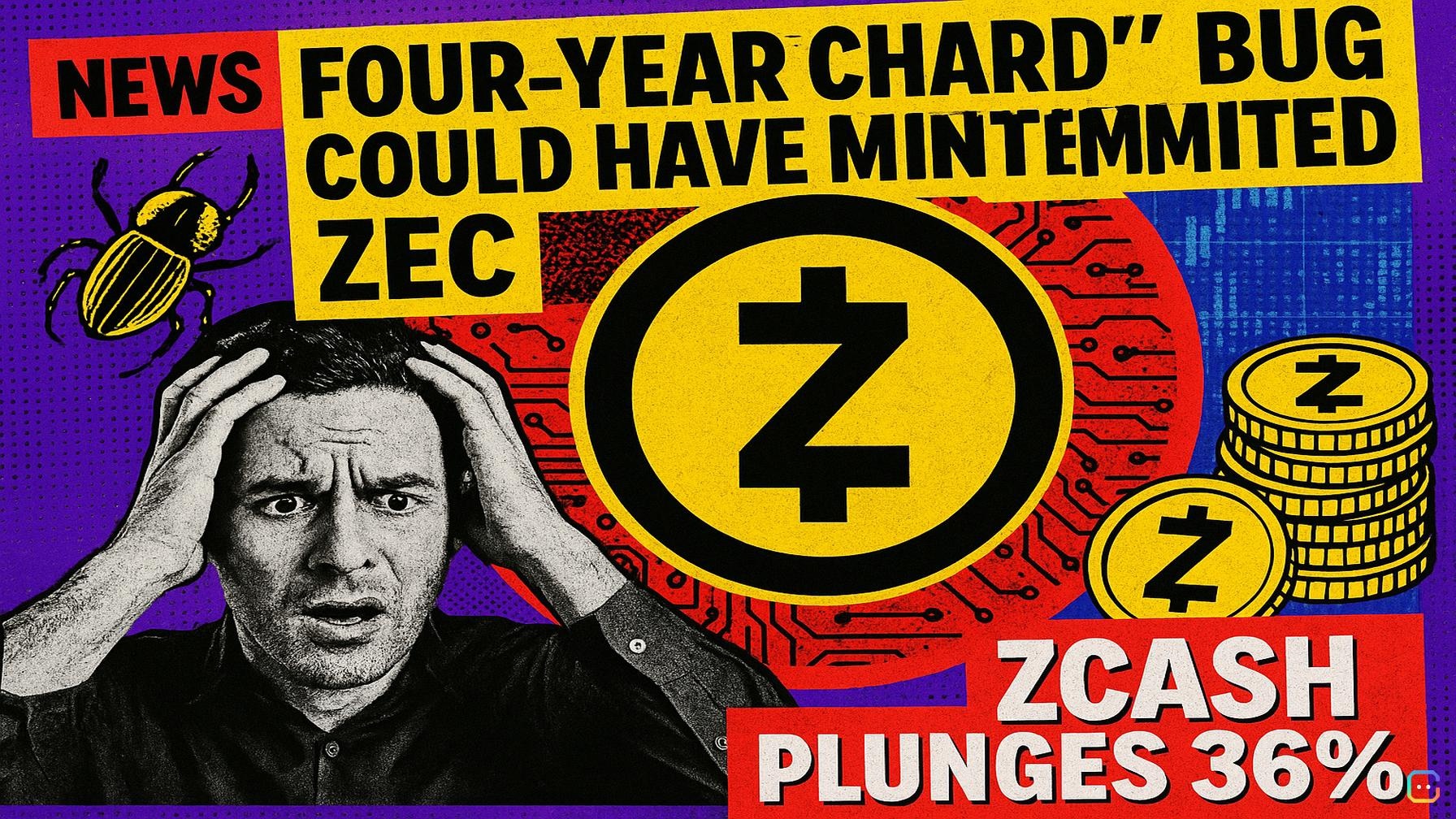
Zcash quietly executed an emergency network upgrade after an independent researcher uncovered a critical vulnerability in the protocol’s most advanced privacy pool, but the team says no funds were lost and the coin’s price continued its recent surge.
What happened
On May 29 security researcher Taylor Hornby discovered a flaw in the Orchard Action circuit — the zero-knowledge cryptographic machinery that powers Zcash’s Orchard privacy pool, introduced in 2022. Orchard is notable for requiring no trusted setup and for holding a significant share of circulating ZEC tokens. Hornby reported the issue to Zcash Open Development Lab (ZODL) engineers that same evening.
A rapid, confidential response
ZODL and Zcash Foundation engineers confirmed the bug within hours and launched a coordinated, confidential remediation plan to prevent exploitation while a fix was developed. Over five days the team executed a sequence of measures:
- An emergency soft fork temporarily disabled all Orchard transactions to stop potential abuse while engineers worked on a fix.
- Private coordination with miners and exchanges began on May 31. An initial activation attempt failed, but a second attempt succeeded early Monday, halting Orchard activity at block 3,363,426.
- On Wednesday the permanent fix was deployed as a full network upgrade (NU6.2) that restored Orchard with a corrected circuit.
Why a hard fork was required
Officials explained that repairing a zero-knowledge proof system demands updating the cryptographic verifying key — a change that cannot be applied through ordinary software patches. That made the network upgrade (a hard fork) necessary to restore secure Orchard operation.
No coins were created, no evidence of exploitation
The Zcash team said the total supply of ZEC was never at risk. Zcash’s built-in “turnstile” tracking mechanism, which monitors value across all transaction pools, showed no unauthorized coins were created, and there is no evidence the vulnerability was exploited.
“We had to move fast across a lot of parties — devs at ZODL and Zcash Foundation, miners, exchanges, others,” ZODL founder Josh Swihart wrote on X, calling it “the most ambitious network upgrade in Zcash’s history.”
Node upgrade and block explorer confusion
The Zcash Foundation urged all node operators to upgrade to Zebra 5.0.0, the software release that activates the corrected rules. After the upgrade, some block explorers appeared to show the chain had stopped producing blocks for hours, prompting speculation about downtime. Explorer operators and experts clarified that the chain continued producing blocks and miners did not stop — explorers went stale because their reader nodes were upgrading or resyncing. “Block explorers are just readers… If the node is upgrading or resyncing, the explorer goes stale,” block explorer CipherScan wrote on X.
Market reaction
The emergency disclosure didn’t dent ZEC’s rally. ZEC traded near $629 at the latest check, up more than 10% over 24 hours and roughly 53% over the past 30 days. The token is up about 1,084% year‑over‑year after a big run last fall that pushed it close to a recent high near $700. It remains well below its 2016 all‑time high of $3,191.
Bottom line
Zcash’s developers and ecosystem partners executed a high-stakes, time-sensitive upgrade that successfully patched a core cryptographic issue without any detected loss of funds. The incident highlights both the complexity of zero-knowledge systems and the value of rapid, coordinated disclosure and response in open-source crypto projects.
Read more AI-generated news on: undefined/news