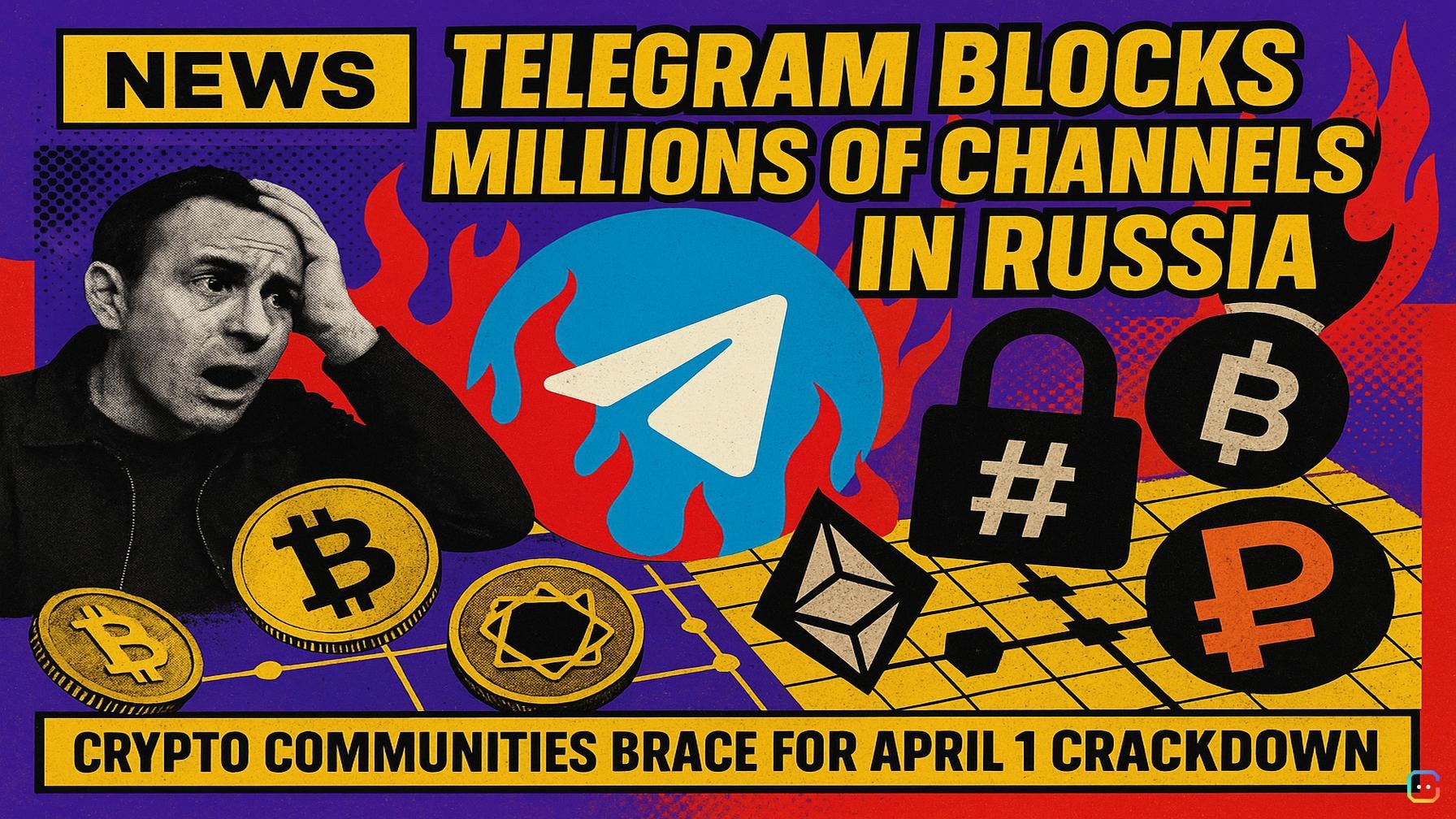
Telegram has moved to block millions of channels as Moscow tightens the screws on the messaging app — a development that could reverberate across crypto communities that rely on the platform for announcements, trading groups and token-discussion channels.
What happened
- Russian authorities say Telegram has started complying more actively with local laws. Andrey Svintsov, deputy chair of the State Duma’s Committee on Information Policy, told TASS that Telegram “has blocked more than 230,000 channels and pieces of content that violated current legislation” over the past week, signaling increased cooperation from Pavel Durov’s company.
- Updated Telegram statistics cited by TASS show 238,800 channels and groups blocked on February 15 and 187,300 on February 16. Overall, more than 7.463 million groups and channels have been blocked on Telegram since the start of the year.
Why Moscow is pushing
Roskomnadzor, Russia’s communications and media regulator, earlier reduced traffic to Telegram, arguing the platform was not meeting national requirements. Officials say those obligations include opening a Russian legal entity, storing personal data on Russian territory, paying taxes and blocking prohibited content. Svintsov estimated that creating a legal entity takes “a week at most” and moving data processing another “two or three weeks,” suggesting Telegram could meet demands within one to two months and avoid a full ban. He added, “In my opinion, Telegram will not be blocked before April 1.”
Threat of a full block
Despite those assurances, reports this week — including a Baza post citing government sources — said Roskomnadzor may “begin a total blocking of the messenger” on April 1. Roskomnadzor told media it had “nothing to add” beyond previous threats of “sequential restrictions,” and Kremlin-aligned commentators remain divided on whether a complete block will be enforced.
Wider context and user response
Telegram is the second-most popular messenger in Russia with roughly 93.6 million users, trailing WhatsApp, which had about 94.5 million monthly users before Roskomnadzor effectively cut access by removing WhatsApp’s domain from Russia’s DNS servers last week. Unlike WhatsApp, which was fully blocked, industry figures say Telegram has been more active in taking measures to keep services running. Still, VPN use is widespread among Russian internet users to bypass restrictions.
Implications for crypto
Telegram’s role in the crypto ecosystem is considerable: projects, token communities, trading channels and NFT groups often rely on Telegram for real-time announcements and community-building. Mass channel takedowns and the prospect of a national block could disrupt those activities, push projects to alternative platforms, and complicate moderation efforts (both to remove scams and to preserve legitimate community channels). Russian authorities are also pushing state-backed alternatives — such as the Max messenger — while users increasingly try U.S.-based apps like imo.
Background
Last summer reports that Telegram planned to open a Russian office under the “landing law” were denied by Durov, according to earlier media accounts. For now, Telegram’s future in Russia appears conditional: the platform is signaling compliance, regulators are warning of further restrictions, and the April 1 date remains a flashpoint to watch.
What to watch next
- Whether Telegram registers a legal entity and relocates data processing to Russia within the coming weeks.
- Any escalation from Roskomnadzor toward a full block on or after April 1.
- The impact on crypto projects and communities that might need to migrate or harden communications against takedowns and platform restrictions.
Read more AI-generated news on: undefined/news