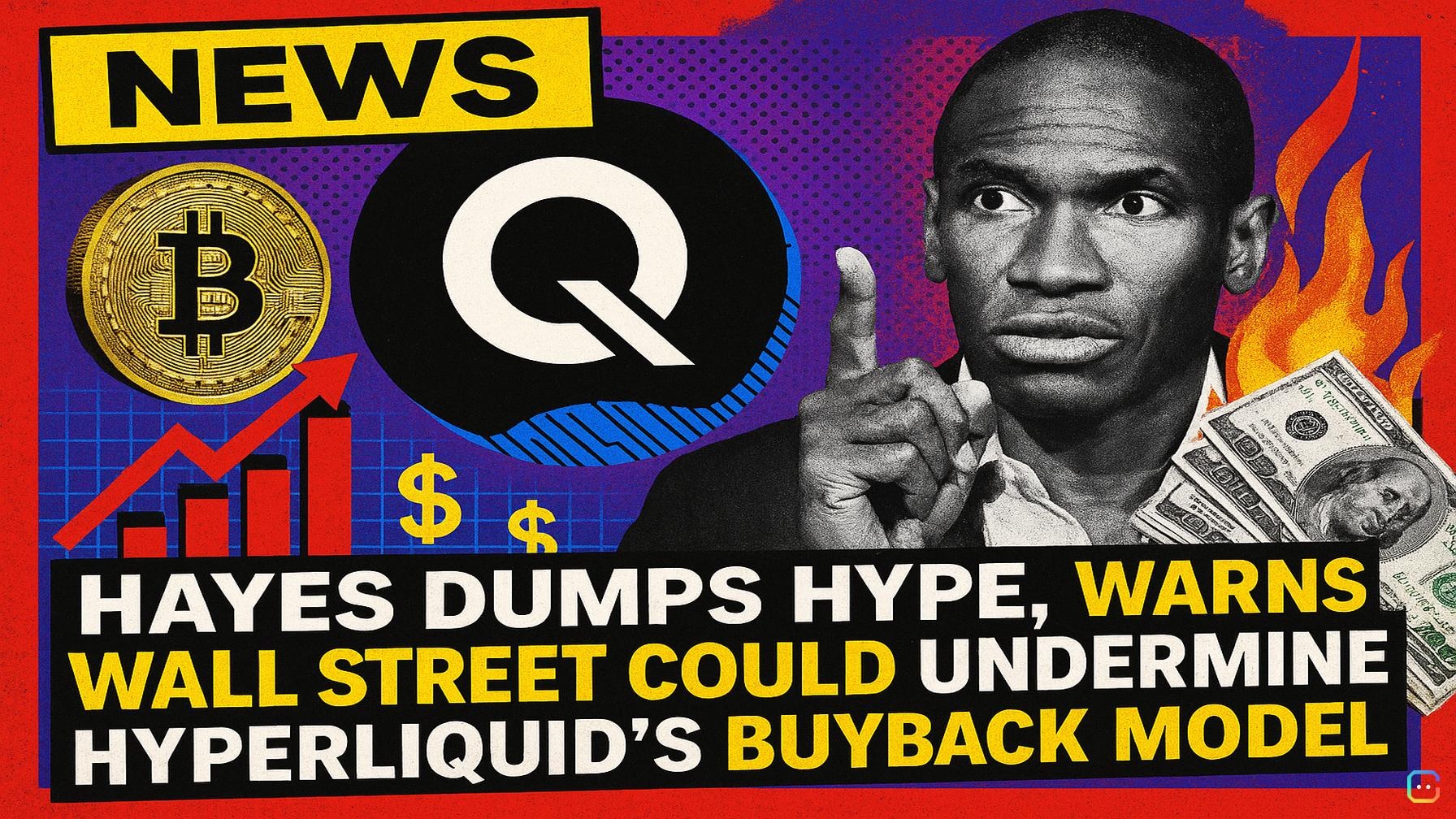
Wall Street is circling Hyperliquid’s throne in perpetual futures, BitMEX co‑founder Arthur Hayes warned, saying the decentralized exchange’s rapid rise could be threatened as incumbents and TradFi move into the market.
Hyperliquid burst onto the scene in 2023 and quickly became crypto’s go‑to venue for illiquid and real‑world asset (RWA) derivatives. Its native token, HYPE, hit fresh all‑time highs last week as the platform poured trading-fee revenue into token buybacks—then burns—to create scarcity. But in a Decrypt interview, Hayes argued that model is fragile: “At the end of the day, this is a cash story,” he said, warning that any sudden loss of market share would undermine the buyback engine that helps support HYPE’s price.
Key datapoints and timeline
- Hyperliquid expanded into RWA perps (including gold and silver) with an October upgrade.
- The platform says outstanding positions tied to those markets have reached $3 billion.
- Hyperliquid has bought back roughly 26.6 million HYPE and permanently removed 579,603 HYPE from circulation (the larger buyback amount equals about $1.56 billion at current prices).
- HYPE traded around $59 on Sunday, down ~14% over seven days after notching an ATH above $75 last week (CoinGecko).
Hayes has been a prominent voice on Hyperliquid’s ascent—praising the platform for enabling weekend price discovery in assets like oil—but he’s also blunt about competition. He expects centralized exchanges and TradFi venues to launch competing perpetual swap products, saying incumbents will be “forced to launch a competing product” and predicting “decently liquid” TradFi perps could appear as soon as next year.
Perpetuals: why they matter
Perpetual futures (perps) let traders hold positions indefinitely via periodic funding payments instead of fixed expiries. BitMEX under Hayes popularized the modern perpetual contract in 2016; the broader idea of continuing contracts traces back decades, the interview noted. Hyperliquid’s edge has been opening up perps on less liquid, real‑world markets—especially active over weekends—attracting volumes that underpin its buyback-and-burn economics.
A sudden flip: Hayes sells
A day after speaking to Decrypt, Hayes told followers on X he had “just dumped” his HYPE holdings and another token. He cited macro and market catalysts—rising energy costs, a wave of IPOs that sap liquidity, and a shift in President Trump’s stance on AI—as reasons to take profits. The move came less than two months after Hayes published an essay predicting HYPE would reach $150 by August 2026, a stark U‑turn that drew mixed reactions within the community.
What’s at stake
Hayes’ warning boils down to this: Hyperliquid’s scarcity mechanics depend on steady fee flows. If liquidity migrates to centralized exchanges or TradFi perps that replicate the same product with deeper pockets, the protocol could see its buyback engine stall—exposing HYPE to downward pressure. For now, Hyperliquid’s growth in RWAs and its buyback figures are impressive, but Hayes’ view underscores an intensifying race between nimble DeFi builders and legacy financial players for the future of derivatives trading.
Read more AI-generated news on: undefined/news