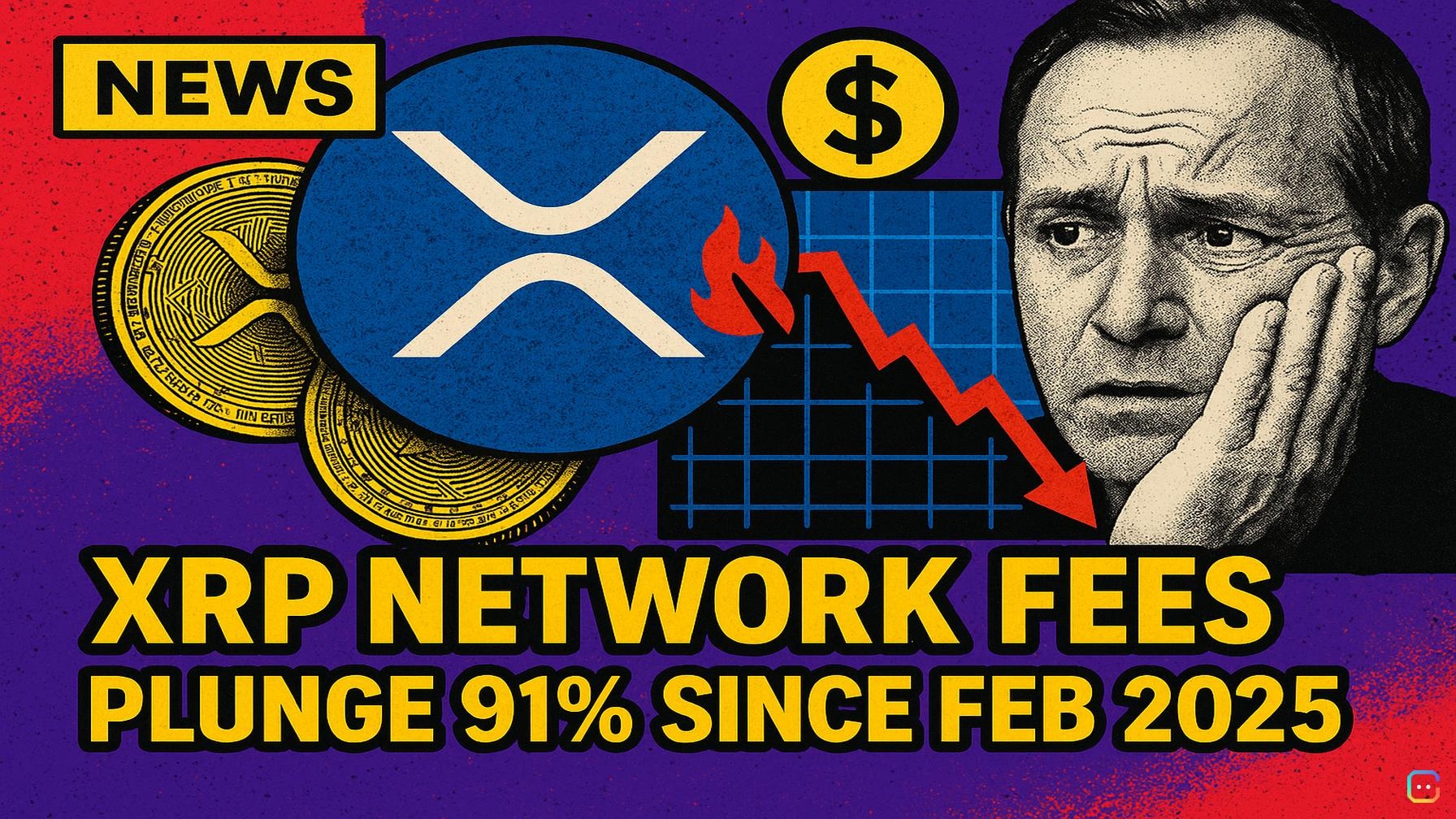
XRP network fees have plunged since February 2025, signaling a sharp drop in on-chain demand, on-chain analytics firm Glassnode says.
In a post on X, Glassnode highlighted a stark move in the 90-day simple moving average (SMA) of XRP’s Total Transaction Fees — the aggregate fees users pay to have transfers processed on the ledger. The SMA smooths short-term swings to reveal longer-term trends in network fee activity.
The chart Glassnode shared shows fees spiking through late 2024 and into early 2025 as XRP’s price rallied. That peak came in February 2025, when the 90-day SMA reached roughly 5,900 XRP. But despite another price surge in the second half of 2025, the fee SMA did not follow; instead it contracted. A pronounced downtrend set in toward year-end, with Total Transaction Fees hitting a low in December 2025. While the indicator has been relatively stable so far in 2026, it remains far below its prior highs.
Today the 90-day SMA sits at about 500 XRP — roughly a 91.5% drop from the February 2025 peak. “A drop of this magnitude is not a fee market adjustment,” Glassnode wrote. “It reflects a near-total contraction in organic transaction demand on the network since the speculative peak.” In short: fewer people are using the ledger for real transfers even as speculative interest and price volatility have continued.
XRP is not alone. Capriole Investments founder Charles Edwards flagged a similar pattern on Bitcoin: Annual Fees — a measure that captures total miner revenue from transactions plus block subsidy — have fallen to their lowest level since 2019. Crucially, that decline in Annual Fees occurred even as BTC rallied to an all-time high in 2025. Because block subsidy income typically rises with BTC’s USD price (except at halvings), the drop in Annual Fees despite higher prices implies a reduction in fee-driven transaction revenue.
Taken together, these signals point to weaker organic on-chain activity across multiple networks, even amid bullish market conditions. Possible explanations include more trading and activity occurring off-chain (on exchanges or Layer-2s), lower retail usage, or changing patterns in how users move value — but Glassnode’s analysis emphasizes that the change looks like a real contraction in transaction demand rather than a routine market rebalancing.
Market update: Bitcoin briefly topped $64,000 earlier this week but has since eased back to around $60,900.
Read more AI-generated news on: undefined/news