As millions of fans descend on North America for the 2026 FIFA World Cup, blockchain sleuths and law enforcement are sounding the alarm: crypto-linked scam operations are already preying on fan demand.
What was found
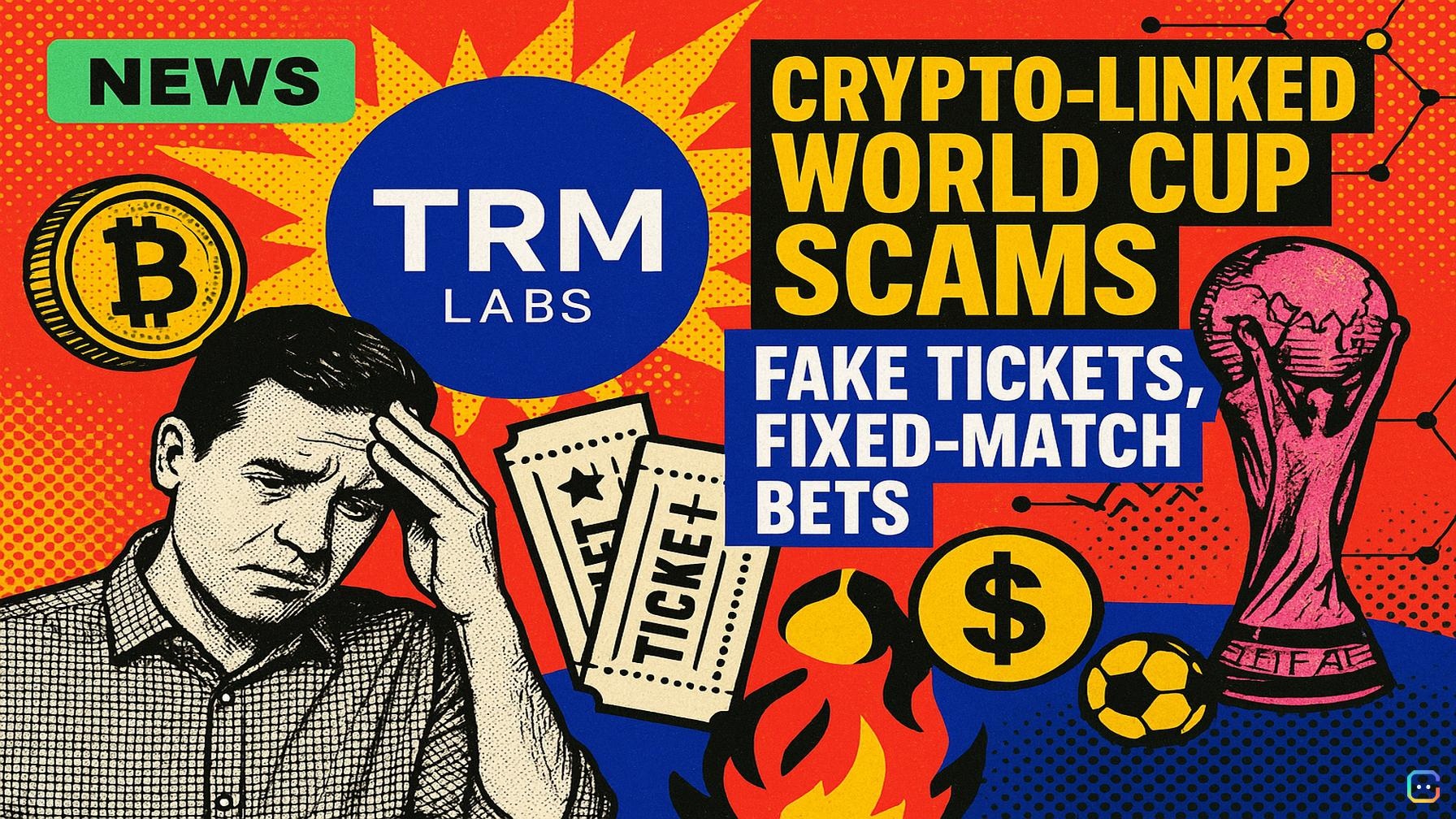
- Blockchain intelligence firm TRM Labs says it has uncovered at least three World Cup–themed fraud operations tied to four cryptocurrency addresses. The schemes include two fake ticketing websites and a fixed-match betting operation—established weeks in advance and active as the tournament opened Thursday across the United States, Canada and Mexico.
- TRM’s global head of policy, Ari Redbord, warned that “criminals always look to exploit major events and cultural moments and they don’t wait until kickoff.” He added that fraudsters typically build infrastructure early and scale up as public interest peaks. On the flip side, Redbord noted that cryptocurrency transaction trails can give investigators and compliance teams opportunities to trace suspicious activity before losses spread.
Why scammers see an opportunity
- FIFA expects roughly 6.5 million attendees and forecasts a global economic impact of about $40.9 billion—creating a massive market for tickets, travel, merchandise and betting. That makes the tournament an attractive target for counterfeit sales and betting-related fraud.
Law enforcement warnings already in place
- U.S. authorities had earlier flagged World Cup–themed scams. On July 4, the Los Angeles County Sheriff’s Department warned about fake tickets, hospitality packages, merchandise offers, streaming subscriptions and betting deals promoted via lookalike websites and social media. The FBI issued a similar alert in May, saying threat actors were spoofing FIFA-related sites to harvest personal data, sell counterfeit tickets and carry out other malicious activity.
- Officials stressed common red flags: requests for payment via cryptocurrency, wire transfers, gift cards or other hard-to-recover methods. FIFA also cautioned supporters that tickets purchased outside its official channels may be invalidated or cancelled without notice.
Market context and ticket availability
- Despite the hype, some demand metrics remain uneven: the Council on Foreign Relations reported that several opening matches in the U.S. and Canada had not sold out on FIFA’s platform, and the Financial Times noted roughly 176,000 unsold group-stage tickets on official resale portals earlier this week. That availability may give scammers another pretext to peddle counterfeit options.
Broader crypto-fraud backdrop
- The TRM Labs alert arrives in a year marked by rising crypto-related theft: Chainalysis reports cryptocurrency theft hit about $3.4 billion in 2026 so far.
What fans should do
- Buy tickets only through FIFA’s official channels and verified resale portals.
- Be wary of links in social posts, texts or messaging apps. Check URLs carefully and look for official domain and SSL indicators.
- Avoid payment methods that are difficult to reverse—particularly cryptocurrency, wire transfers and gift cards—for ticket purchases.
- Report suspicious sites or offers to platform providers and law enforcement.
Bottom line: high-profile events attract opportunistic fraudsters, and the World Cup is no exception. Fans using caution—especially around crypto payments—can reduce their risk while enjoying the tournament.
Read more AI-generated news on: undefined/news