Ripple sets sights on $1B-run rate for 2026 — and it’s not counting XRP
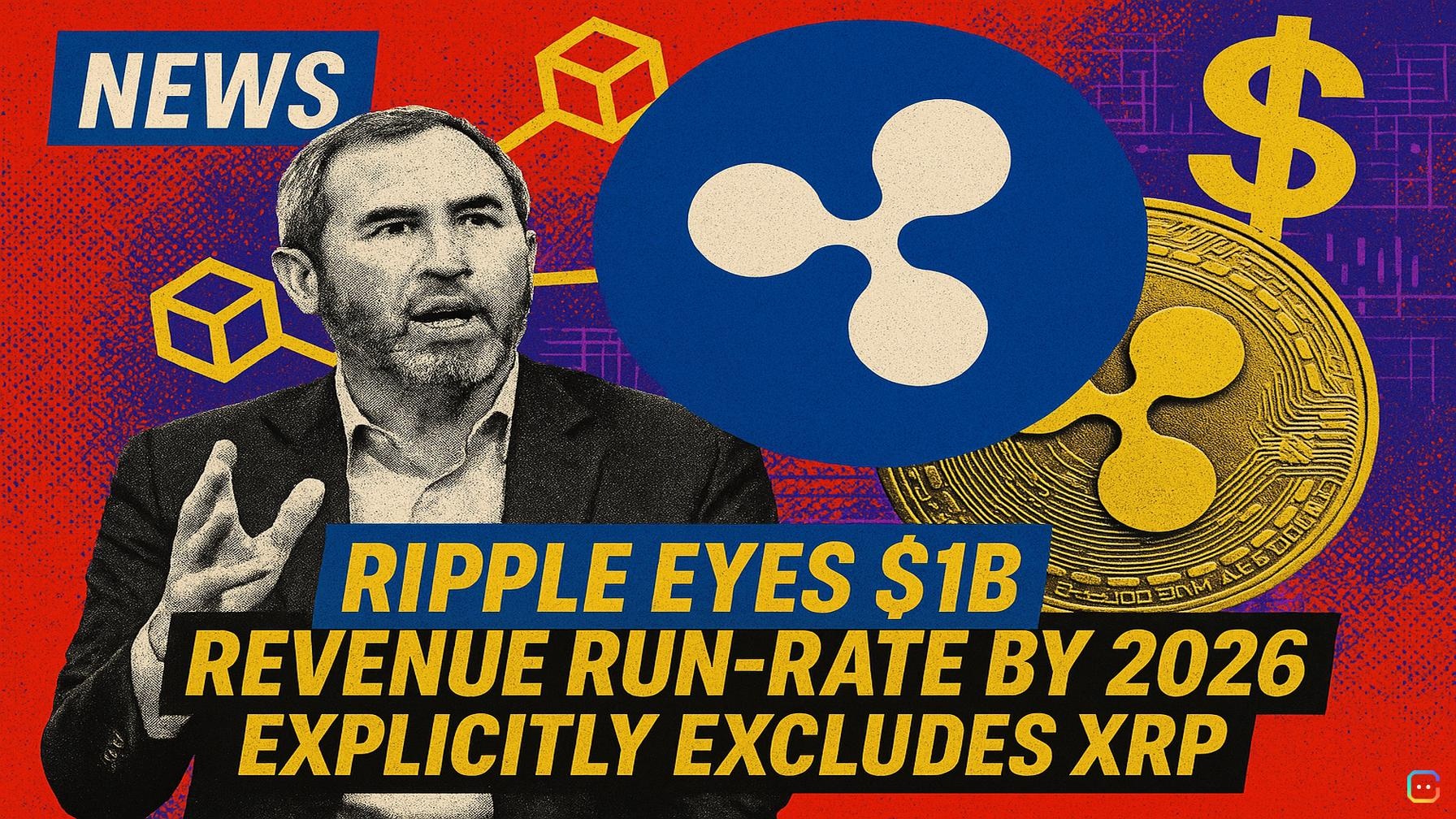
Ripple CEO Brad Garlinghouse has put a firm figure on the company’s next big milestone: a $1 billion revenue run rate by the end of 2026 — explicitly excluding the value of XRP on Ripple’s balance sheet. The announcement, shared on CoinMarketCap and social posts on X, underscores Ripple’s push to be seen as a payments and fintech infrastructure company that earns from products and services rather than token holdings or sales.
Why the caveat matters
Ripple’s relationship with XRP has been a recurring flashpoint in public debates about the company’s business model. By separating operating revenue from XRP holdings, Garlinghouse aims to show that Ripple’s commercial progress can be evaluated independently of daily token price swings — a message intended for banks, payment firms and corporate treasuries weighing Ripple’s services.
Building out beyond cross-border payments
Over the past year Ripple has broadened its scope. In 2025 it agreed to acquire prime broker Hidden Road for $1.25 billion — a move that brought credit, clearing and prime brokerage capabilities to its stack. Ripple says Hidden Road clears roughly $3 trillion a year across markets, bolstering Ripple’s institutional offerings.
That deal also supports Ripple USD (RLUSD), the company’s stablecoin positioned for enterprise settlement and collateral. Ripple has been integrating RLUSD into new payment tools, including services for AI agents and machine-to-machine payments on the XRP Ledger.
Products and target customers
Ripple’s materials highlight custody, treasury management, liquidity services and faster settlement as core offerings aimed at banks and firms that need regulated access to digital assets and account controls — not retail trading products.
Market context: XRP demand vs. Ripple’s business
Market flows show investor appetite for XRP can move on a different path than Ripple’s operating metrics. Crypto.news data put XRP near $1.15 on June 14, and XRP-linked ETF products recorded inflows for a fifth consecutive week — about $10.68 million in the week ended June 12 — while Bitcoin and Ethereum funds saw outflows. Garlinghouse’s “not including XRP” qualifier is intended to decouple the company’s revenue narrative from such price-driven demand.
Regulatory backdrop
Ripple’s growth plan comes as U.S. policy moves on crypto. The CLARITY Act cleared the Senate Banking Committee on May 14, 2026 by a 15-9 vote, though it still needs additional work — including integration with text from the Agriculture Committee — before a full Senate vote. Garlinghouse has publicly called for clearer rules, saying banks need legal certainty to expand crypto services such as payments, custody, liquidity, treasury tools, stablecoins and token settlement in the U.S.
A step into automated payments
Ripple is also pushing automation: on June 13 it released the XRPL AI Starter Kit, which enables AI agents to use XRP and RLUSD for payments via the x402 protocol with limited human oversight. The kit allows software agents to create wallets, check balances, track transactions and send payments — positioning Ripple for machine-driven commerce.
Bottom line
By spelling out a $1 billion revenue run-rate target that intentionally excludes XRP holdings, Ripple is framing itself as a services-first fintech provider while continuing to expand institutional capabilities, stablecoin use cases and automated payment tooling as regulatory clarity evolves.
Read more AI-generated news on: undefined/news