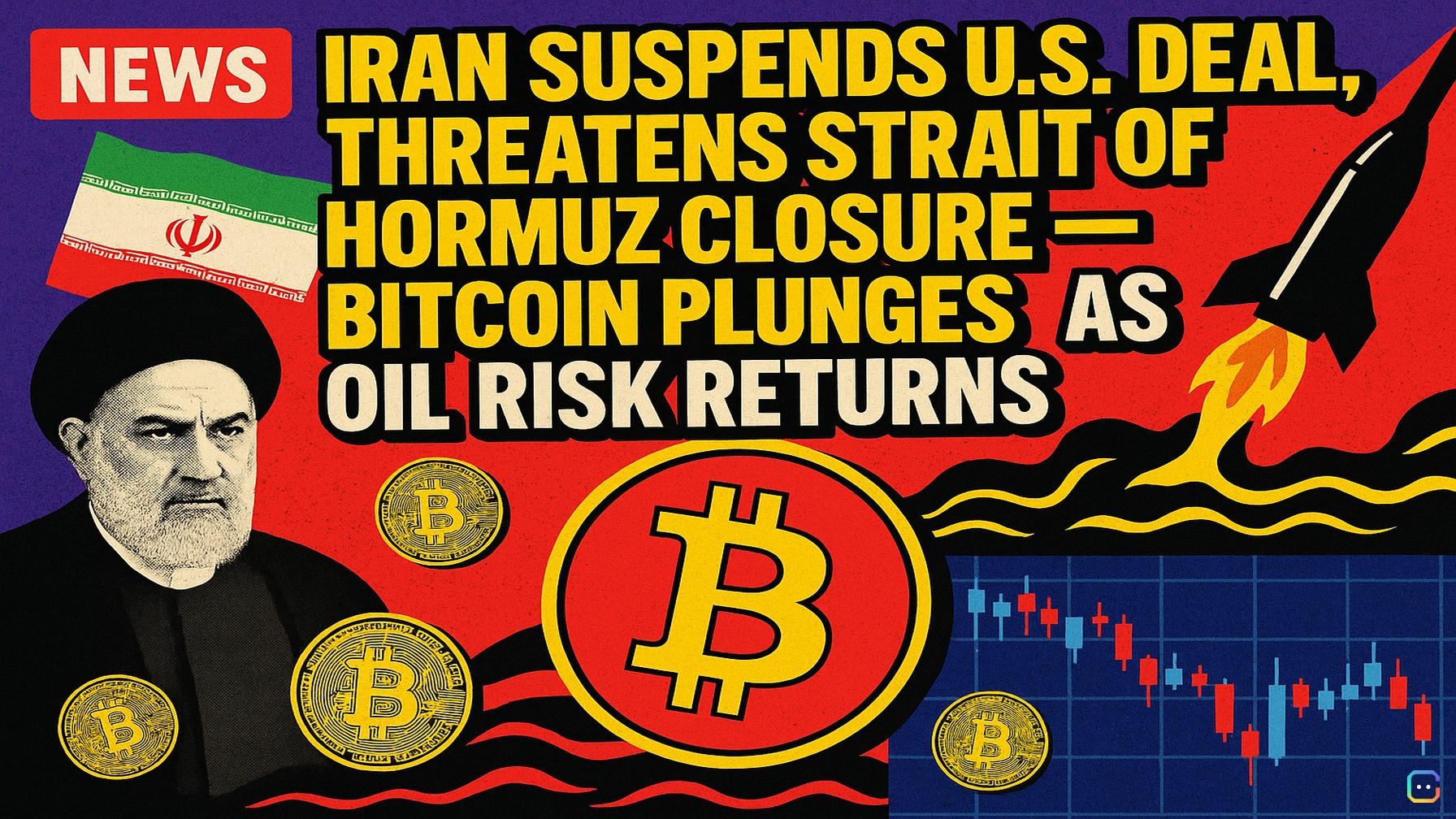
Headline: Iran halts newly signed U.S. deal, warns of Hormuz shutdown — crypto markets tumble as oil-risk returns
Lede: Iran has abruptly suspended a 60-day negotiation framework with the United States less than 24 hours after electronically signing a memorandum of understanding, saying Israeli strikes in southern Lebanon breached the pact’s first clause. Tehran warned it could cancel talks, re-impose a full Strait of Hormuz blockade and respond with missiles — developments that spurred a sell-off in crypto assets as traders priced in renewed geopolitical and energy-market risk.
What happened
- The move was first reported by The Hormuz Letter, citing Iranian outlets Fars and Al-Mayadeen. Tehran says Israeli military activity in southern Lebanon violated the MOU’s opening clause, which it interprets as an agreement to halt hostilities and protect Lebanese sovereignty.
- Iran accused the United States of failing to ensure compliance and refused to proceed unilaterally until it receives assurances that Israeli operations stop and Washington is meeting its obligations.
- Officials warned they would suspend all upcoming negotiations, reimpose the Hormuz blockade and may retaliate with missile strikes if the alleged violations continue.
- An Iranian delegation had been preparing to travel to Switzerland for the opening round of talks — a 60-day diplomatic track reportedly intended to involve U.S. Vice President JD Vance and Iranian Parliament Speaker Mohammad Bagher Ghalibaf — before Tehran paused the process.
Why it matters for markets
- The Strait of Hormuz is a chokepoint for a large share of global seaborne crude exports. Threats to close the passage quickly raise the prospect of tighter oil supplies and a reversal of recent declines in crude prices, which had drifted toward the $75-per-barrel area.
- Higher oil prices feed into inflation expectations and complicate central bank policy outlooks — a dynamic that can weigh on risk assets including equities, commodities and crypto.
Immediate crypto impact
- Digital assets fell as investors reduced exposure to risk amid the geopolitical shock. Bitcoin dropped below $63,000 and briefly traded near $62,000 as markets turned risk-off.
- The sell-off produced heavy derivatives activity: CoinGlass data showed roughly $499.34 million in liquidations across crypto markets in the past 24 hours, with long positions accounting for about $402.11 million. More than 125,000 traders were liquidated during the move.
- Traders are weighing how a potential energy-price spike could feed into inflation and interest-rate expectations — both key drivers for crypto sentiment and risk pricing.
What to watch next
- Whether Iran resumes the negotiation track and what guarantees, if any, the U.S. provides regarding Israeli operations.
- Any escalation around the Strait of Hormuz and corresponding moves in oil prices.
- Continued risk appetite shifts in crypto markets, volume and derivatives flows as news and policy signals evolve.
Disclosure: This article is for informational and educational purposes only and does not constitute investment advice.
Read more AI-generated news on: undefined/news