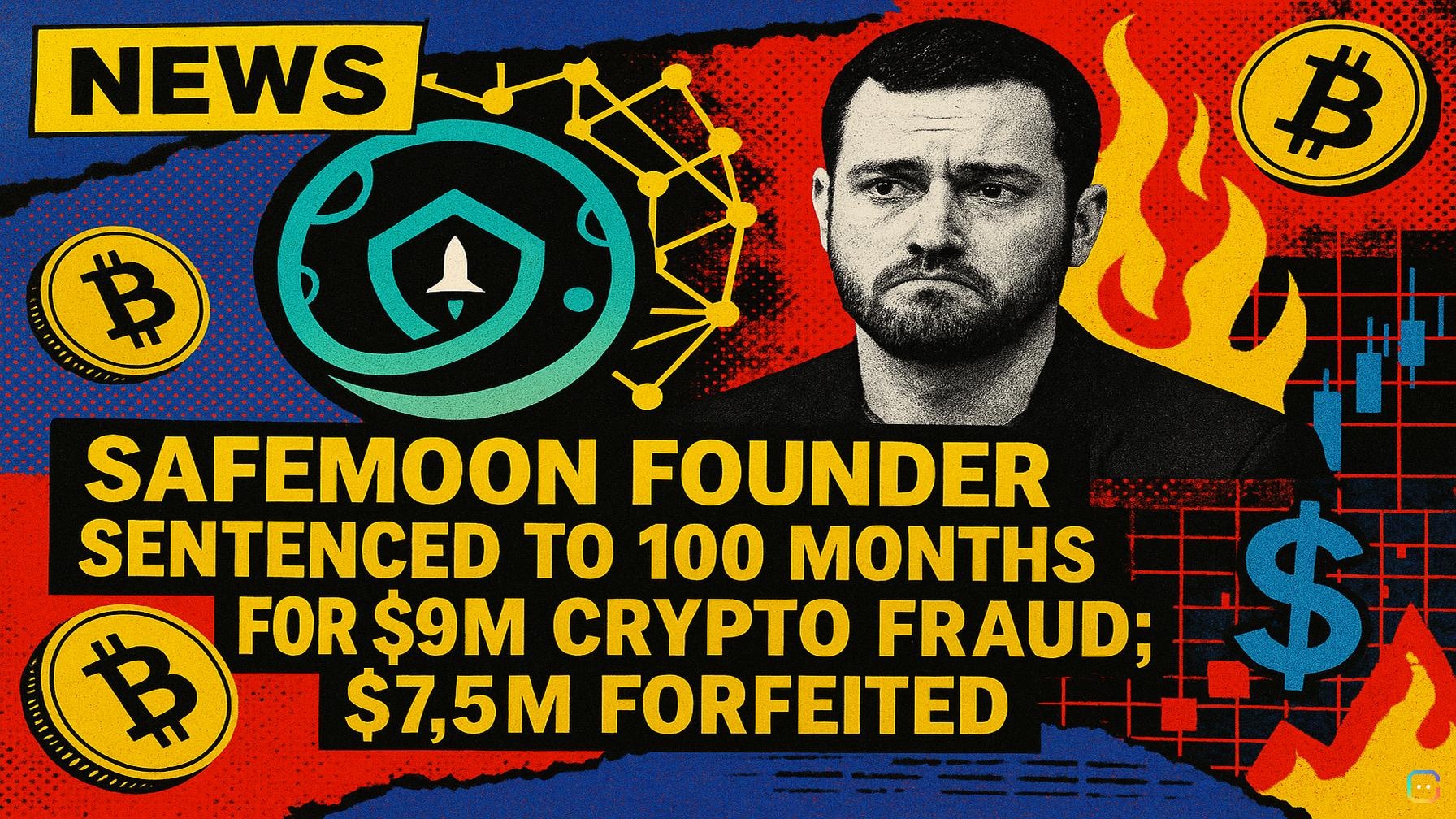
Braden John Karony, the one-time CEO and founder of SafeMoon, was sentenced to 100 months in federal prison after a jury found him guilty of multiple fraud charges, including securities fraud, wire fraud and money laundering.
Court records and Department of Justice statements say prosecutors proved Karony and others misled investors by claiming SafeMoon’s liquidity pools were “locked” and therefore secure, when in fact more than $9 million was siphoned from those pools into private accounts. Authorities say the diverted funds were used to buy luxury homes, vehicles and support a lavish lifestyle while small investors — including military veterans and people on modest incomes — suffered losses, some losing life savings.
“This was not a small loss per person,” U.S. Attorney Joseph Nocella, Jr. said, and the FBI’s James C. Barnacle, Jr. added that Karony “abused his position as CEO” and “betrayed his investors’ trust” by stealing the crypto. The three-week trial ran in May 2025 and concluded with guilty verdicts on all counts. Sentencing took place in the Eastern District of New York before U.S. District Judge Eric Komitee, who imposed the 100‑month term.
The court also ordered forfeiture of roughly $7.5 million; restitution and additional forfeiture efforts are expected as authorities try to recover funds for victims. One former SafeMoon executive, Thomas Smith, has already pleaded guilty and faces his own penalties, while other co‑founders and associates remain under scrutiny.
The case underlines recurring risks in token projects that promise liquidity and safety in promotional posts and social media campaigns. Prosecutors say transfers tied to luxury purchases and private bank accounts helped unravel the scheme and show how quickly trust can erode when internal controls fail.
Beyond SafeMoon, the DOJ has signaled heightened interest in crypto fraud prosecutions, suggesting more investigations and court actions are likely as regulators and law enforcement pursue both criminal penalties and asset recovery in high‑profile digital asset cases.
Read more AI-generated news on: undefined/news