Headline: “Don Colossus” — How a 15‑foot gilded Trump statue became the billboard for a fraught memecoin experiment
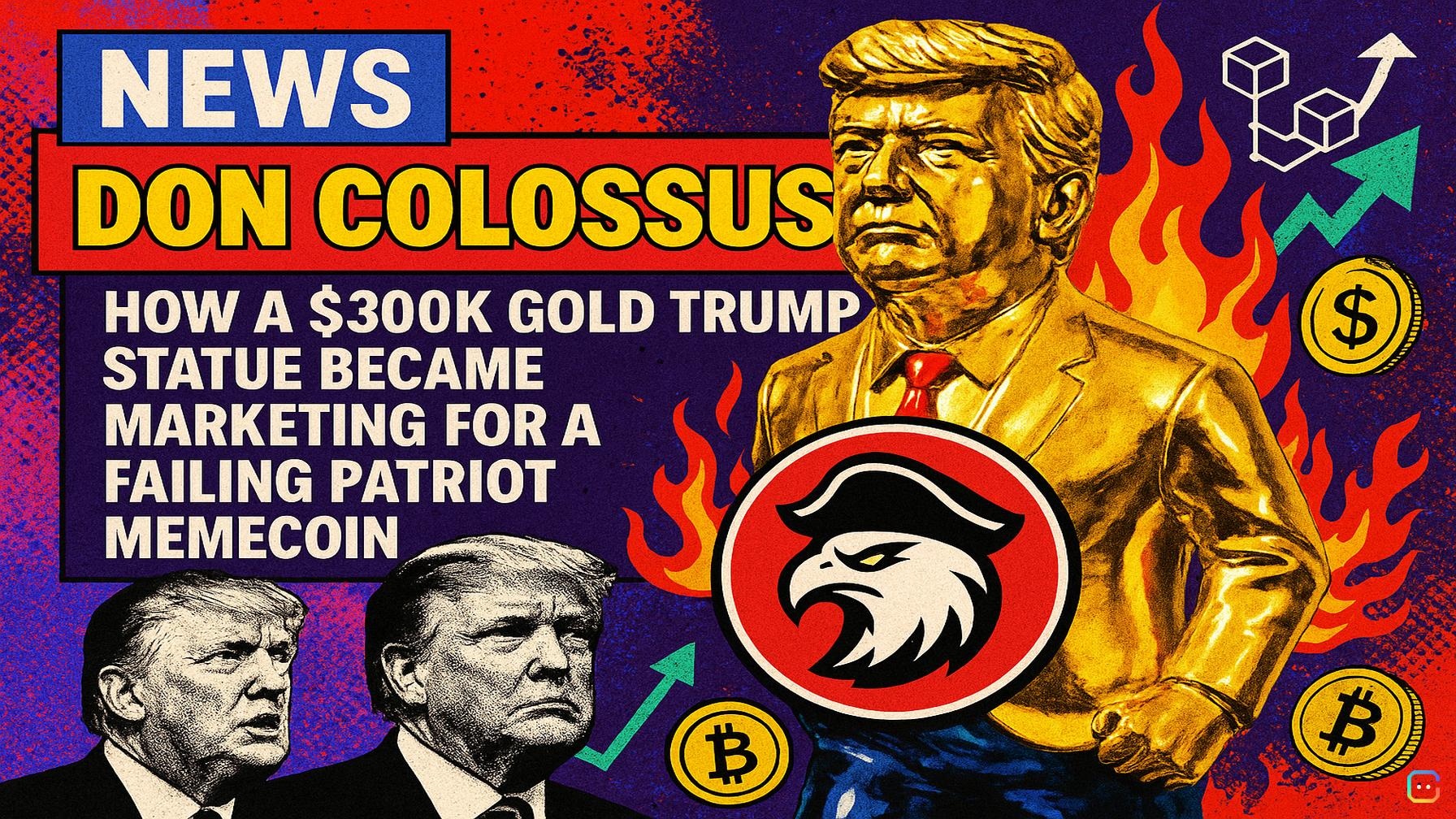
A 15‑foot bronze statue of Donald Trump, gilded in gold leaf and mounted on a 7,000‑pound pedestal at one of his golf resorts, has become the unlikely centerpiece of a fraught cryptocurrency experiment. Dubbed “Don Colossus,” the monument was paid for by a pool of crypto investors and intended to market PATRIOT — a memecoin built largely on MAGA momentum and speculation, not on technical utility.
The short version
- Investors put up roughly $300,000 to commission the statue as part of a wider push to promote PATRIOT.
- The token went on sale in late 2024 and spiked briefly amid pro‑crypto rhetoric from Trump, who talked up making the U.S. a “crypto capital.”
- Within months PATRIOT lost more than 90% of its value amid delays, internal disputes and competing projects.
- A public fight with Ohio sculptor Alan Cottrill over $75,000 in claimed intellectual‑property fees threatened to stall the statue’s release.
- A concrete and stainless‑steel pedestal was installed at Trump’s golf complex in January 2026; an official unveiling in Doral, Florida is being planned and Trump may attend.
- Trump’s own token, Official Trump (TRUMP), launched shortly before PATRIOT’s planned reveal and siphoned attention and demand away from the rival memecoin.
A monument that doubled as marketing
The statue’s backers — a mix of crypto developers and right‑wing activists — saw physical spectacle as a way to revive interest in PATRIOT after its early hype faded. The project’s organizers hoped that a viral, gold‑plated monument on Trump property would deliver the social‑media buzz memecoins rely on.
PATRIOT’s trajectory tracked a familiar memecoin arc: a high‑profile launch, a speculative price spike tied to celebrity attention, then a collapse as the underlying narrative unraveled. The coin’s collapse was compounded by infighting among investors and logistical setbacks tied to the statue’s creation and use in marketing.
Legal tensions and competing tokens
Alan Cottrill, an Ohio sculptor, claimed he was owed $75,000 for intellectual‑property rights tied to the statue’s design and threatened to withhold it until compensated. Despite the standoff, construction proceeded and the pedestal was installed in January 2026.
The situation grew more complicated when Trump’s own token, Official Trump (TRUMP), debuted just before PATRIOT’s intended unveiling. That launch diluted attention and likely contributed to PATRIOT’s price tumble — a reminder of how crowded and volatile the memecoin market can be when celebrity brands overlap.
Politics, crypto and spectacle
While members of the Trump family publicly distanced themselves from the coin, Trump kept attention on the project — including sharing a Breitbart link — keeping PATRIOT in the public eye even as its market value plunged. Supporters behind the initiative have defended it as a “people’s crypto token” meant to celebrate Trump and his base, not primarily as a get‑rich‑quick scheme. Critics see the statue and the token as emblematic of the risk, hype and legal ambiguity that often surround memecoins.
Where it stands now
The statue remains in place and continues to be used in promotional efforts aimed at sparking a market revival. Cottrill is still reportedly seeking full payment, and investors still push the narrative that the golden sculpture will rekindle interest in PATRIOT. For now, “Don Colossus” stands as a literal and figurative monument to one of the stranger intersections of politics, celebrity and speculative crypto — and a potent symbol of the memecoin era’s highs and crashes.
Source: New York Times reporting.
Read more AI-generated news on: undefined/news