Sheikh Tahnoon’s quiet entry into a Trump-linked crypto playbook has put traders, regulators and policy wonks on alert.
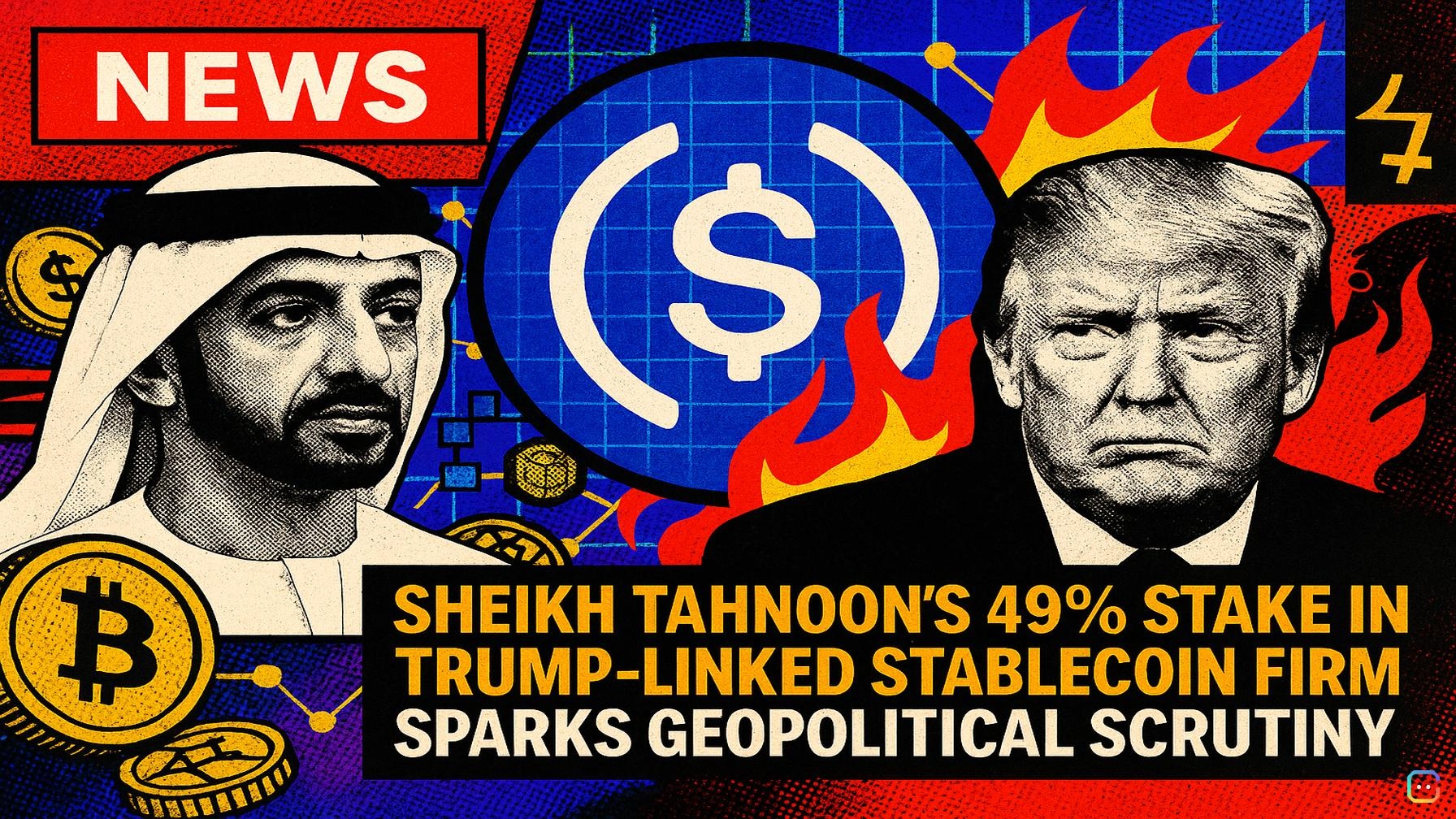
According to multiple reports, Sheikh Tahnoon bin Zayed Al Nahyan — the UAE’s national security chief who oversees intelligence operations and controls the country’s primary AI holding company, G42 — acquired a 49% stake in World Liberty Financial (WLFI). WLFI is the crypto firm tied to the family of former U.S. president Donald Trump that is building a U.S. dollar‑denominated stablecoin and broader payments infrastructure. Part of the deal’s proceeds reportedly flowed to entities connected to the Trump family.
The timing matters: the stake was purchased months before the U.S. began easing long‑standing export restrictions on advanced AI chips to the UAE. U.S. policy had kept those chip exports tightly controlled for years over concerns about technology leakage and strategic risk; the recent shift followed diplomacy and fresh security assurances from Abu Dhabi. While no official link has been made between the investment and the policy change, the close sequencing has raised questions among observers.
Sheikh Tahnoon also chairs MGX, a UAE‑linked investment vehicle that has committed substantial capital to Binance — a move widely reported to amount to roughly $2 billion — making MGX a major institutional backer of the exchange. Industry analysts see the wave of investments as part of a coordinated push to build digital‑asset infrastructure that ties payments rails, exchange liquidity and AI ambitions across the Gulf and global crypto markets.
No public evidence of illegal activity or policy violations has surfaced. Still, the deal highlights how crypto companies can sit at the crossroads of geopolitics, capital flows and advanced technology policy. Regulators and lawmakers are likely to probe the structure and timing of the investment, any ties to U.S. political actors, and the role of crypto entities in strategic negotiations over sensitive technologies.
For the crypto sector, the episode underscores a broader reality: stablecoins and payments projects do more than reshape finance — they can also become vectors for geopolitical influence and strategic investment. Market participants and policymakers alike will be watching closely for further disclosures and any regulatory responses.
Read more AI-generated news on: undefined/news