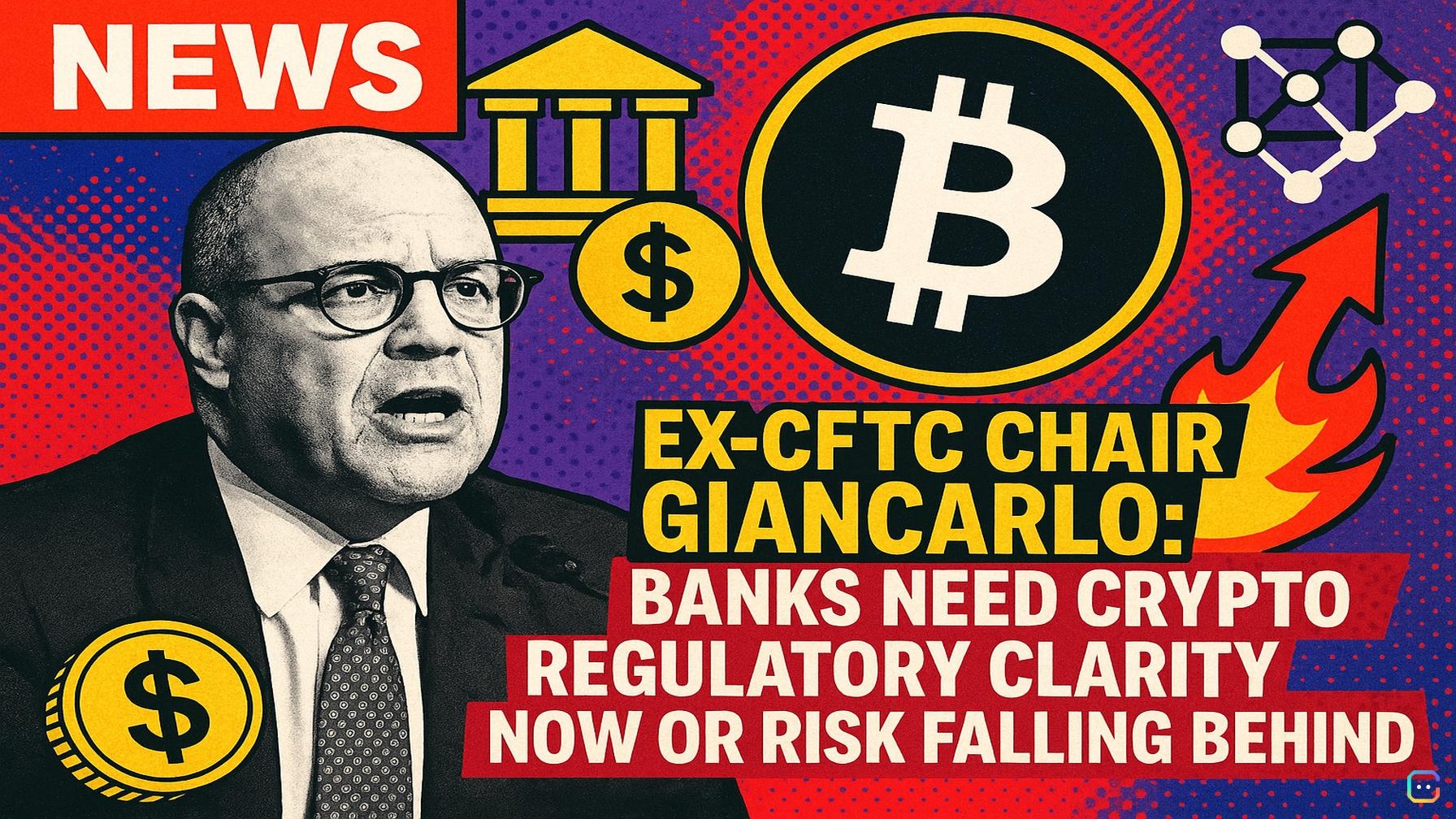
Former CFTC chair Chris Giancarlo says U.S. banks urgently need regulatory clarity on crypto — and fast — or they risk falling behind global competitors.
Speaking on Scott Melker’s The Wolf Of All Streets podcast, Giancarlo framed recent U.S. policy moves as a turning point for domestic crypto innovation. He called last July’s landmark stablecoin law, the GENIUS Act, “the appetizer,” and described the stalled market-structure package, the CLARITY Act, as “the main dish” — the tougher, more consequential piece that remains unresolved.
A quick timeline: the Senate Banking Committee released its CLARITY Act draft in mid-January, and the bill has been stalled for nearly two months amid sharp pushback over provisions — including limits on stablecoin issuers — that sparked a broader fight between banks and the crypto industry.
Giancarlo argued banks need this certainty far more than crypto firms. “Their general counsels are telling their boards, ‘you can’t invest billions of dollars in this … unless you’ve got regulatory certainty,’” he said. Without clear rules, banks will be reluctant to invest in new systems, he warned, and risk being relegated to the “rear guard” of innovation. By contrast, he noted, crypto firms are natural risk-takers who will “build it here, or they’re going to build it abroad.”
If Congress fails to pass the CLARITY Act, Giancarlo expects market regulators such as the SEC and CFTC to step in and issue rules that make the sector functional in the near term — though not necessarily providing the long-term certainty banks want. “They won’t have the support of legislation that makes it work forever or at least into the next presidential cycle, but it’ll make it work for now,” he said. “Now, does that give the industry the certainty they want? No. And who needs that certainty more than the banks? Crypto doesn’t need it.”
Giancarlo also highlighted how politicized the debate has become: partisan divisions between Republicans and Democrats, and tension between traditional finance (TradFi) and decentralized finance (DeFi) or other new technologies. Timing complicates matters further: “If we could not be in a worse time, we’re in an election year,” he said, noting lawmakers’ focus on midterm politics.
Treasury Secretary Scott Bessent last month urged Congress to move on the bill this spring, pointing to a bipartisan working group and warning that prospects could dim if Democrats win the House in November — given what he characterized as tougher regulatory leanings in the Biden administration.
Despite the hurdles, Giancarlo put the odds of passage at roughly 60-40, saying the bill contains “a lot of good in the bill for all sides” and that there’s broad recognition of the need to modernize U.S. financial infrastructure. “I think there’s a recognition that this is the new architecture of finance and America,” he concluded.
Read more AI-generated news on: undefined/news