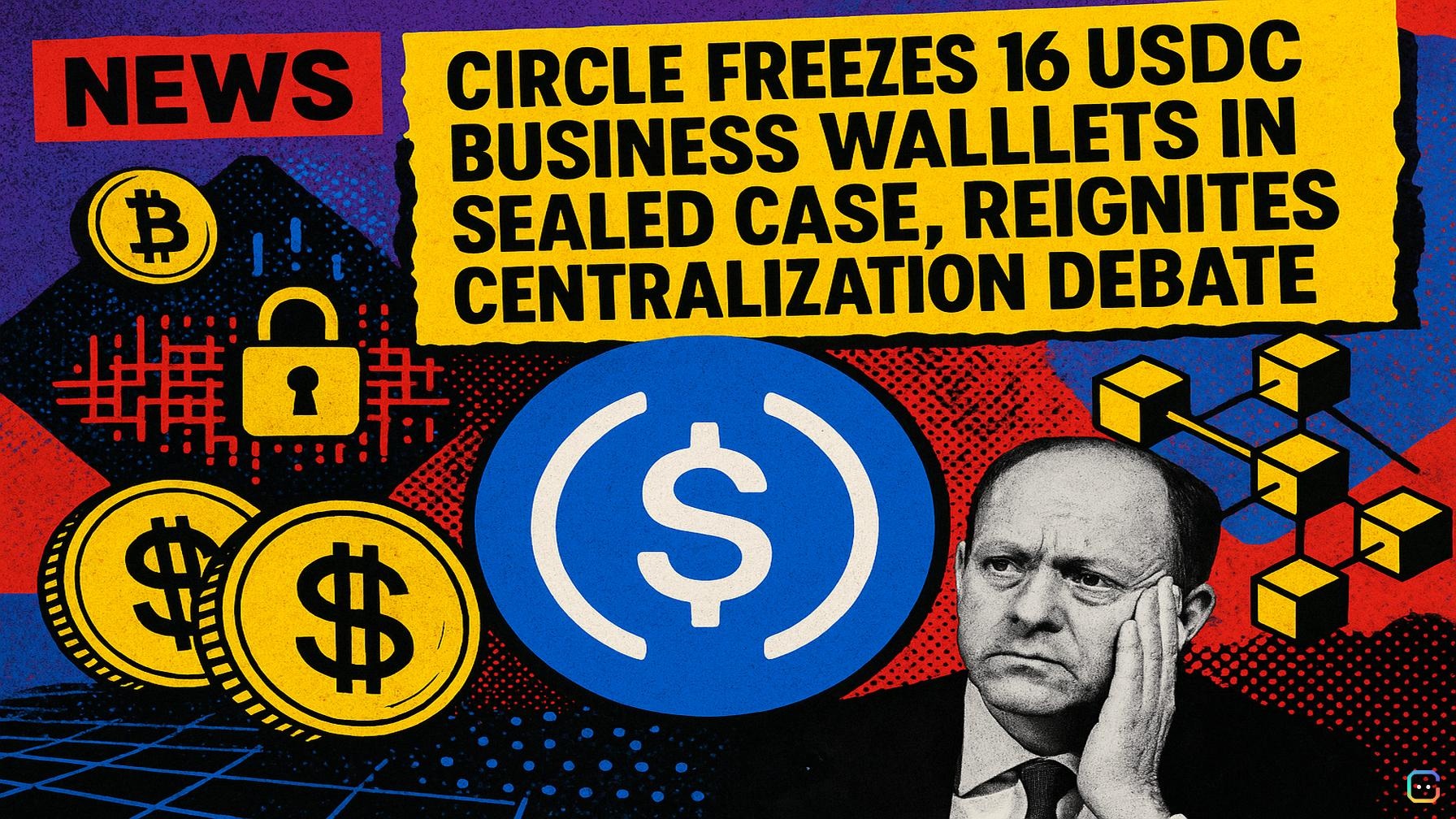
Headline: Circle’s freeze of 16 USDC wallets reignites debates over stablecoin centralization and censorship
Circle quietly froze USDC balances in 16 business hot wallets late Monday — a move tied to a sealed U.S. civil case — and the action has renewed sharp concerns about the power centralized stablecoin issuers wield to block funds.
What happened
- Circle blacklisted 16 hot wallets used by businesses, including exchanges, online casinos and forex platforms, according to PANews. The company says the freeze relates to a U.S. civil case whose details remain sealed, leaving affected firms unsure why they were targeted or when access might be restored.
- On-chain investigator ZachXBT amplified the incident on X, saying the wallets are “unrelated” and questioning why a single civil case led to such a broad action. He noted the freeze has already disrupted operations at multiple firms.
- The episode follows prior criticism of Circle from ZachXBT — who previously called Circle “a bad actor” for allegedly moving too slowly to freeze more than $3 million in stolen USDC tied to SwapNet users.
Why this matters
- USDC’s smart contracts include explicit controls that let Circle blacklist — and in some cases wipe — addresses. Circle and other issuers present these tools as necessary safeguards against hacks, money‑laundering and sanctions evasion.
- Critics argue that opaque freezes tied to undisclosed civil actions risk turning a widely used settlement asset into a politicized gatekeeping tool. When enforcement is inconsistent or secretive, counterparties and builders lose predictability and trust.
Context and comparisons
- Freezes are not unique to Circle: data cited by CryptoNews shows Tether has frozen roughly $1.6 billion in USDT across more than 2,500 addresses, while Circle’s freezes total about $110 million across fewer than 500 addresses. Critics say Circle’s pattern of enforcement has at times appeared “slow or inconsistent” compared with rivals.
- As institutional demand for tokenized dollars grows — and major platforms such as Coinbase expand USDC’s footprint — the incident highlights a trade‑off developers and institutions face: the convenience and liquidity of centralized stablecoins versus the censorship resistance of permissionless alternatives.
Bottom line
The sealed‑case freeze of 16 business wallets is a reminder that the technical ability to blacklist addresses is now a material policy and operational lever in crypto. For many firms and users, the episode will reopen a familiar question: how much trust should the ecosystem place in stablecoins that can be turned off by a central authority?
Read more AI-generated news on: undefined/news