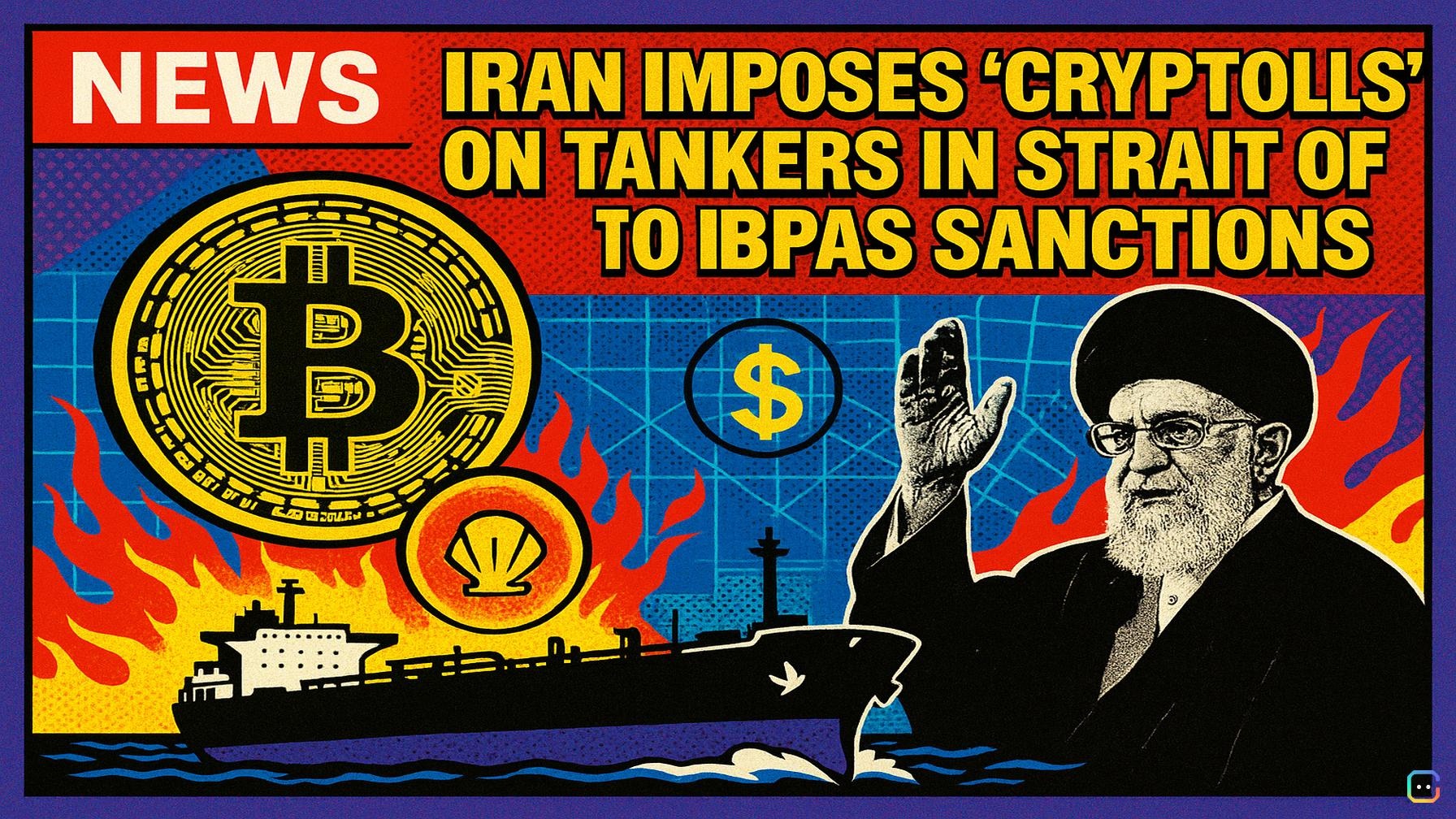
Iran is now reportedly charging “crypto tolls” for tankers transiting the Strait of Hormuz — another wrinkle in a growing, sophisticated sanctions‑busting playbook that security and blockchain analysts say has been years in the making.
What happened
- A spokesperson for Iran’s Oil, Gas and Petrochemical Products Exporters’ Union confirmed that bitcoin is being accepted as a payment method for ships passing through the Strait. Earlier reporting suggested USD‑pegged stablecoins were also being used to allow a select group of oil tankers to transit unmolested.
- Reports say the fee is roughly $1 per barrel of oil. With the largest tankers carrying up to two million barrels, the toll can be substantial.
Why it matters
The Strait of Hormuz is one of the world’s most important energy chokepoints; about one‑fifth of global oil and liquefied natural gas flows through it. Turning transit fees into crypto payments signals a formalization of an unofficial — but increasingly capable — sanctions‑evasion ecosystem run in part by Iran’s Islamic Revolutionary Guard Corps (IRGC).
Blockchain evidence and past incidents
- Chainalysis data highlights a pattern: IRGC‑affiliated networks have used cryptocurrency at scale to move money for Iranian oil sales and related cross‑border commerce over the last few years.
- December 2024: A U.S.‑sanctioned, IRGC‑linked financier tied to Yemen’s Iran‑backed Houthi movement handled more than $178 million in crypto transfers tied to Iranian oil sales in a single year.
- April 2025: A broader set of Houthi financiers were sanctioned for crypto activity that approached nearly $1 billion over roughly a year, linked to purchases of weapons and commodities from Russia.
- The Houthis have also threatened another maritime chokepoint at Bab‑al‑Mandeb, which connects the Red Sea to the Gulf of Aden, raising the specter of further disruption to global shipping.
Expert perspective
Andrew Fierman, head of national security intelligence at Chainalysis, says the move is logical for a regime cut off from conventional finance. “It’s highly unsurprising that this type of trade would be happening via cryptocurrency,” he told reporters, noting Iran’s established network of crypto wallets makes it easier to receive USD‑pegged value without relying on traditional banks or even centralized exchanges.
Fierman contrasted Iran’s approach with North Korea’s — where the emphasis has largely been on stealing crypto and laundering it — arguing Iran is using stablecoins as a legitimate payments mechanism for sanctioned commerce rather than simply theft.
Context on sanctions and currency pressures
Iran has been under comprehensive U.S. sanctions since 1979, and many Iranian banks and financial actors carry individual sanctions. That isolation, plus recurring hyperinflation in the rial, makes counterparties reluctant to accept Iranian currency (in everyday use Iranians typically denominate prices in tomans; one toman equals 10 rials). A USD‑pegged stablecoin therefore offers a tradeable asset that behaves like dollars without going through Western banks.
Regulatory and geopolitical implications
Tom Keatinge, founding director of the Centre for Finance and Security at RUSI, told the outlet that USD‑backed stablecoins have become an important avoidance tool for the Iranian regime and that the risk of Western regulatory intervention against such flows appears relatively low.
A wry aside from Lee Reiners of Duke University underscored the political complexity: he suggested Iran might try to demand payment in a U.S.‑linked stablecoin launched in the UAE, which could, in theory, create incentives for political pressure to alter sanctions — an illustration of how financial plumbing can intersect with geopolitics.
What this means for crypto and enforcement
The Iran case underscores several trends that matter for crypto markets and policy:
- Stablecoins and widely liquid crypto wallets can be repurposed as a de facto alternative payments rail for sanctioned actors.
- Enforcement isn’t simply a matter of chasing a few wallets; Chainalysis argues Iranian networks are sophisticated, with many interconnected addresses and liquidity options that reduce reliance on regulated exchanges.
- Geopolitical actors can leverage crypto to monetize control over physical chokepoints — turning maritime security and financial controls into a single, interlocking challenge.
Bottom line
Iran’s crypto tolls are less a sudden innovation than a visible sign of an established strategy: using cryptocurrency, especially USD‑pegged stablecoins, to undercut sanctions and preserve cross‑border trade. For regulators and exchanges, the development raises tough questions about monitoring liquidity, enforcing sanctions, and the limits of traditional financial controls in an era when value can move outside the banking system.
Read more AI-generated news on: undefined/news