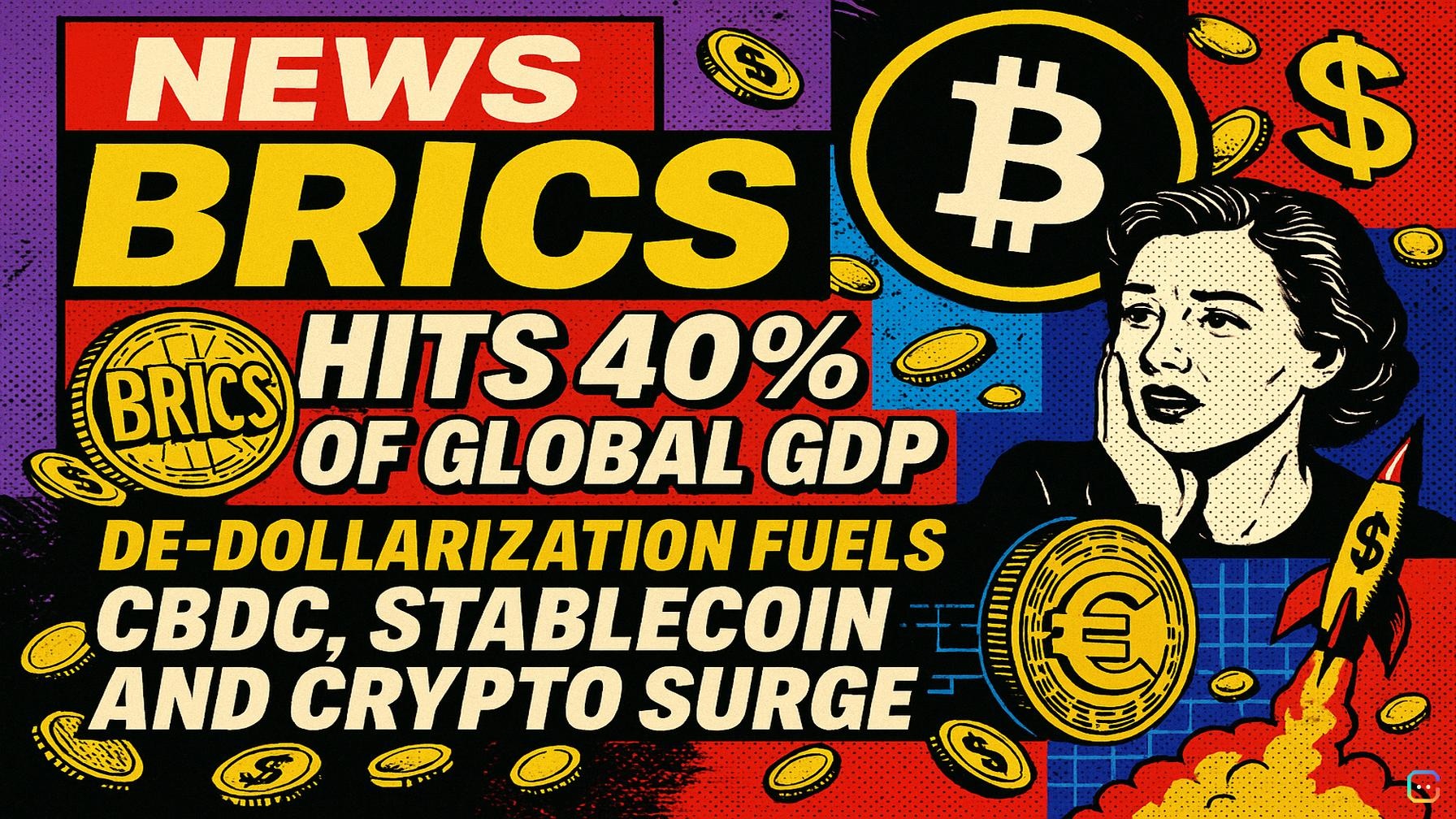
BRICS now accounts for roughly 40% of global GDP — and that’s not a forecast anymore, it’s IMF purchasing-power-parity data. By contrast the G7’s share sits near 28–29% and has been sliding. What began as a years-long divergence in growth and influence is now manifesting in payment systems, commodity contracts and even who moves oil through strategic chokepoints.
Key facts at a glance
- BRICS share of global GDP (PPP): ~40% (IMF).
- G7 share: ~28–29% and declining.
- BRICS average growth (2026): 3.7% vs G7: 1.1%.
- Population coverage: ~48.5% of the world.
- Resource control: 72% of rare earth reserves, >43% of global oil production, 42% of global wheat supply.
- Country growth leaders (2026): India ~6.2%, China ~4.8%, Germany ~0.9%.
Two decades of compounding growth, not a blip
The 40% figure reflects two decades of sustained expansion across BRICS members, not a one-off spike. That structural shift is enabling new trade patterns and payment systems that bypass the U.S. dollar — and that matters for crypto markets, CBDC development and stablecoin use.
De‑dollarization is real — and operational
BRICS trade settled without the dollar topped $1 trillion by the end of 2025. Practical examples are piling up:
- Geopolitics at sea: In the Strait of Hormuz — which handles roughly 20% of the world’s oil — Iran has been insisting that passage tolls be paid in yuan or stablecoins, not dollars. Reports indicate a roughly $2 million-per-voyage toll, and Tehran has said it wants settlements in yuan; legislation is reportedly in progress to formalize the move. BRICS-aligned tankers have been allowed through while some Western-linked vessels were blocked.
- Oil settlements: Indian refiners are now paying for Russian crude in yuan and UAE dirhams, cutting the dollar out of those corridors. India’s non-dollar settlement volumes reached about 60 million barrels in March 2026 alone.
- New payment rails: China’s cross-border interbank system (CIPS) reportedly settled the equivalent of $245 trillion in yuan transactions in 2025. The mBridge CBDC platform handled roughly $55 billion, with some 95% of that value transacted in the digital yuan.
Reserve mix, gold and the petrodollar
The dollar’s share of global reserves has fallen from 71% in 2008 to about 56.3% today. Central banks have been net buyers of gold for 15 consecutive years — part of broader diversification. Saudi Arabia’s decision not to renew the petrodollar arrangement in June 2024 is another sign of shifting energy‑currency dynamics. Analysts say concerns that “the dollar is being weaponized” are motivating countries to reduce dollar exposure — a force pushing toward a more multipolar currency world.
Institutional shifts and geopolitics
Diplomatic moves are reinforcing economic ones. South Africa has deepened its BRICS commitment after tensions with the West, and the New Development Bank has announced $1.9 billion in Global South infrastructure funding for 2026–2027. Those institutional investments accelerate the BRICS vs G7 divergence.
Why this matters for crypto and markets
- Payment innovation: CBDCs and stablecoins are already being used in trade settlements (e.g., Iran’s yuan/stablecoin tolls), which validates digital-asset rails in real-world commodity flows.
- Demand signals: Reserve diversification and sustained central-bank gold buying change the macro backdrop for both fiat and digital assets.
- A multipolar currency future: Some observers argue we’re heading toward a decade-long move to a multi-currency system — with the dollar, euro and renminbi dominant in different regions — and that has direct implications for cross-border settlement tech, stablecoins and CBDC interoperability.
Bottom line
BRICS hitting around 40% of global GDP (PPP) is a milestone that’s already influencing trade, reserves and payments. From yuan‑denominated oil tolls in the Strait of Hormuz to CBDC rails and trillion‑dollar non‑dollar trade corridors, the shift away from dollar‑centric settlements is tangible — and it’s creating practical openings for digital currencies and alternative payment systems to gain real economic footing. Watch the yuan, CBDC rollouts, stablecoins and BRICS financial institutions; they are central to the next phase of global settlement architecture.
Read more AI-generated news on: undefined/news