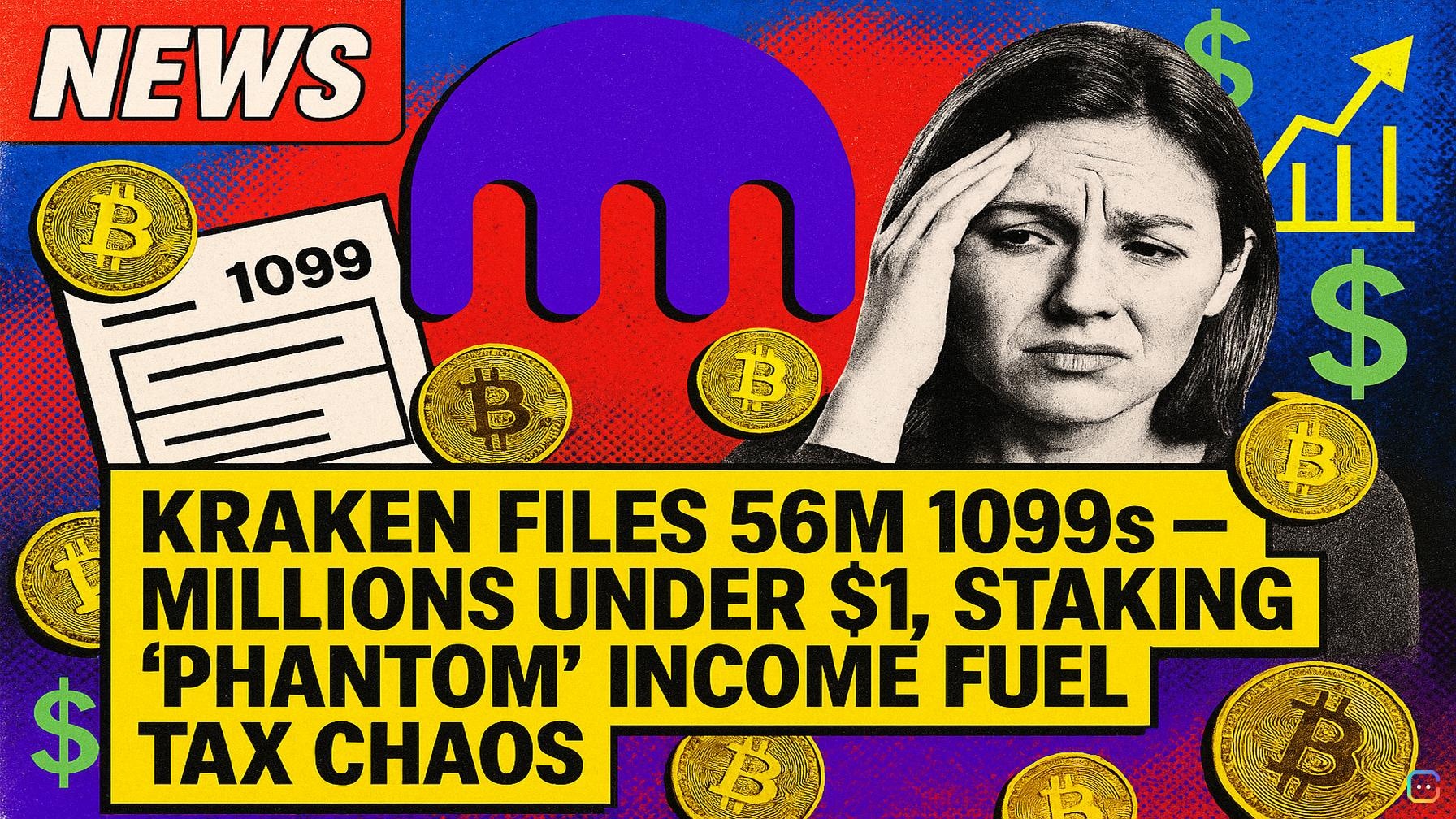
Cryptocurrency exchange Kraken says it submitted 56 million crypto-transaction forms to the U.S. Internal Revenue Service for the 2025 tax year — and a surprising share of them report tiny amounts.
Key numbers
- 56 million Form 1099-DAs filed for 2025.
- About 18.5 million of those reported transactions under $1.
- More than half reported $10 or less.
- Only 8.5% exceeded the $600 reporting threshold used for non-employee compensation.
- 74% were for under $50.
Why this matters
Kraken warns that each 1099-DA is also sent to the customer and forces a reconciliation task on the taxpayer’s return. For 2025, brokers report gross proceeds (what was sold) but not cost basis (what was paid), so forms often show only one side of the taxable calculation. Kraken says this has generated thousands of client questions and “hours taxpayers spend reconciling these micro-transactions, often with incomplete data, generate costs wildly disproportionate to any revenue the IRS will collect from them.”
Practical burden
Kraken estimates an active crypto holder will need $250–$500 a year for dedicated tax software to handle the extra reporting, on top of normal filing costs. The exchange points to broader estimates for context: the Tax Foundation values Americans’ time and expenses on individual returns at about $146 billion annually, and the National Taxpayers Union Foundation says the average non-business filer spends roughly 13 hours and $290 per return.
Two core policy problems
1) No de minimis rule for crypto payments. Because the tax code currently has no low-value exemption, small everyday purchases paid in crypto can trigger taxable events. Kraken gives a concrete example: paying $7.99 for a meal with Bitcoin technically requires the taxpayer to look up the cost basis of the fraction of BTC spent, calculate gain or loss, and report it on Form 8949. Libertarian think tank Cato made a similar point, saying daily coffee purchases in BTC could “result in over 100 pages of tax filings.”
2) Staking “phantom income.” Staking rewards are taxed as ordinary income at the moment they’re received, based on the token’s market price that day. Most holders keep staking rewards rather than sell them, so taxpayers can owe tax on tokens they still hold — and if the token’s price drops later, the tax bill can exceed the asset’s current value. Kraken says a large share of the sub-dollar 1099-DAs it issued were staking distributions.
What Kraken wants from Congress
- A broader de minimis exemption beyond stablecoins. Current legislation moving through Congress includes a de minimis carve-out but is limited to stablecoins; Kraken is pushing for a wider, inflation-indexed exemption paired with anti-abuse guardrails to prevent structuring.
- A taxpayer election for when staking rewards are taxed: either at receipt (current law) or at sale (when gain/loss is realized). Kraken says exchanges already have the technical ability to report both ways; they just need legal authorization.
Bottom line
Kraken frames the flood of microtransaction reporting as a real compliance burden that creates “phantom” tax liabilities and extra costs for ordinary crypto users. With Congress weighing narrow de minimis relief for stablecoins and broader proposals still uncertain, the reporting chaos could persist unless lawmakers or regulators move to simplify how small crypto payments and staking rewards are treated for tax purposes.
Read more AI-generated news on: undefined/news