Crypto Long & Short — Protecting the people building DeFi infrastructure
Welcome to this week’s institutional briefing from Crypto Long & Short. Today’s edition focuses on a growing policy push to protect the builders of decentralized finance and a technical debate over what will actually scale Ethereum.
Expert Insights — Jennifer Rosenthal, DeFi Education Fund
By Jennifer Rosenthal, chief communications officer, DeFi Education Fund
Main point: as traditional finance increasingly embraces DeFi tooling, it’s critical to protect the engineers and open-source contributors who create that infrastructure.
What’s happening
- Financial incumbents are announcing DeFi initiatives more often, reflecting a wider recognition that open-source, permissionless, programmable and noncustodial systems can meaningfully upgrade parts of the financial stack.
- If you’re new to DeFi, using it, or planning to connect customers to it, the DeFi Education Fund urges stakeholders to defend core policy principles that allow this technology to flourish.
Policy focus: developer protections
- Lawmakers and the DeFi community have been having bipartisan, bicameral conversations about how existing law should apply to decentralized systems. A recurring topic: legal exposure for software developers who write code but do not control users’ funds.
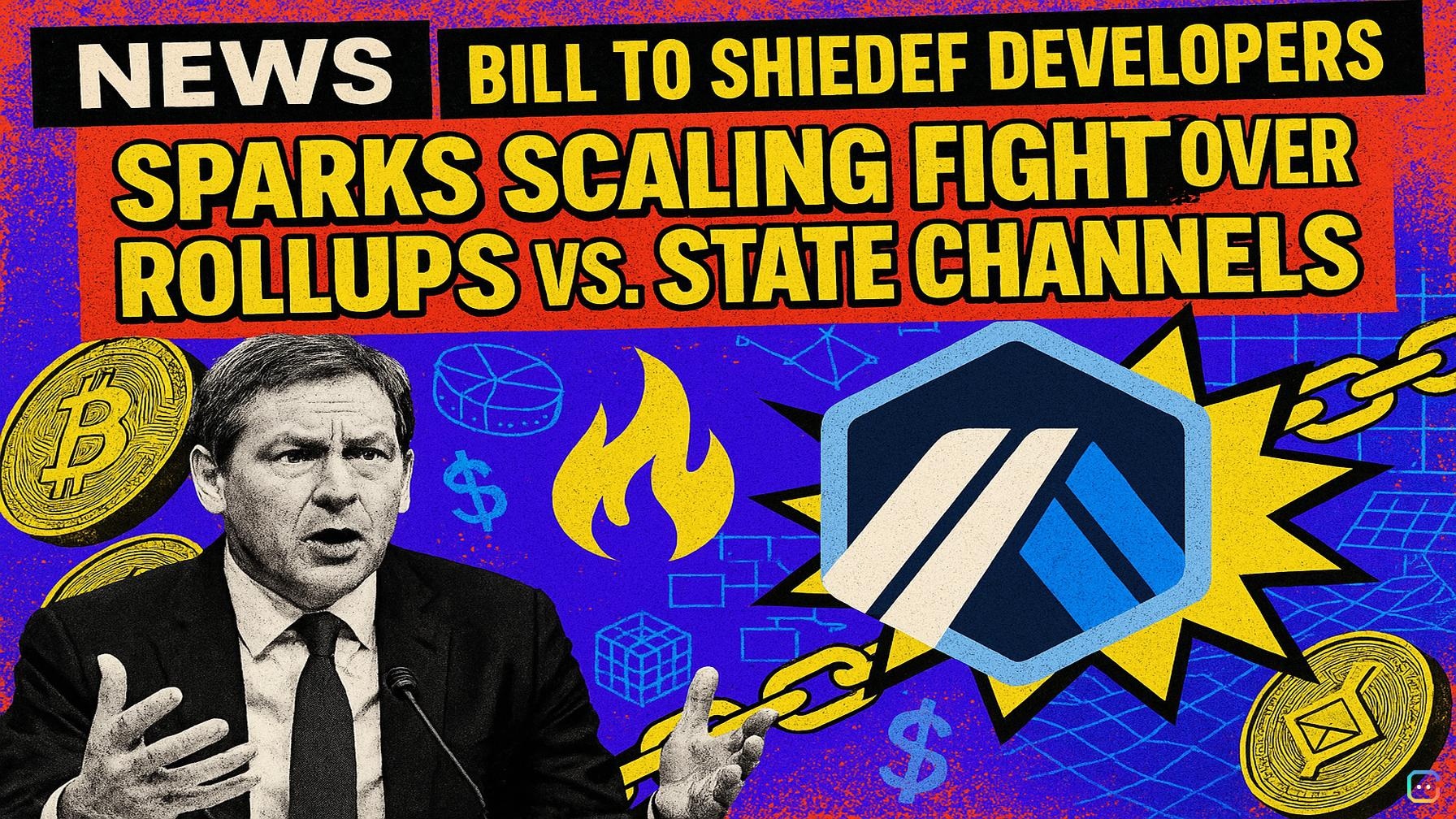
- On Feb. 26, 2026, Reps. Scott Fitzgerald (R‑WI), Ben Cline (R‑VA) and Zoe Lofgren (D‑CA) introduced the Promoting Innovation in Blockchain Development Act of 2026 (PIBDA). The bill would clarify that criminal code Section 1960 — which targets unlicensed money transmission and similar conduct — applies to entities that control or transmit customer funds, not to developers who merely write or deploy code.
- PIBDA aims to align the statute with congressional intent and the Treasury’s long‑standing regulatory interpretation, shielding builders who don’t custody or move other people’s assets.
- Rep. Fitzgerald framed the bill as drawing “a clear line between those who develop and deploy blockchain software and those who actually move or manage funds,” arguing it protects innovation and lets law enforcement focus on true criminality.
Why this matters
- Blockchain is evolving faster than many legacy regulatory frameworks, and software engineers building open, disintermediated systems don’t fit neatly into rules written for intermediary-centric finance.
- Clear, durable legal guardrails could reduce uncertainty, protect builders, and enable responsible participation across both centralized and decentralized markets.
- The DeFi Education Fund encourages industry and interested stakeholders to support legislative and regulatory measures that defend these principles.
Principled Perspectives — Alexis Sirkia, Yellow Network
By Alexis Sirkia, chairman and co‑founder, Yellow Network
Main point: rollups have fragmented Ethereum rather than producing unified scale; state channels offer a different approach that removes custodial chokepoints.
Diagnosis
- Vitalik Buterin recently acknowledged that most Layer 2s are fragmenting Ethereum rather than scaling it. That diagnosis is correct — but the deeper cause is often overlooked.
- Rollups were designed to solve perceived throughput limits by creating parallel execution environments that post compressed proofs to Ethereum. That increased raw capacity on paper but created many isolated liquidity pools that must route value through bridges to interact.
- The result: concentration and fragmentation. Base and Arbitrum now account for roughly 77% of L2 DeFi total value locked (TVL). Usage on smaller rollups has fallen about 61% since June 2025. The “long tail” of rollups is shrinking and capital is becoming more fragmented.
The bridge problem
- Bridges have been repeatedly exploited; since 2021, bridge failures have cost around $2.5 billion.
- Each transfer between rollups typically passes through an intermediary custody point. Attackers can compromise that chokepoint rather than attacking both chains, making bridges an enduring vulnerability.
- The typical industry response — build “better” bridges — treats the symptom, not the root cause: reliance on intermediaries.
A different approach: state channels
- State channels let participants transact peer‑to‑peer off‑chain while the base layer serves as an enforcement mechanism. Only final settlement touches the blockchain, and either party can invoke on‑chain enforcement if a counterparty misbehaves.
- Unlike rollups, which multiply execution environments and then try to reconnect them via bridges, state channels keep parties continuously connected and only require the base layer for finality. That design removes custodial intermediaries rather than patching them.
Why it matters for market infrastructure
- The Commodity Futures Trading Commission (CFTC) is preparing to approve a U.S. framework for perpetual futures that could shift a significant share of the roughly $14 trillion in offshore derivatives volume into regulated venues. Today, U.S. regulated platforms handle only about 1.6% of global crypto derivatives volume.
- Any infrastructure that absorbs even a fraction of that offshore volume will need to settle cross‑chain in real time without custodial chokepoints. Rollups, by their design, are not ideal candidates for that job.
- Predictions that most L2s won’t survive 2026 (as 21Shares has suggested) may be blunt, but the underlying message is important: the market is re‑pricing the risk that intermediaries pose, and builders are likely to migrate toward architectures that eliminate those intermediaries.
Market Note — Francisco Rodrigues
By Francisco Rodrigues
Snapshot: cross‑sector bridges keep growing — traditional finance into crypto — but the market is still being rattled by smart contract exploits that inflict real damage on DeFi venues.
Chart of the Week
- Aave’s TVL market share has fallen sharply: from roughly 51.5% in February to about 39% today. That decline followed the April 18 KelpDAO rsETH exploit, which froze rsETH markets and prompted withdrawals from depositors.
- Active loan share was more resilient, slipping only about 2% (from 54% to 52%), because existing borrowers could not easily unwind positions.
- The AAVE token has lost roughly 50% of its value since its January peak, reflecting both increased bad‑debt risk and the reputational cost of being the largest DeFi lending venue when a collateral asset failed.
Closing
- As DeFi matures and intersects with traditional finance, the community faces two linked challenges: policy clarity that protects builders, and technical choices that prevent systemic fragility.
- Protecting developers from misapplied criminal statutes and accelerating research into designs that remove custodial chokepoints are both central to making DeFi robust, scalable and safe.
Note: Views expressed here are those of the authors and do not necessarily reflect those of CoinDesk, Inc., CoinDesk Indices or its owners and affiliates.
Read more AI-generated news on: undefined/news