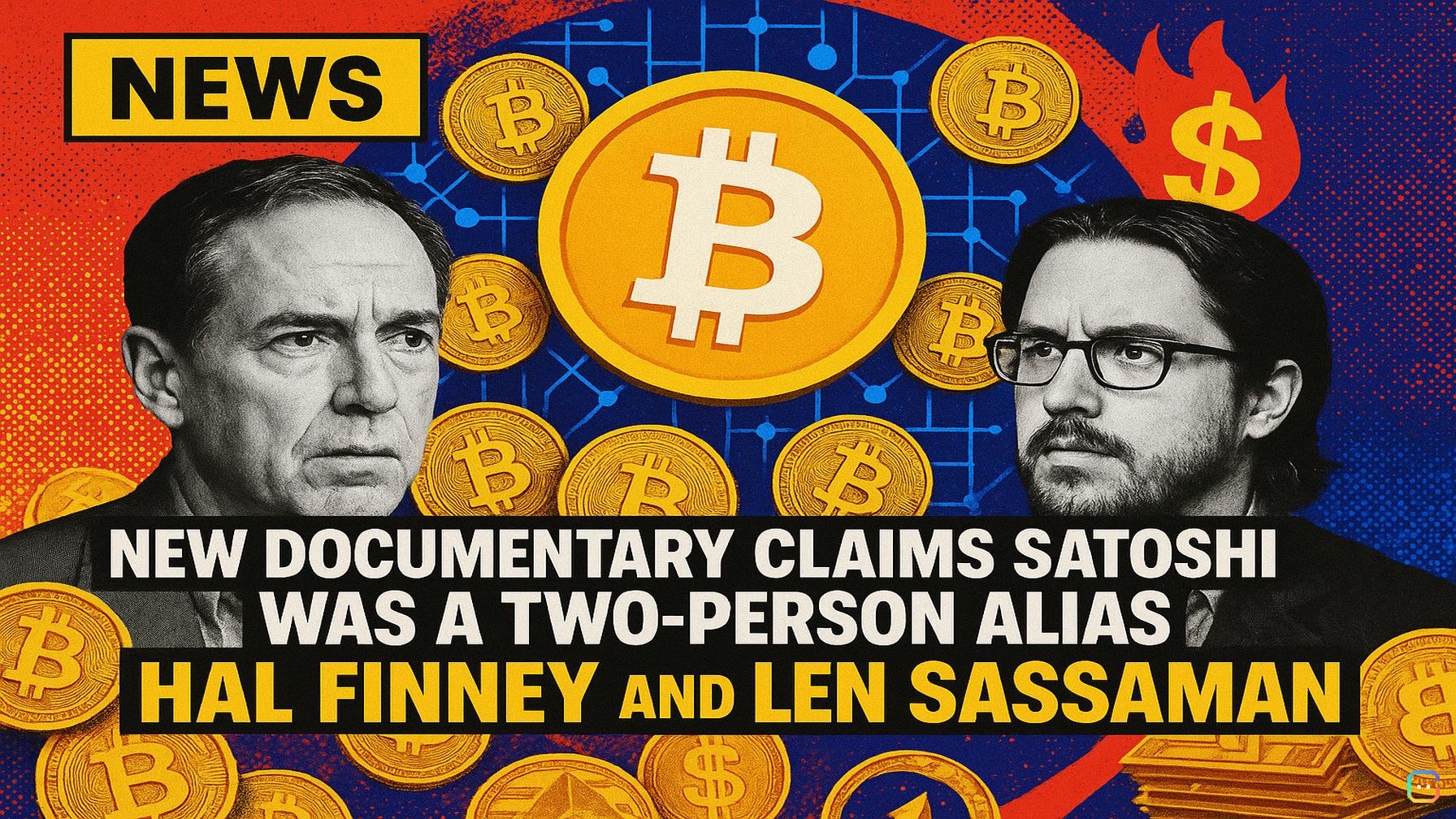
A new documentary makes a provocative claim: Satoshi Nakamoto wasn’t a lone genius but a shared nom de plume. Finding Satoshi, released Wednesday and directed by Tucker Tooley and Matthew Miele, presents a four‑year investigation arguing that two cypherpunk-era cryptographers—Hal Finney and Len Sassaman—collaborated under the Satoshi identity to create Bitcoin.
The probe, led by business writer William D. Cohan and private investigator Tyler Maroney, weaves interviews with more than a dozen figures—from leading computer scientists and privacy pioneers to wealthy tech investors—alongside forensic digital analysis and historical context. The filmmakers spend substantial time tracing the cultural soil that birthed Bitcoin: cypherpunk mailing lists, privacy tools like PGP, and proto‑Bitcoin projects such as Adam Back’s Hashcash.
Key on‑screen testimony includes Fran Finney, Hal Finney’s widow, who concedes her husband likely played a role in Bitcoin’s creation—an admission Cohan called “very, very powerful.” Meredith L. Patterson, the widow of Len Sassaman, also appears and assesses whether her late husband could have been part of the Satoshi persona. Both men are deceased—Sassaman died by suicide in 2011 shortly after Satoshi’s final public post, and Finney died of ALS in 2014—which the film suggests reduces the likelihood of legal or personal fallout from naming them.
The documentary builds its case around a division of labor: Finney as the coder and Sassaman as the writer of Bitcoin’s foundational nine‑page white paper. Investigators combined linguistic, behavioral and timeline analysis. Data scientist Alyssa Blackburn supplied matching of online activity patterns that, the filmmakers say, best fit the Finney–Sassaman profile. Former FBI agent Kathleen Puckett (who worked on the Unabomber case) assessed the white paper’s authorial motives and concluded the writer showed little interest in money—an observation the filmmakers use to eliminate some suspects.
Finding Satoshi also examines and discards other high‑profile candidates, including Adam Back (recently suggested by a New York Times piece using linguistic analysis), Nick Szabo, David Chaum, Paul Le Roux and Wei Dai. Back, who created proof‑of‑work and now leads Blockstream, has repeatedly denied being Satoshi; the film says he is ultimately ruled out. The documentary features voices from privacy luminaries such as Phil Zimmermann (creator of PGP), reinforcing how Satoshi’s ideas grew out of the privacy and cryptography underground—both Finney and Sassaman worked on PGP in the 1990s.
The filmmakers acknowledge counterarguments. Jameson Lopp, CTO of Casa, pointed out timing discrepancies—Satoshi emailed a developer at a moment when Finney was running a race in Santa Barbara—which the investigators interpret as consistent with a two‑person authorship (one writing code, the other writing and posting). The film also includes interviews that didn’t move the needle: a 90‑minute sit‑down with Sam Bankman‑Fried recorded in 2021 was cut from the final film; SBF later received a 25‑year sentence for fraud. Other interviewees, including Michael Saylor and Bill Gates, reportedly downplayed the importance of unmasking Satoshi.
Finding Satoshi frames its conclusion as a resolution to “the greatest financial mystery of the 21st century.” The filmmakers released a trailer on March 11, 2026 and say the mystery will be settled with the film’s rollout on April 22. Whether the wider crypto community accepts their thesis remains to be seen, but the movie is likely to rekindle debate over one of crypto’s most enduring questions.
Read more AI-generated news on: undefined/news