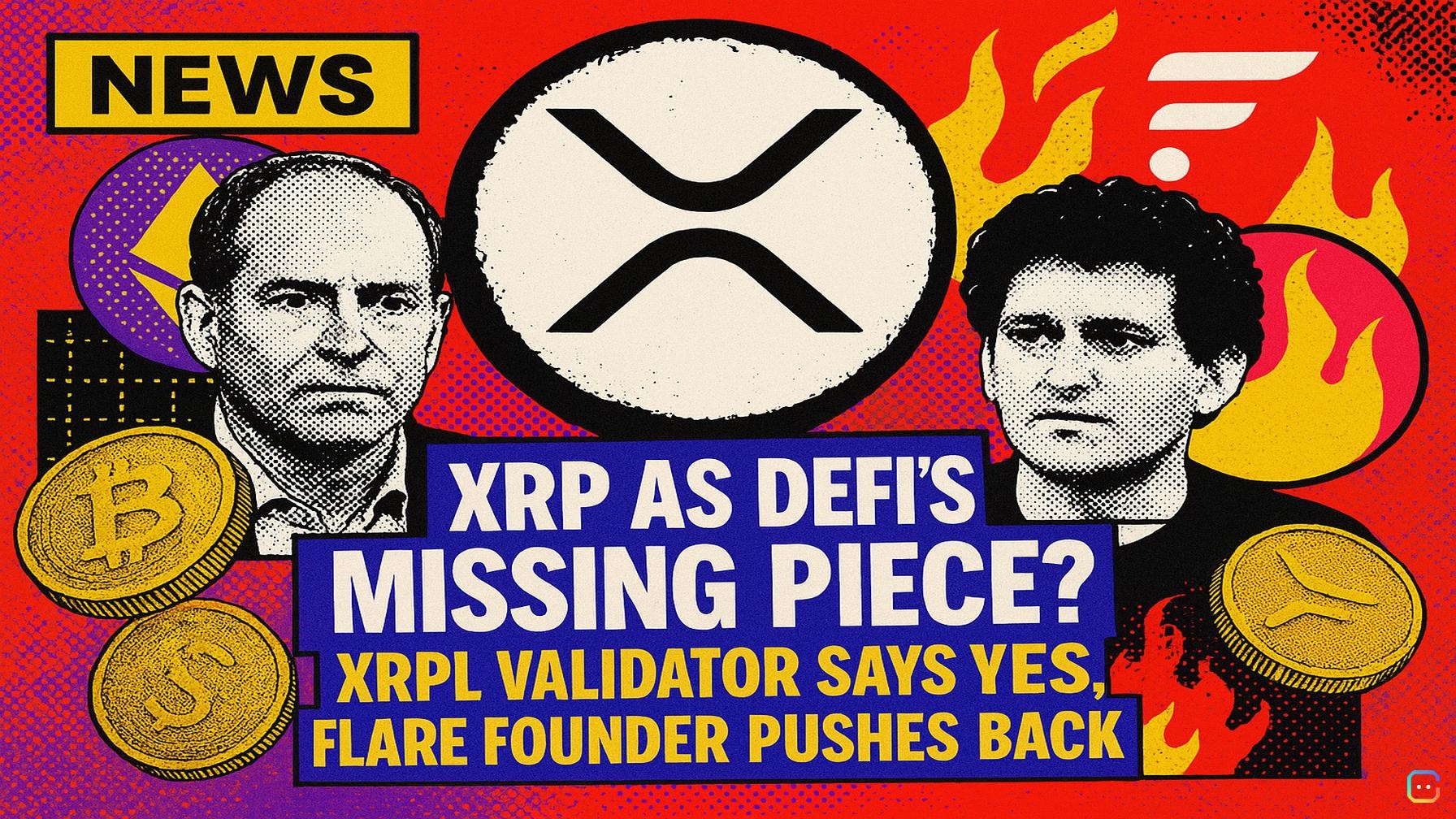
XRP is once again at the center of a heated debate about the future of finance, with one XRP Ledger (XRPL) validator arguing the token could be the “missing piece” to accelerate DeFi adoption and challenge traditional finance.
In a recent post on X, a validator known as Vet argued that while decentralized finance still has a long way to go before it can realistically displace banks and legacy systems, XRP is uniquely positioned to help close that gap. Vet pointed to XRP’s established use cases — especially cross-border payments and liquidity provisioning — and said the ledger’s protocol design intentionally favors lower downside risk for real-world financial applications. He framed XRP as a potential bridge asset that can help address TradFi’s chronic pain points: slow settlement times, high fees, and constrained cross-border access.
Vet went further, claiming the XRPL’s architecture and “high-value” use cases set it apart from many DeFi projects and other digital assets. He argued that the ledger avoids “multiplicative risk composability” tied to smart-contract-driven ecosystems and also does not rely on staking, which he says reduces systemic downside exposure. Vet pointed to the upcoming XLS-66 upgrade as an example of the XRPL’s structural design choices in action.
Not everyone agreed. Flare Network co-founder Hugo Philion pushed back, taking issue with both Vet’s conclusions and the tone of his post. Philion called Vet’s remarks “grave dancing,” suggesting they were celebratory at the expense of other protocols’ problems. While he reiterated his support for XRPL and XRP, Philion said assertions of superior protocol design are premature until systems are proven at scale and under real-world conditions — and he noted that deployments on the XRPL have had their share of issues and bugs.
Vet responded that Philion had missed the point: the XRPL deliberately trades off certain upside opportunities to reduce downside risk, and that trade-off is what makes it suitable for financial rails. He denied that his comments were meant to gloat and reiterated that XLS-66 illustrates the ledger’s pragmatic design focus.
The exchange highlights a broader, ongoing industry conversation: can DeFi meaningfully compete with or even replace traditional finance, and which technologies are best suited to lead that shift? Proponents argue DeFi exposes TradFi’s inefficiencies and offers faster, cheaper, and more accessible alternatives; skeptics warn that many DeFi systems remain unproven at scale and can introduce new forms of systemic risk.
For now, the market appears unready for a wholesale transition, but the debate over architecture, risk trade-offs, and real-world utility — with XRP and the XRPL squarely in the spotlight — will likely intensify as upgrades like XLS-66 roll out and DeFi continues to evolve.
Read more AI-generated news on: undefined/news