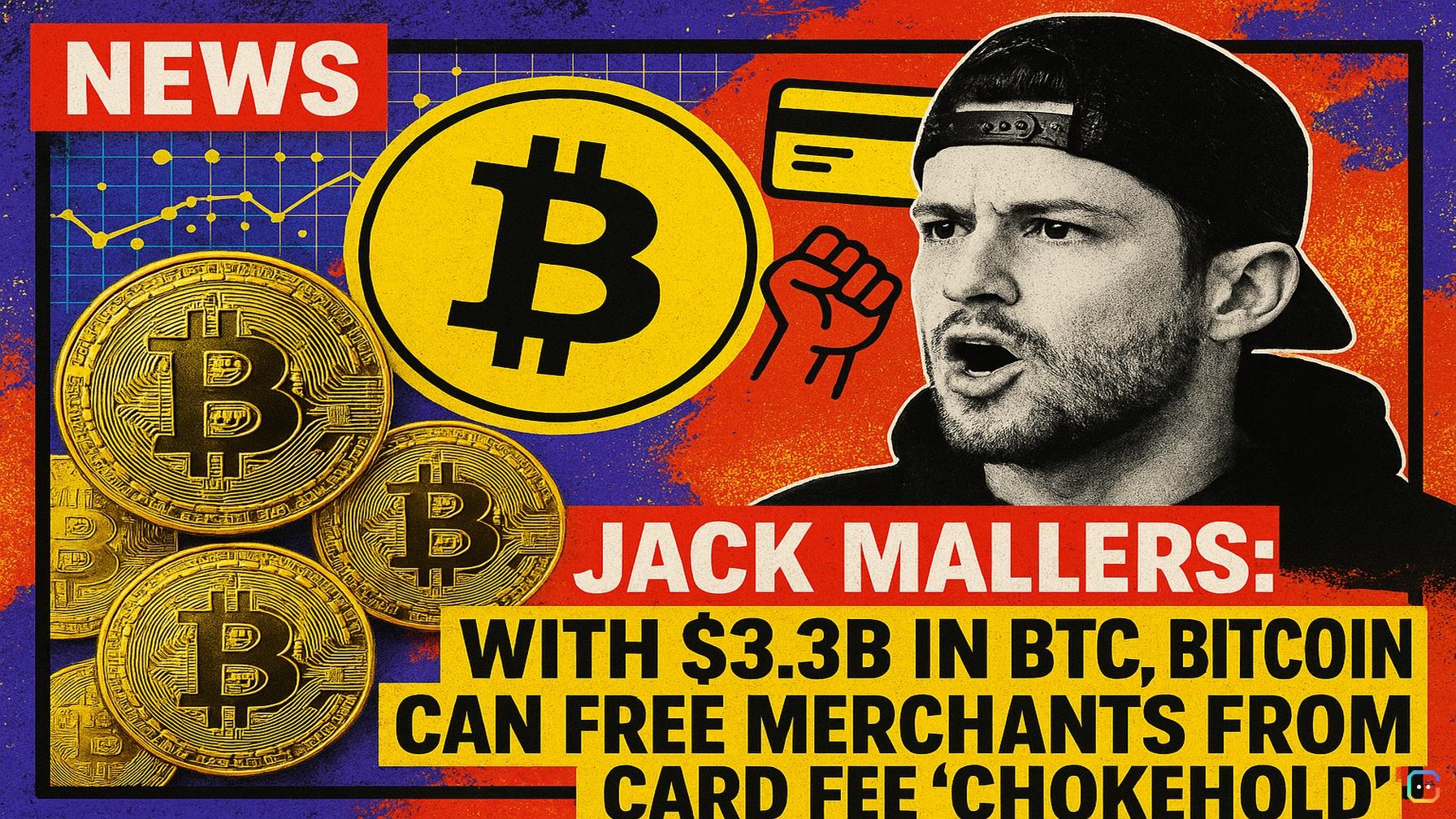
Jack Mallers used the Bitcoin 2026 Conference stage to deliver a blunt diagnosis of the U.S. payments system: it’s built to favor card networks and cardholders at the expense of merchants — and Bitcoin is the alternative.
Mallers, CEO of Twenty One Capital, laid out the math plainly. Every time a customer pays with a credit card, merchants typically lose about 3%–5% of the sale to interchange and network fees. That money doesn’t disappear; it’s recycled into consumer-facing rewards — cashback, miles, lounge access — which Mallers says distract consumers while effectively shifting costs onto businesses. “They are holding merchants hostage and abusing customers,” he told the audience, arguing that the current rewards-driven model entrenches centralized payment rails and stifles competition.
He pitched Bitcoin as a real-world solution: faster, cheaper cross-border transfers and a payment rail better suited to everyday commerce than gold. Mallers contrasted gold’s static, illiquid nature with Bitcoin’s dual role, saying Bitcoin can both store value and move it — giving it practical advantages for transactions as adoption grows.
Mallers also addressed why people rarely spend crypto today. His point was behavioral and monetary: people tend to spend money they expect to lose value and hoard money they expect to gain. With Bitcoin’s 21 million-coin supply cap, many holders expect appreciation, so they are reluctant to spend it. Dollars, by contrast, are spent more readily because inflation erodes purchasing power.
Twenty One Capital’s sizeable stake underpins Mallers’ push. The firm holds 43,514 BTC — roughly $3.3 billion at current prices — making it, according to Bitcoin Treasuries data, the second-largest public crypto holder. That position signals that Mallers’ advocacy for BTC payments isn’t merely philosophical; it’s backed by significant capital.
Mallers framed his aim as broad: to make Bitcoin payments a real option for entrepreneurs and consumers nationwide, breaking what he called the “chokehold” of card networks and centralized institutions. His remarks drew swift attention on social media, with observers amplifying his criticism of big banks and payment networks.
The debate over who ultimately bears the cost of card rewards — merchants, consumers, or networks — isn’t new, but Mallers’ talk pushed it squarely into the crypto context, arguing that Bitcoin could rewire incentives and reduce hidden costs for businesses.
Featured image from Unsplash, chart from TradingView.
Read more AI-generated news on: undefined/news