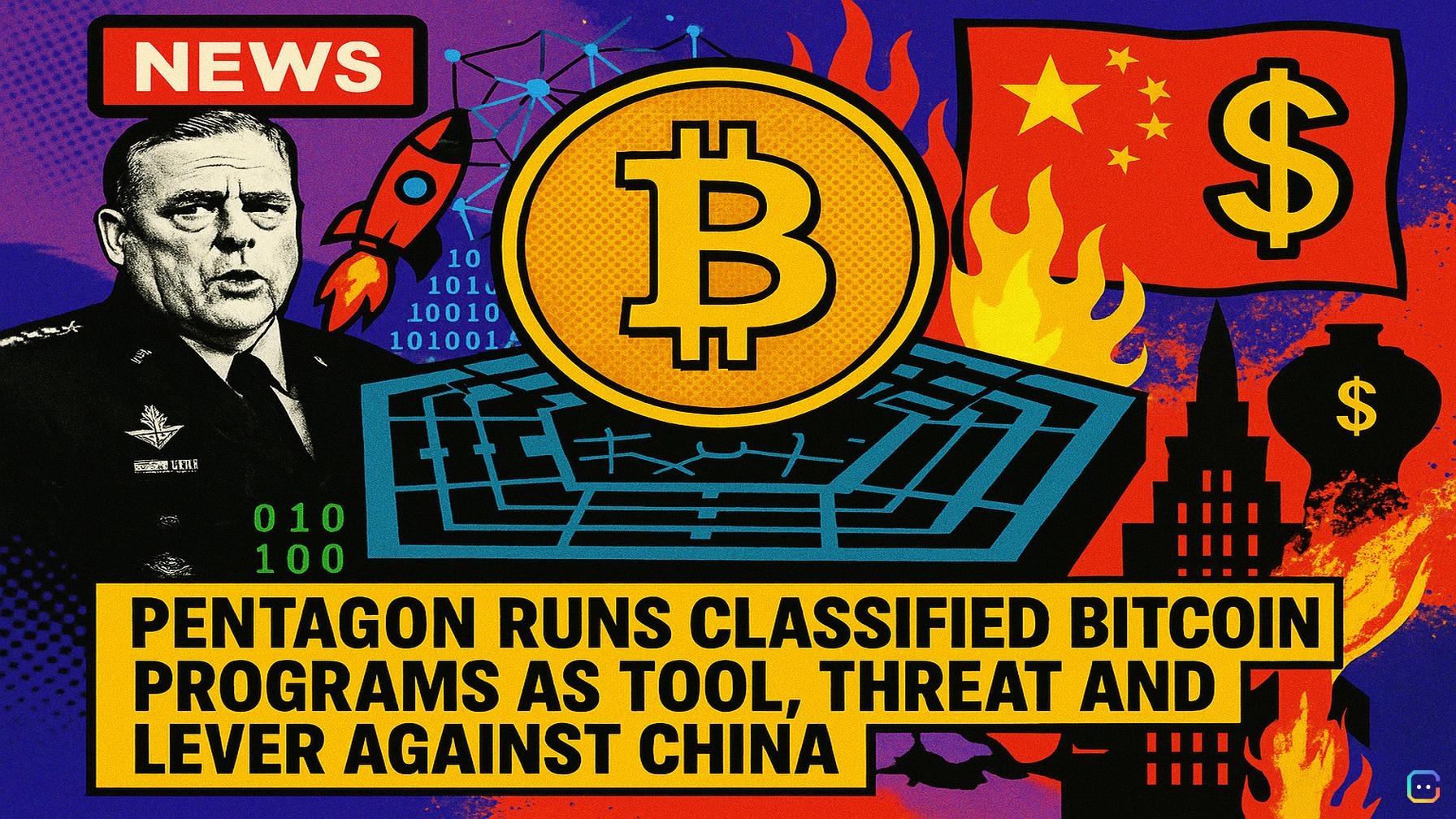
Pentagon treats Bitcoin as both a tool and a threat — and a lever against China, Defense Secretary Pete Hegseth told the House Armed Services Committee on April 30.
At the hearing, Hegseth said the Department of Defense is running classified Bitcoin programs on two operational tracks: enabling the technology and countering it. Asked by Rep. Lance Gooden (R-Texas) whether the U.S. is securing a strategic advantage in Bitcoin, Hegseth said the classified efforts “provide us a lot of leverage in a lot of different scenarios.” He added he is “a long enthusiast of Bitcoin and crypto potential,” noting that many of the department’s activities around enabling or defeating crypto remain classified.
Hegseth’s remarks follow related public testimony from INDOPACOM Admiral Samuel Paparo, who told the Senate that U.S. Indo‑Pacific Command operates a live Bitcoin node and is conducting operational protocol tests. Paparo framed Bitcoin as a computer‑science system — built on cryptography and proof‑of‑work — that can impose costs in cyber and operational environments. Together, the Hegseth and Paparo statements mark the most explicit public framing yet of Bitcoin as a defense instrument within the U.S. government.
Lawmakers tied that shift to real-world security concerns. Rep. Gooden argued Bitcoin has “evolved from a fringe asset into a matter of national security,” citing examples such as Iran’s demand for Bitcoin payment at the Strait of Hormuz, North Korean ransomware activity, and China’s accumulation strategies.
Policy moves reflect that strategic thinking. Earlier in 2026, former President Trump signed an executive order creating a U.S. strategic Bitcoin reserve, initially seeded with roughly 200,000 government‑held coins seized through forfeiture, as previously reported by crypto.news.
Mining geography is another piece of the puzzle. DL News has estimated Russia now accounts for about 16% of global Bitcoin mining hashrate, while China maintains roughly 12% through offshore operations — figures that policymakers view as a direct strategic variable in U.S.‑China competition.
Why it matters: these disclosures suggest Washington is treating Bitcoin not just as an economic asset or regulatory challenge, but as an operational domain with offensive and defensive utility. For investors and observers, the growing overlap between crypto infrastructure, military strategy, and geopolitics could reshape how governments, markets, and miners engage with the network going forward.
Read more AI-generated news on: undefined/news