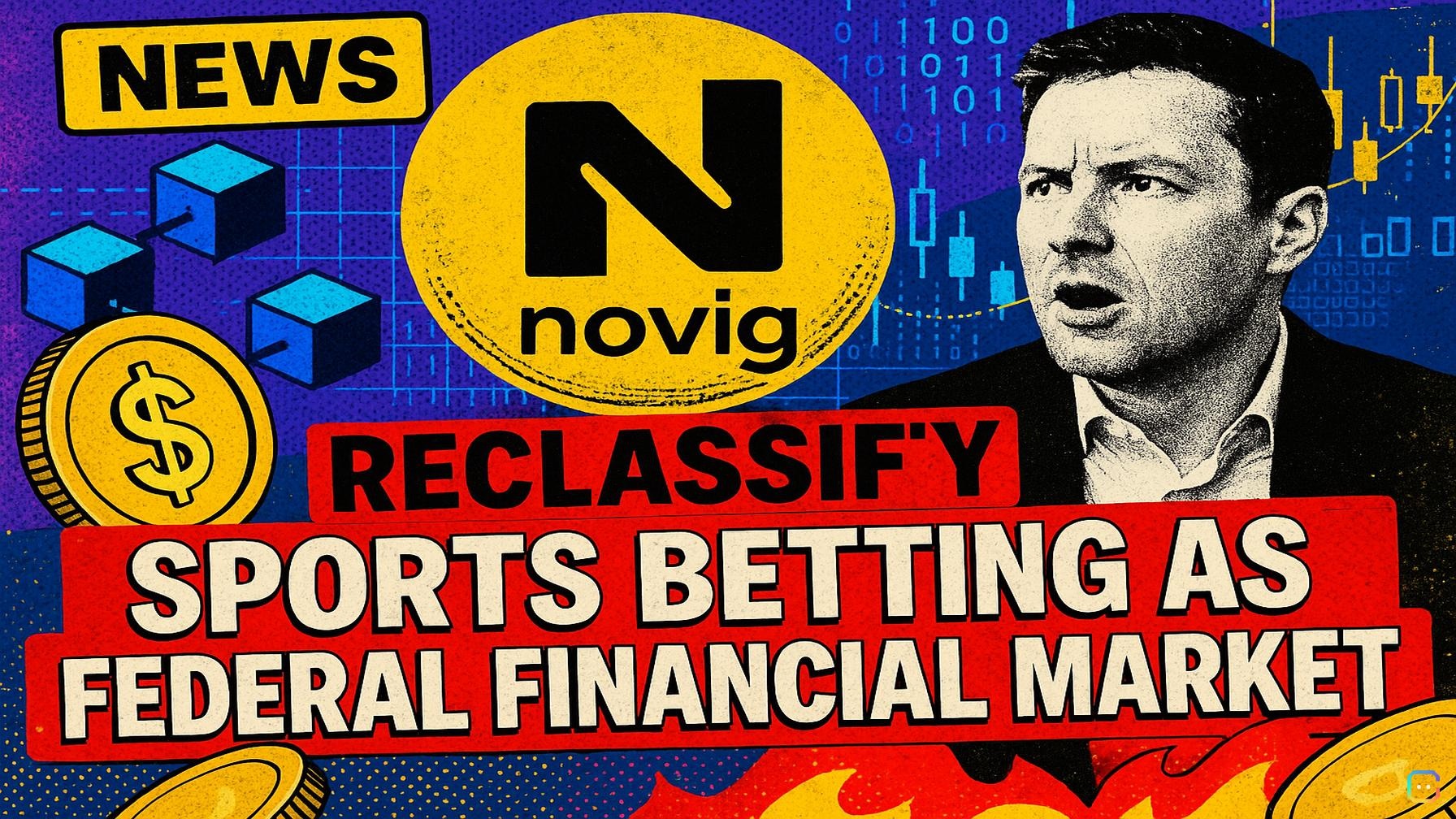
Sports betting should be regulated as a federal financial product — not a state-licensed casino game — if the industry wants markets that are fair, efficient and scalable, two prediction-market entrepreneurs argued at Consensus Miami 2026.
Jacob Fortinsky, CEO and co-founder of sports-betting platform Novig, told the conference that the current sportsbook model is “structurally broken” because legacy operators routinely limit or ban their most successful customers. “Sports betting is really the only industry in the country that regularly limits and bans their power users,” he said, arguing that sports-event contracts are binary financial instruments that have been misclassified as gambling for too long. “For so long they’ve been treated as a gambling product and instead should really be treated as a financial product,” Fortinsky added, noting that sports betting is a roughly $2 trillion global asset class still dominated by casino-style operators.
Adam Mastrelli, founder of AI trading shop 57 Maiden, reinforced that critique with firsthand experience: he and a partner were barred from two major sportsbooks within months for being “sharp.” “It’s like LeBron James getting kicked out of the NBA for being too good,” he said. After being shut out, they moved their activity to Novig, which they say charges no fees and enables traders to create synthetic positions. Mastrelli warned that edges in these markets decay quickly — of 154 strategies his firm tested, only three remain profitable — though he still finds certain niches lucrative (his best season, he said, came in the WNBA).
Fortinsky said Novig plans to shift this summer from a sweepstakes-based product currently live in 35 states to a federal Designated Contract Market (DCM) framework — a move that would let it operate across all 50 states under federal oversight. He described a failed state-level regulatory push in Colorado as a “wake-up call,” quoting regulators who told Novig that state priorities are often tax revenue rather than consumer protection, innovation or market efficiency.
The debate over federal versus state authority is already escalating: Fortinsky predicted the fight “is going to get to the Supreme Court in the next two or three years,” pointing to roughly 15 pending lawsuits involving the Commodity Futures Trading Commission, Kalshi, Robinhood and various states. Within the prediction-market space, he argued, sports markets may actually be the least risky vertical when it comes to manipulation and insider trading compared with political or event-driven contracts.
Mastrelli, who avoids offshore platforms, compared mature prediction markets to equities exchanges where institutional players constantly battle for alpha: “When I see a robust equities market now, this is AQR against SIG. It doesn’t go away.” Their comments underscore a growing push in crypto and prediction-market circles to recast sports betting as a regulated financial market — a shift that could redraw competitive lines and open the space to institutional trading and new product models if federal regulators move in that direction.
Read more AI-generated news on: undefined/news