BlackRock steps up tokenization push with two new onchain U.S. Treasury and money-market offerings
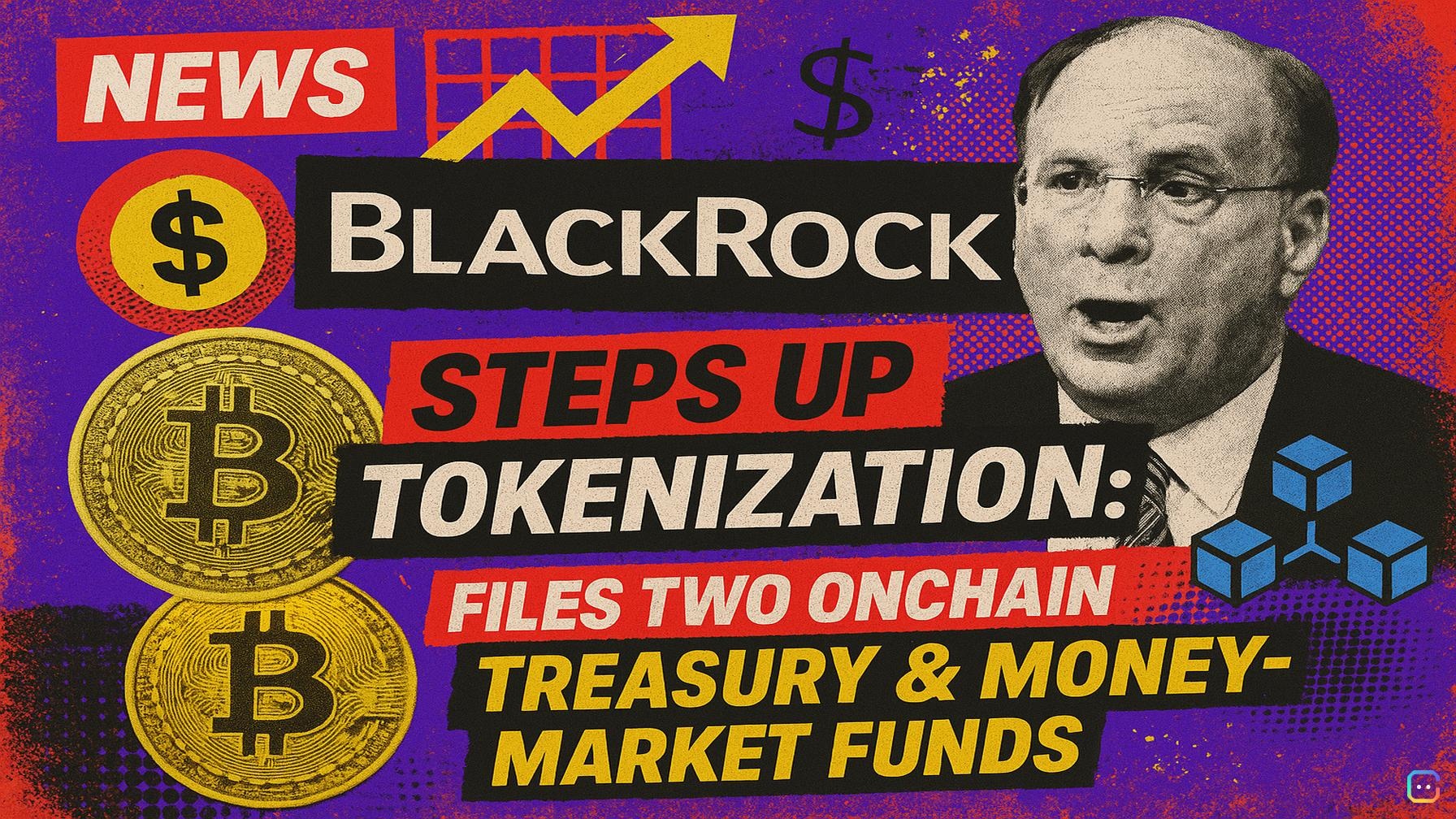
BlackRock, the world’s largest asset manager with roughly $14 trillion under management, is accelerating its move into tokenized finance. In filings with the U.S. Securities and Exchange Commission (filed Friday), the firm proposed two new onchain share structures tied to Treasury and money-market funds — signaling another major institutional bet on blockchain-based fund distribution and recordkeeping.
What BlackRock filed
- BlackRock Daily Reinvestment Stablecoin Reserve Vehicle: A new fund that would hold cash, short-term U.S. Treasuries, and overnight repurchase agreements backed by Treasuries. The fund would issue “OnChain Shares” through a permissioned system that interfaces with multiple public blockchains. Securitize Transfer Agent LLC would be the official keeper of ownership records, using a permissioned framework linked to public networks while keeping offchain records that map wallet addresses to investor identities. The filing does not name which blockchains the fund will initially support. The minimum investment would be $3 million.
- Onchain share class for BlackRock Select Treasury Based Liquidity Fund: BlackRock also proposed adding an onchain share class to this existing money-market fund (about $7 billion in AUM). That filing specifies BNY Mellon Investment Servicing as transfer agent and says official ownership records would be maintained on Ethereum using ERC-20 token standards. As with the other filing, blockchain entries combined with offchain identity linkage would form the official shareholder registry.
Why it matters
These filings advance a model that combines public blockchain rails with traditional, permissioned transfer agent architecture and KYC/identity controls — an approach aimed at meeting regulatory and compliance demands while tapping the efficiency and composability of tokenization. Advocates argue tokenized real-world assets can speed settlement, enable round-the-clock trading and increase transparency.
Market context
Tokenization of real-world assets has been one of the fastest-growing segments of digital finance. According to rwa.xyz, the sector has expanded more than 200% over the past year and now tops $30 billion. A Boston Consulting Group and Ripple analysis projects tokenized assets could scale to as much as $18.9 trillion by 2033.
BlackRock’s ongoing strategy
BlackRock CEO Larry Fink has repeatedly endorsed tokenization as a way to modernize financial plumbing. The firm’s first tokenized money-market fund, BUIDL — launched in 2024 with Securitize — has grown to roughly $2.5 billion and is already being used across crypto markets as collateral for borrowing and leveraged trading. These new SEC filings suggest BlackRock is broadening that footprint, fusing traditional asset-management infrastructure with blockchain-native capabilities.
Bottom line
The filings mark another notable example of large incumbents experimenting with tokenized versions of cash-like products, using hybrid onchain/offchain setups to try to capture the efficiencies of blockchain while preserving regulatory controls. If approved and adopted at scale, these structures could further normalize tokenized funds as usable instruments in both institutional and crypto-native markets.
Read more AI-generated news on: undefined/news