Yield-chasing is winning out over protection in DeFi — and it’s leaving billions vulnerable to hacks.
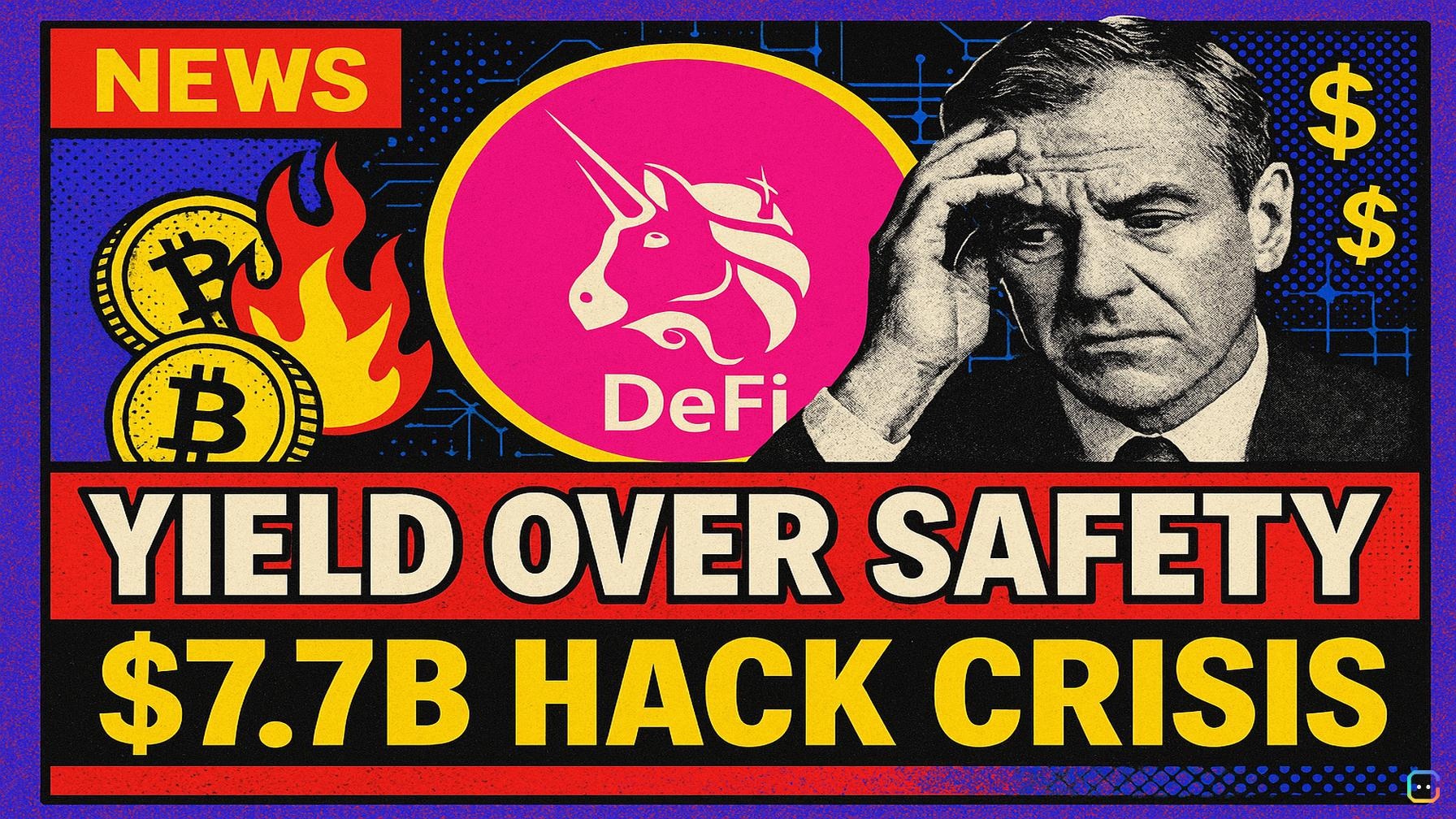
What began as the 2020 “DeFi Summer” promise — a permissionless, transparent financial system without intermediaries — now routes tens of billions through decentralized protocols. But that liquidity is strikingly underinsured. According to DeFiLlama, uninsured lending protocols have lost $7.7 billion to exploits since DeFi’s rise, and April 2026 alone saw more than $600 million in security losses, with high-profile incidents such as the Drift and Kelp DAO attacks dominating the month.
Why so little cover?
DeFi insurance is tiny compared with the sector it’s meant to protect. DeFiLlama lists 28 insurance protocols, but Nexus Mutual — the best-known player — accounts for almost the entire sector’s roughly $123.5 million in TVL. That’s only about 0.14% of DeFi’s roughly $83 billion market. Hugh Karp, founder of Nexus Mutual, calls this a major barrier to mass DeFi adoption: “Less than 2% of DeFi’s TVL is covered or insured,” he told CoinDesk.
Part of the challenge is that the risks have evolved. Early insurance products priced and covered smart-contract bugs, which are relatively straightforward to audit. But attackers have increasingly exploited off-chain weaknesses — compromised private keys, phishing, and social engineering — which are harder to quantify and price for insurers. “Many of the largest hacks have originated offchain from operational security failures,” Karp said. Those failure modes are difficult to standardize and underwrite, driving premiums up and making coverage unaffordable for many users.
Bridges, collateralization and the limits of coverage
The Kelp DAO exploit — which drained hundreds of millions by manipulating a bridge to access assets that were then recycled as collateral on lending platforms like Aave — highlights the gap between what insurance typically covers and how modern attacks play out. Karp noted that “the core failure of bridge risk isn't something that would have been covered.” Even when policies could apply, coverage is often indirect and contingent: losses may only qualify if they trigger specific downstream consequences, such as bad debt in lending markets caused by frozen oracles.
Why users skip insurance
For many DeFi participants the math is simple: yields matter more than protection. Paying 2–3% in insurance premiums can cripple low-margin yield strategies, and most users are yield-driven. “Most DeFi users are yield-driven and do not want to give up several percentage points of return for cover,” said Dan She, senior audit partner at CertiK.
Structural weaknesses in the insurance model
Beyond user preferences, the foundations of DeFi insurance have been shaky. Many insurance protocols were built on the same composable infrastructure that attackers exploited — effectively stacking counterparty exposure on counterparty exposure. Early rapid growth saw insurance TVL leap from roughly $3 million in early 2020 to $1.89 billion by November 2021, with players like Nexus Mutual, Cover Protocol, InsurAce, Tidal Finance and Bridge Mutual leading the charge. But several collapsed or stalled: Cover Protocol was hacked and failed, and Armor.fi, Bridge Mutual and Tidal all flatlined or vanished between 2021 and 2024 amid unsustainable tokenomics, governance problems and conflicts of interest.
Capital backing insurance pools has also been a weakness. “When exploits hit, the capital backing the cover was often exposed to the same risks as the protocols they cover, so it evaporated precisely when it was needed most,” said Matthew Pinnock, COO at Altura. Spectra Finance founder Gaspard Peduzzi adds that insuring DeFi with other DeFi-native protocols simply stacked more counterparty risk on top of existing risk.
Who pays when things go wrong?
Because insurance coverage is thin and pools can be depleted, losses ultimately fall somewhere. Karp describes the typical post-exploit sequence: protocol safety modules absorb initial losses, treasuries are tapped next, and if those are insufficient, ordinary depositors face haircuts. “In practice, when there's no cover, the cost falls disproportionately on the least sophisticated participants,” he said.
Is the industry adapting?
There are early signs of change. Some teams are experimenting with embedding insurance directly into DeFi products rather than selling stand-alone policies. Others advocate for more narrowly tailored coverage that addresses specific, well-understood risks. Some experts even suggest integrating traditional (off-chain) insurance providers into the space to bring underwriting expertise and capital that isn’t native to DeFi.
But change is incremental. DeFi’s insurance market remains small not because demand is absent, but because the risk surface is complex and evolving. DeFiLlama’s breakdown of losses by attack method underscores this: private key compromises account for the largest share of value stolen, followed by phishing attacks targeting multisignature wallets.
The bottom line
As hacks continue and losses mount, the market faces a stark choice: accept the current trade-off between high yields and low protection, or develop more robust, possibly hybrid insurance solutions that can realistically cover how modern DeFi is attacked. If the latter doesn’t happen soon, insurance gaps may become a structural drag on the sector’s growth — and leave everyday users holding the bill.
Read more AI-generated news on: undefined/news