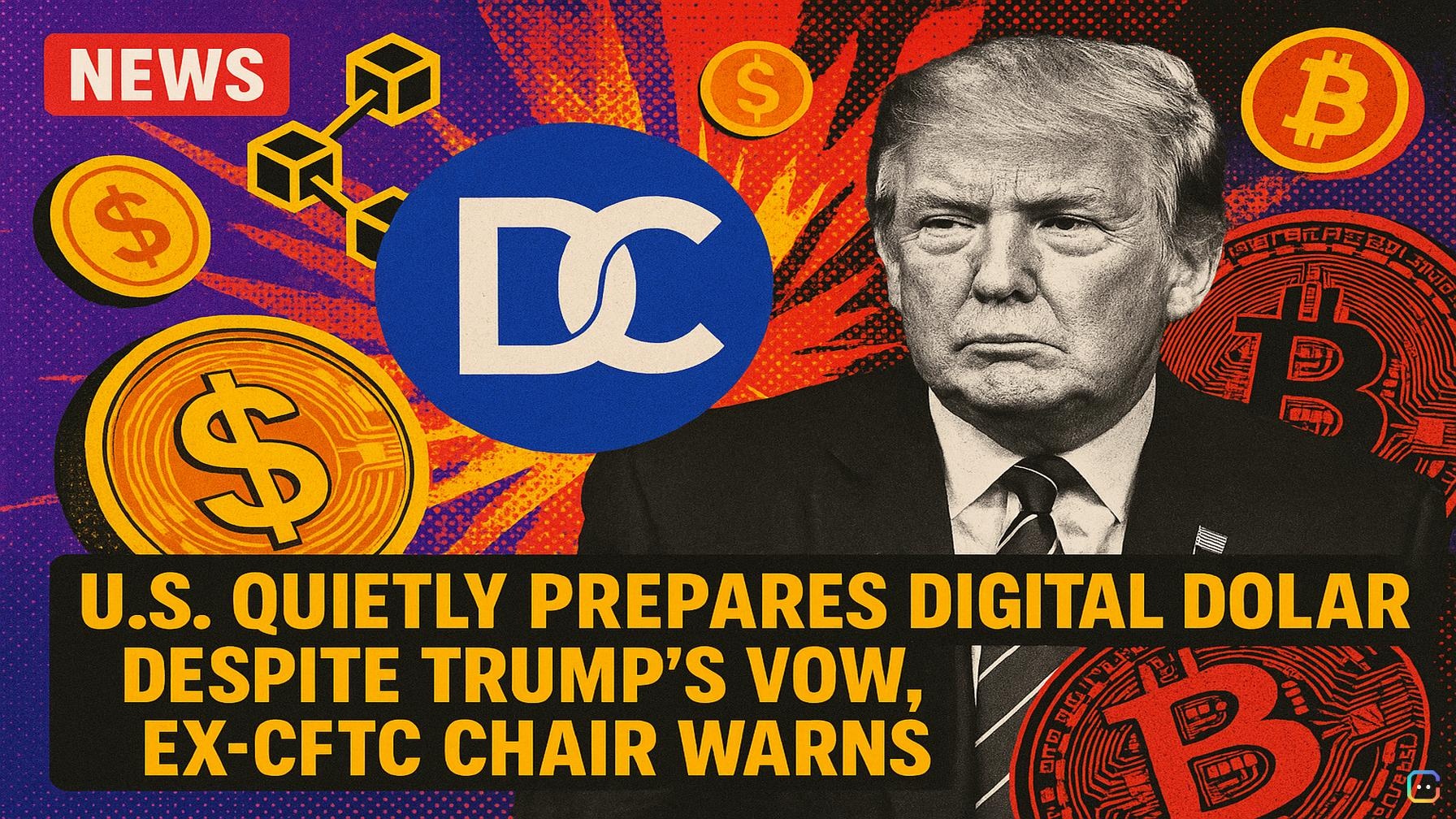
Despite President Trump’s public vow to block a U.S. central bank digital currency, work on a government-backed digital dollar is quietly progressing, former CFTC chair Timothy Massad warned at the Digital Money Summit 2026 in London.
Massad, who led the Commodity Futures Trading Commission from 2014–2017, told CoinDesk that while CBDCs remain politically sensitive in Washington, they are being examined “behind closed doors.” He cited growing international momentum and multilateral projects as key drivers pushing the U.S. to prepare its own on‑chain settlement rails rather than cede ground to Europe.
“We are a participant in Project Agora,” Massad said, referring to the Bank for International Settlements initiative that brings together seven central banks. “We don’t have a central bank president who is going to get out there and speak about wholesale or retail CBDC, but that does not mean that we are not looking at how to create one.”
The comments came alongside a more cautious line from the Federal Reserve’s Mark Gould, the Fed’s chief payments executive, who said a central bank stablecoin “is not under our remit” at present. When pressed on whether a government-backed digital dollar would ultimately fall to the Fed, he replied that it would — but reiterated it is not an active Fed project today.
The public posture contrasts with past political rhetoric. In March 2024, then-candidate and later president Trump promised he would “never allow the creation of a central bank digital currency.” And earlier this year lawmakers tried to lock in that stance legislatively: a provision to bar the Federal Reserve from issuing a digital dollar passed the Senate in an 89–10 bipartisan vote as part of a broader housing bill, though it still faces hurdles in the House.
Massad argued the politics won’t fully determine outcomes. He told CoinDesk after the panel that even if the administration maintains a public ban on a formal retail CBDC, the broader shift toward tokenized finance will compel a government-endorsed alternative — effectively a way for public authorities to ensure U.S. participants and markets aren’t left behind as other jurisdictions deploy digital currency infrastructure.
The exchange highlights a growing reality for U.S. policymakers: public messaging and political promises aside, international experiments and industry-driven tokenization are prompting quiet policy and technical planning that could shape the future of dollar-based settlement systems.
Read more AI-generated news on: undefined/news