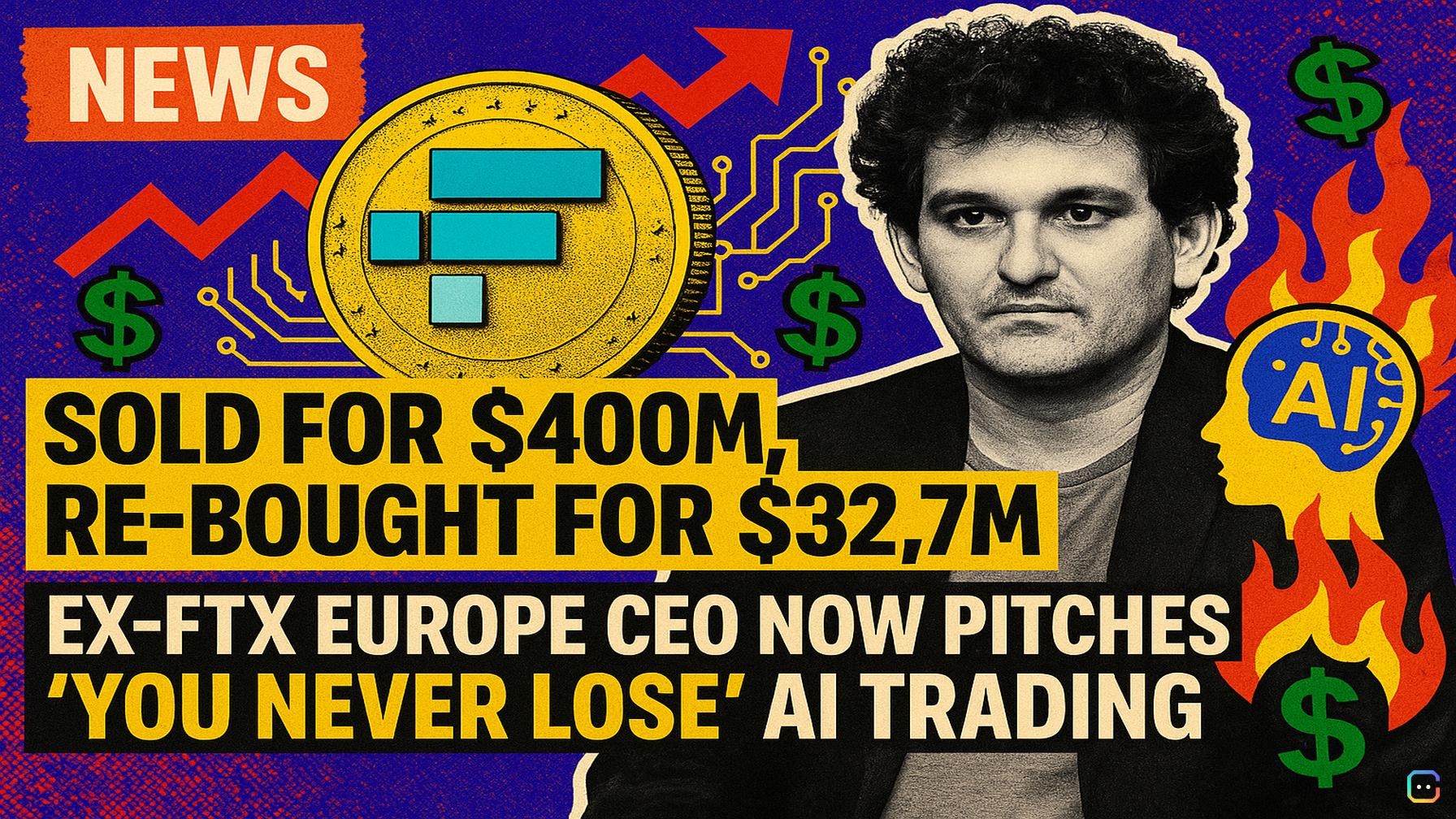
Headline: Ex‑FTX Europe CEO who sold for $400M, rebought for $32.7M, now pitches “you never lose” AI trading product
Patrick Gruhn — the one-time CEO of FTX Europe who sold his firm into Sam Bankman‑Fried’s empire for roughly $400 million and later reacquired it after the collapse for a fraction of that price — is back in the headlines. In a viral interview with Mario Nawfal and a recent Perpetuals.com release, Gruhn is promoting UpsideOnly, a prediction‑based trading product the company bills as “risk‑free” for users because trades are executed using Perpetuals’ capital.
Key background
- Gruhn sold FTX Europe to FTX during the exchange’s rapid expansion. U.S. court filings later characterized that purchase as part of roughly $376 million spent to secure a European license.
- After FTX imploded, the FTX estate pursued clawbacks but ultimately agreed in February 2024 to sell the European assets back to Gruhn and co‑founder Robin Matzke for $32.7 million, according to media reports including the Wall Street Journal.
What UpsideOnly promises
- Built under the Perpetuals.com umbrella (a company described in the launch materials as Nasdaq‑listed), UpsideOnly is presented as a market‑prediction platform where users make directional calls across equities, crypto, commodities and FX — but don’t post capital themselves.
- Perpetuals’ launch release says its BayesShield AI engine has been trained on “more than 22 billion retail trades.” The platform claims users “never put up their own money,” Perpetuals trades with firm capital, and winning trades’ profits are split roughly 50/50 with contributing users; losing trades allegedly cost the company, not the user.
- Gruhn frames this as an answer to what he sees as the structural problem in derivatives venues: retail traders being pitched high leverage and left “structurally doomed against market makers and professional liquidity providers.”
Gruhn’s narrative and criticisms
- In the Nawfal interview, Gruhn summarizes his arc bluntly: he “sold his company to FTX for $400 million before it collapsed, watched it implode, then bought it back for $30 million.”
- He is sharply critical of FTX’s internal collapse and the industry’s excesses: saying the downfall wasn’t “outright fraud from day one” but devolved into embezzlement, and speculating FTX “would probably be bigger than Binance today” absent the misconduct.
- Technically, Gruhn describes a split human/AI workflow: humans identify entry points while AI handles exits, a pairing he argues mitigates common behavioral mistakes (locking tiny wins, refusing small losses) that destroy retail P&L.
Risks, skepticism and regulatory flags
- Perpetuals’ own marketing and disclaimers raise familiar red flags: the firm highlights regulatory, model and capital sustainability risks even as it markets a “you never lose” product.
- Critics and independent observers warn this setup can look like rehypothecating retail behavioral edge into a principal trading book: underwriting systematic retail error at scale to extract an edge can work until a fat‑tail event, liquidity shock or model failure exposes who actually bears losses.
- The interview also touches on the human costs linked to high‑leverage trading — references to “suicides, addiction and financial ruin” — and Gruhn contrasts leverage‑heavy crypto platforms unfavorably with regulated counterparts, arguing retail odds are often worse than those at casinos.
Bottom line
UpsideOnly repackages a familiar promise — let users participate in markets without risking principal — backed by a proprietary AI and a corporate balance sheet. That pitch is likely to draw interest given recent industry trauma and the appeal of downside protection for retail traders. But Perpetuals’ own caveats and the structural risks implicit in running a principal book that insures retail bets mean the product may simply shift where risk sits rather than eliminate it. For regulators, competitors and traders, the test will come when real market stress hits: will the platform absorb losses as advertised, or will governance, capital and model limits force a rethink of the “risk‑free” claim?
Read more AI-generated news on: undefined/news