Headline: Small Texas Bank Goes National, Aims to Become Wall Street’s Crypto Bridge
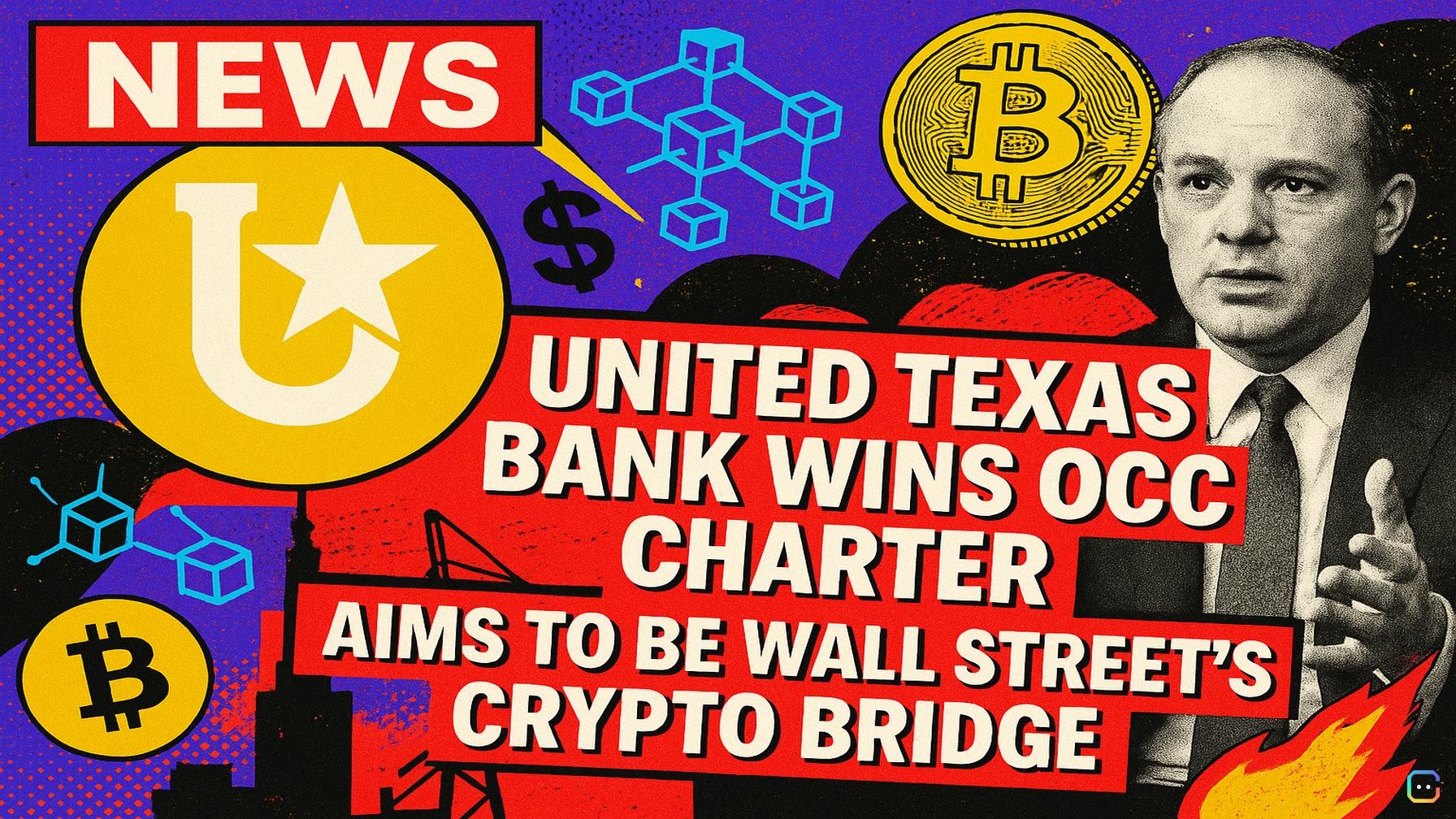
A 40-year-old Texas lender is making a bold play to become a go-to banking hub for the crypto world. United Texas Bank (UTB) announced it received approval from the Office of the Comptroller of the Currency (OCC) to convert from a state-chartered to a nationally chartered bank — a move CEO Scott Beck says positions the bank as a direct bridge between crypto firms and the U.S. banking system.
Key dates and compliance fixes
- OCC approval for the conversion was granted on May 15; UTB says the two conversion conditions were satisfied as of May 27.
- UTB has operated under a Federal Reserve Consent Order since 2024 related to its Bank Secrecy Act and compliance systems. The bank says it used that period to build a proprietary BSA/AML platform, UTB PRISM SENTINEL, rather than treat the Consent Order as a setback.
What the national charter delivers
By shifting to an OCC national charter, UTB now has the same federal licensure and full trust powers as major money-center banks, plus direct access to the Federal Reserve’s wire and ACH systems — while retaining FDIC insurance. Beck frames the move as a way to bypass the limits of “trust-only” charters that keep many crypto firms off the Fed’s payment rails.
Scale and market role
UTB says it already handles substantial crypto-related flows: about $10 billion in U.S. dollar volume each month (roughly $120 billion a year) for foreign banks, OTC desks and major exchanges. Beck and UTB’s chair portrayed the bank as a “centralized value hub” that can offer crypto firms U.S. dollar access they often can’t get at big retail banks.
New products aimed at 24/7 crypto liquidity and compliance
To capitalize on its federal upgrade, UTB plans to roll out two flagship offerings:
- UTB Atomic: an AI-driven, real-time payments network designed to restore round-the-clock liquidity that evaporated after the failures of Silvergate and Signature Bank. UTB Atomic promises instant, off-balance-sheet clearing between institutional clients to avoid settlement bottlenecks in a 24/7 market.
- UTB PRISM SENTINEL: the bank’s continuous blockchain surveillance and BSA/AML engine, which UTB says will run in parallel to the payments network to mitigate compliance risk and help navigate emerging regulatory thresholds like federal stablecoin rules under legislation such as the GENIUS Act and the Clarity Act.
Regulatory and competitive context
UTB says converting to an OCC-supervised national bank aligns it more directly with federal oversight and helps shield clients from a fragmented regulatory landscape that has long challenged crypto firms. The bank also stresses it is among the first to complete an OCC conversion since the Dodd-Frank era.
The move comes as other regional players seek to compete with Wall Street over crypto business: last week Minnesota enacted rules allowing local banks and credit unions to offer crypto custody services, signaling growing state-level competition for digital-asset banking relationships.
What’s next
UTB plans to launch a comprehensive digital asset custody offering and a full-service trust department this summer, aiming to cement its role as “native financial plumbing” for institutional crypto flows into and out of the U.S.
If UTB can scale its compliance and payments technology while holding onto Fed access, the bank could offer an alternative to both cautious big banks and the trust-only outfits that aren’t fully integrated with the Fed’s rails — and in the process, reshape how institutional crypto liquidity is routed through the U.S. financial system.
Read more AI-generated news on: undefined/news