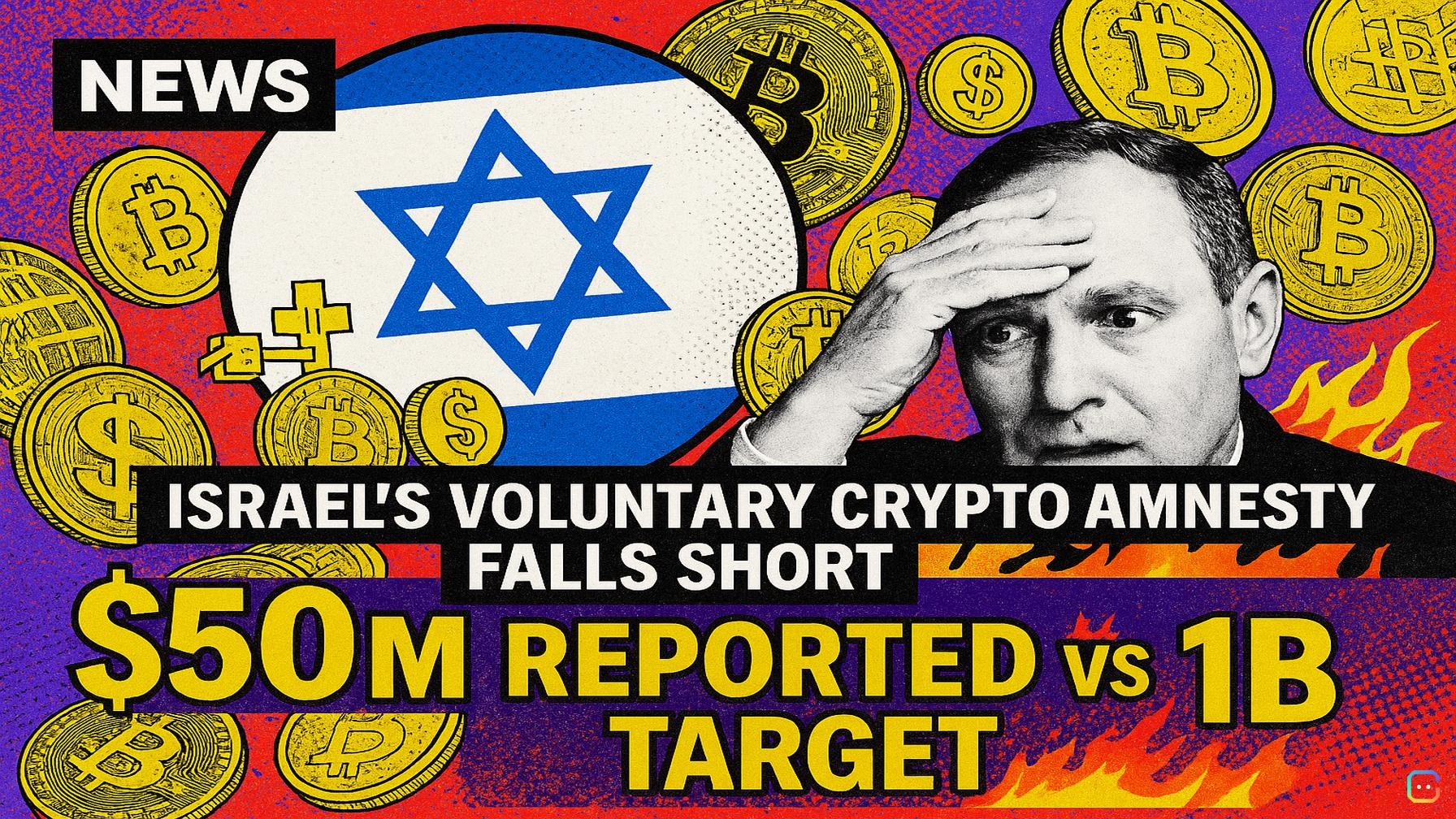
Israel’s voluntary crypto amnesty is falling far short of expectations, widening the gap between authorities’ revenue targets and what taxpayers are actually disclosing.
The Israel Tax Authority had hoped a voluntary disclosure program launched in August 2025 would recover up to $1 billion in unpaid taxes from undeclared crypto gains. So far, however, only about $50 million of crypto capital has been reported through the scheme, and just 58 taxpayers have come forward, according to Globes.
How the program works
- Eligible crypto holders can avoid criminal charges if they correct past filings and pay the full tax due.
- The protection is limited to taxpayers whose holdings did not exceed the equivalent of $522,000 as of December 2024.
- Disclosures and tax payments must be submitted by Aug. 31, 2026.
Why uptake is weak
Tax experts point to a key design flaw: the program requires taxpayers to identify themselves up front. Iftach Simhony, a CPA and head of tax at Prof. Bein Law Office, told Globes the lack of an anonymous initial reporting track is especially problematic for crypto holders. Without a way to probe enforcement risk confidentially, many may prefer to stay silent rather than expose themselves and only later learn whether they face prosecution.
Big gap remains
Israeli officials still believe substantial crypto profits lie outside the tax system. The $50 million disclosed is only a sliver compared with estimates of national holdings: the Bank of Israel’s financial stability report for Jan–Jun 2024 put Israeli crypto holdings at roughly $1 billion. That disparity helps explain why the authority’s revenue expectations have not been met.
Wider regulatory context
The weak response comes as Israel’s financial authorities step up scrutiny of digital assets. The Bank of Israel has been reassessing how private digital currencies—especially stablecoins—might fit into payments infrastructure, signaling a shift from niche trading use toward broader payment considerations. Policymakers have moved toward tighter stablecoin regulation as these tokens enter mainstream payment discussions.
Global echoes
Tax reporting for crypto is also under review abroad. In the U.S., lawmakers introduced the PARITY Act in May, which would require the IRS to reexamine a de minimis exemption for digital assets—potentially excluding small crypto transactions from routine reporting obligations. That proposal reflects the ongoing balance governments are trying to strike between tax enforcement and the practicalities of everyday crypto payments.
What to watch
Will Israel tweak the amnesty to allow anonymous pre-disclosure checks, extend deadlines, or broaden eligibility? Or will authorities pivot to enforcement and audits to recover unpaid taxes? The next months will show whether the program can be adjusted to coax more taxpayers in—or whether the promised revenue will remain out of reach.
Read more AI-generated news on: undefined/news